


President of Russia Vladimir Putin: I congratulate you on the beginning of the academic year.
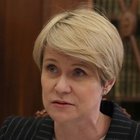
Head of the Talent and Success Foundation Yelena Shmeleva: Thank you, Mr President. We mark both the beginning of the academic year and the completion of the first convocation of the Federal Territory Council. We worked for five years as per your decision, Federal Law No. 437 and constitutional amendments.
(Shows the presentation.) It contains some results and photos.
I want to report to you that this constitutional novelty has proven its efficiency. Why? Because Sirius has proven itself as the country’s legal laboratory: 418 pieces of legislation, ranging from a charter to the Social Code, have been adopted. The region now independently exercises 106 of its 178 regional powers. The federal territory’s own revenues have doubled. Six government programmes are being carried out. And, of course, here is the specific feature of the federal territory – it is close to people, each 10th resident turned to us, offered something and did something – we have received 3,000 systematised proposals from citizens, and some of them have even become legal standards.
Of course, the main work of Sirius is to unlock the talents of children and young people from across the country. Mr President, since you opened the educational centre in 2015, 90,000 school students from all entities of the Russian Federation have completed its specialised programmes and intensive sessions. In all, 150,000 participants took part in the Grand Challenges programme. Our school projects competition has already completed 11 seasons. Sirius Courses cover eight percent of all schools nationwide.
Regarding the educational model of Sirius, the federal territory, it is also possible to sum up results, which show that this model is developing, remains in high demand and is extremely effective. Our students score 20 percent more points during Unified State Exams, and over 80 percent of graduates enrol at universities. The Presidential Lyceum confirms the educational model by the results of graduates who are admitted by a decision of the fund’s board of trustees. Of the 59 graduates, 13 scored 100 points, one scored 200 points, average physics-exam scores are 94.8 points, and all papers are rated 80 points and more.
Perhaps, this is only the beginning, and these statistics are not so impressive, but we can see that Russia’s first IT specialisation programme (where Grade 9 graduates enrol) continues to develop. They received 42 certificates after completing the third year of studies, and 26 of them graduated with distinction. They have already completed advanced training at leading national companies.
Our secondary musical school continues to develop following the same logic. Actually, upbringing is inseparable from education, professional assertion and socialisation. We have our own methods for all forms of supporting school students; these methods are enshrined in Soviet pedagogical practice and in new forms that are developing at Sirius.
The first generation of Sirius graduates has already matured; they enrol at leading national universities, perform at the concert centre and come back to act as mentors for younger students. This model (when professionals work with our school students) is also implemented at the secondary musical school and the concert centre.
As you know, starting this year, we have been implementing a naval training programme, when naval officers teach children. We have a very serious coaching school which functions in the federal territory. Moreover, the Talent and Success foundation and the administration of the federal territory have joined the Russian International Olympic University, training students, coaches and managers.
Our programmes are in high demand abroad. We are developing new channels for attracting talented young people. We have now launched open international Olympiads in astronomy, climate science, and biology, as well as, for the first time, in geography and robotics.
And, of course, the university you founded just six years ago is developing as a university that generates new knowledge rather than simply reproducing existing knowledge. We currently have 245 postgraduate students, all of whom are employed as junior research fellows, so, we have the right to award academic degrees.
We place particular emphasis on the practical component of education, which permeates all areas of Sirius, whether at the school, university, vocational, or music school level. Both the college and kindergarten, as well as the university and its research staff, are important for us.
The territory’s Innovative Science and Technology Centre is its pride and joy. It has 113 resident companies and generates significant revenues: almost 70 billion rubles. But what matters most is the connection between the lyceum, the university, and the centre. This means developing and refining domestic technologies and bringing them to residents and industries, ultimately transforming people’s quality of life.
We are also very pleased to see the development of the Concert Centre, which you opened on October 3, 2025. Its first season has now concluded. The new season opened on September 1 this year. A total of 149 events were held during the first season, attracting nearly 60,000 people to our concerts. Maestro Valery Gergiev opened the second season on September 1, together with the Bolshoi Theatre and its orchestra. The 120th anniversary of Dmitri Shostakovich’s birth is the key theme of the second season.
In accordance with your executive order to preserve Lyudmila Verbitskaya’s memory, we have effectively established a centre for the development and promotion of the Russian language. The Zhivoye Slovo (Living Word) Russian Language Theatre performs at the Concert Centre. An archive of the Russian language has also been established and is being developed. And, at your instruction, the Muzyka publishing house – the oldest sheet music publisher in Russia, and perhaps even in the world – was transferred to the Foundation. This is, of course, a very valuable contribution to music education and the development of the national music library.
In 2027, together with the International Organisation for the Russian Language, we will hold the Living Word International Congress and present the first Lyudmila Verbitskaya Prize.
Speaking of our educational model, I want to thank you for signing the Intergovernmental Agreement with the Republic of Kazakhstan together with President Kassym-Jomart Tokayev on May 28, during your state visit. We are currently developing the Kazakhstan-Sirius project. Kazakhstan-Sirius schools will be established in Almaty and Astana, along with institutions based on the Presidential Lyceum and Educational Centre model.
This year, on your instructions, we held the Sirius-Rosa Khutor International Arts Festival for Children and Youth. The President of Kazakhstan described it as an unprecedented initiative and a significant contribution to cultural dialogue between Russia and friendly countries. Our work in science and the arts, as well as our Olympiads and educational programmes, are attracting considerable interest in India, the UAE, Kyrgyzstan, Malaysia, Belarus, and Uzbekistan. We are cooperating with these countries and continuing to develop our dialogue.
That is a very brief overview of the past five years. As for the second convocation of the Sirius Federal Territory Council, we are now handing over to it the tasks you entrusted to us. We are approving and developing the Sirius-Adler-Krasnaya Polyana-Rosa Khutor master plan and are finalising the adoption of the unified territorial planning document for Sirius.
As part of our efforts to improve transport services in the federal territory and create a fundamentally new environment for urban development, routes, and transport systems, Sirius is establishing a joint transport systems testing centre with Moscow.
Of course, everything we do at the university is closely linked to the development of new infrastructure. Accordingly, the second convocation of the Council will focus, among other things, on the reconstruction of the student quarter. A federal multidisciplinary scientific and clinical university medical centre is already being designed, and there are also plans to establish a medical college to train healthcare professionals for the Krasnodar Territory and southern Russia as a whole.
Mr President, we have also been instructed to develop a third experimental legal regime, this time in the field of the bioeconomy. The first applies specifically to education, the second to unmanned transport systems, and we are now developing a third regime for the bioeconomy to accelerate breeding programmes and strengthen food security – as always, with Sirius serving as a testing ground for solutions that can subsequently be applied across the country.
We are proud that you have entrusted us with developing programmes of federal significance. The first focuses on the genetic history, origins, and unity of the peoples of Russia. It is a very interesting programme aimed at establishing sovereign infrastructure for DNA analysis. We are also developing a programme for RNA-based pharmaceuticals. I have already mentioned the development of Lyudmila Verbitskaya’s school. All of these are ongoing activities that amount to the performance of state functions within the federal territory.
Within its mandate as a national methodological centre, Sirius will continue to develop network-based programmes for schoolchildren and university students. Sirius regional centres and partner institutions operate according to our model, which means that inclusive education and the practice of addressing national priorities together with partner universities, including international institutions, will continue to develop, attracting more and more talented children and young people from around the world to the federal territory.
The national system of education and development that we are building together at Sirius may therefore also prove useful and relevant to Greater Sochi. The educational programmes, colleges, and universities we are creating are intended to serve the entire country, the Krasnodar Territory, and Abkhazia, from which a growing number of young people are coming to study here. This reflects the fundamental principle of the federal territory: applying a scientific approach and expert analysis to key decisions so that our work can benefit the entire country – through legal solutions, our educational model, and our scientific and cultural achievements.
The ecosystem you have established here in southern Russia – you once called us the city of the world’s youth, a title of which we are very proud – is precisely that: an ecosystem comprising a foundation, a lyceum, a university, and educational, innovation, cultural, and concert centres, all functioning as a single, cohesive whole.
Thank you, Mr President, for your trust and continued attention to Sirius. The Council team and the federal territory administration are ready to take on the tasks of the next stage. Thank you.
Vladimir Putin: Ms Shmeleva, I would like to thank you. Five years is not a long time, but a great deal has been accomplished under your leadership. Your team has been actively involved in developing the very concept of a new scientific and educational centre with capabilities that, in essence, we have never had before. These include administrative preferences, the creation of a regulatory framework for development, the reduction of bureaucracy, streamlined decision-making, and rapid progress in both scientific research and the practical application of its results.
We have many highly talented and interesting people. They come here from all over Russia, and some are returning from abroad. All of this is closely linked to education, both at school and at the university level. Sirius has developed into a vibrant and dynamic cluster that attracts talented and creative people like a magnet.
Of course, none of this would have been possible without a team like yours. At the same time, as always, there are clearly many issues and challenges that require particular attention and a tailored approach. Let us discuss all of this. I am at your disposal. Please.
Yelena Shmeleva: Thank you, Mr President.
<…>