


Ahead of the event, President of Turkmenistan Serdar Berdimuhamedov greeted the leaders of the CIS countries and President of Iran Masoud Pezeshkian in an official welcome ceremony.
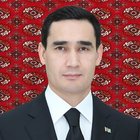

The CIS summit opened with a restricted-format meeting attended by President of Russia Vladimir Putin, President of Azerbaijan Ilham Aliyev, Prime Minister of Armenia Nikol Pashinyan, President of Belarus Alexander Lukashenko, President of Kazakhstan Kassym-Jomart Tokayev, President of Kyrgyzstan Sadyr Japarov, President of Tajikistan Emomali Rahmon, President of Turkmenistan Serdar Berdimuhamedov, President of Uzbekistan Shavkat Mirziyoyev, and CIS Secretary General Sergey Lebedev. The meeting was opened by the President of Turkmenistan, Serdar Berdimuhamedov.
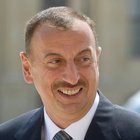
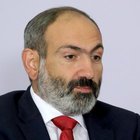
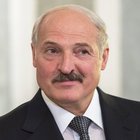
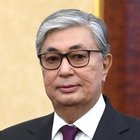
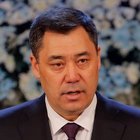
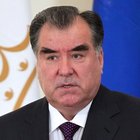
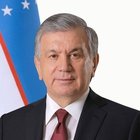
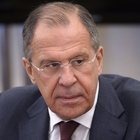
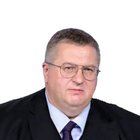
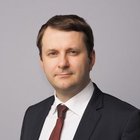
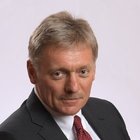
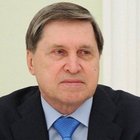
The talks continued in the expanded format, with President of Iran Masoud Pezeshkian joining the participants. The Russian delegation included Foreign Minister Sergei Lavrov; Deputy Prime Minister and Russia’s National Coordinator for CIS Affairs Alexei Overchuk; Deputy Chief of Staff of the Presidential Executive Office Maxim Oreshkin; Deputy Chief of Staff of the Presidential Executive Office and Presidential Press Secretary Dmitry Peskov; and Presidential Aide Yury Ushakov.
Following the meeting, a package of documents was signed. Decisions were adopted on the Statement by the Heads of State of the Commonwealth of Independent States on the Occasion of the 35th Anniversary of the Formation of the Commonwealth of Independent States and the Statement by the Heads of State of the Commonwealth of Independent States on Preserving Historical Memory. Other documents signed concerned, among other things, declaring 2028 as the Year of Social Development and Quality of Life and 2029 as the Year of Transport Connectivity within the CIS; fostering a positive image of the CIS and its member states in the information space; conducting the 2030 round of censuses in CIS member states; and combating crimes committed in the ICT sphere.
* * *
Remarks at the restricted-format meeting of the CIS Council of Heads of State
President of Russia Vladimir Putin: Mr Berdimuhamedov, colleagues, friends,
See also
Russia fully supports the draft joint statement prepared for approval by our leaders on the occasion of the CIS anniversary. The document takes stock of the organisation’s key achievements and sets out long-term objectives for future growth.
Over the past three and a half decades, the Commonwealth has truly come a long way, establishing itself as an influential regional integration association. It is thanks to the CIS – and here I share the view of colleagues who have already spoken on this point – that we have been able to preserve, and in many areas even broaden, the economic, social, cultural and humanitarian ties our peoples forged over centuries of living together within a single state.
The economy has been, and remains, a priority area of our cooperation. CIS countries work closely together on trade, investment and high technology. Of course, as has just been noted, we would like to move faster and work more effectively in this area – that is certainly true. Even so, progress is being made. It is worth noting that by the end of 2025, Russia’s trade with its CIS partners had exceeded $110 billion and grew by a further 12 percent in the first six months of this year.
Could we move faster still? Yes, we probably could. What would it take? Removing barriers. And yet, in our day-to-day work, we know only too well that it sometimes seems more advantageous at the national level and in the national interests to keep those barriers in place for a while. So we are, in effect, deliberately holding back a pace that, as Mr Lukashenko noted, could indeed be quicker.
Even so, the decisions we have taken have enabled us to build highly effective cooperation within the Commonwealth.
Take, for instance, a financial infrastructure that is stable and independent of outside pressure – and allows us to tackle many of today’s challenges quite effectively. Virtually all our mutual payments are conducted in national currencies; these transactions’ share in commercial operations between our states has now exceeded 90 percent. This opens the way to deeper economic cooperation – whatever the external pressure or market conditions – enabling us not only to trade but also to develop capital markets and pursue reciprocal investment.
CIS business circles are implementing large industrial and infrastructure projects, as mentioned just now, creating new Eurasian industrial and transport chains, and modernising and further developing the North-South and East-West transcontinental logistics corridors.
Import substitution processes are gaining momentum, with increased production of a broad range of goods, including vehicles, equipment, medicines and agricultural goods.
Our countries are also efficiently coordinating joint efforts against economic and financial crimes, money laundering, and corruption. We are implementing joint projects to counter the criminal use of digital technologies, organised crime, drug trafficking, terrorism and extremism. Our law enforcement and intelligence services maintain close operational contacts.
Several new practical solutions in criminal justice, cybercrime prevention and border control, which the Russian side supports, have been submitted for the approval of this summit.
I am delighted to state that the CIS countries unanimously advocate for shaping a just multipolar world order based on the universal principles of international law and the central role played by the UN.
Humanitarian ties are a major element of the CIS partnership. Exchanges in science and education, culture and tourism, healthcare and environmental protection, sports and youth policy are highly intensive.
As for the environment, the problem of the Caspian Sea, which is a very pressing issue for many of us, is also on the agenda today, thanks to our hosts, who are chairing this meeting.
This is logical, because our nations truly have many things in common, including a deep blending of traditions and cultures, commitment to common moral and spiritual values, and close ties of kinship and family bonds.
The Russian language is a powerful unifying force throughout the vast space of the CIS, which has also been mentioned today. This year, we launched the International Organisation for the Russian Language. Its first ministerial meeting held in Moscow has outlined the main spheres of its activities to preserve the common Russian-language cultural and humanitarian legacy, and to promote and popularise Russian throughout the world.
I would like to use this occasion to once again express gratitude to President of Kazakhstan Kassym-Jomart Tokayev, who proposed establishing this organisation, which I regard as very useful, and to all of you, our friends and colleagues, all member countries of the CIS, for supporting that initiative.
I have said many times how important it is for the CIS countries to protect our shared history and prevent its falsification. The younger generation must know the truth about our peoples’ achievements during the Soviet times, and about the heroism of our fathers and grandfathers during the Great Patriotic War. A dedicated statement by the CIS leaders on the importance of preserving historical memory will contribute to these efforts.
The Commonwealth has a well-established practice of thematic years during which we organise major joint projects and events covering various aspects of humanitarian links and social life.
We welcome our Tajikistani and Turkmenistani friends’ initiatives to declare 2028 the Year of Social Development in the CIS and 2029 the Year of Transport.
These and similar annual projects involving federal and regional authorities, businesses, public activists, and the media will help demonstrate to the citizens of our countries the benefits of cooperation in these areas within the CIS.
Overall, promoting a positive image of the CIS in society, the media, and internationally is an extremely relevant task. We hope that the resolution to be adopted during this meeting will intensify corresponding efforts.
Finally, I would like to thank Mr Serdar Berdimuhamedov and all our Turkmenistani friends for their constructive and productive approach to the CIS chairmanship this year and, of course, for organising this event.
As I said before, today we will adopt a decision on the handover of the CIS chairmanship to Uzbekistan on January 1, 2027. I want to wish Mr Mirziyoyev success in this important mission and assure you, Mr Mirziyoyev, that our Uzbekistani friends can rely on Russia’s extensive assistance where it is required.
Friends, and, of course, as per tradition, I would like to invite you all to St Petersburg on December 21. We usually gather for a friendly meeting of the CIS leaders ahead of New Year’s Eve to go over all current and prospective issues in an informal setting. And thank you all for your friendly and warm new year wishes – I mean on my personal new year, my birthday. We all usually exchange greetings, and I think it is also a good tradition.
Thank you.