


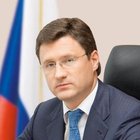
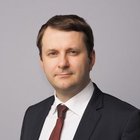
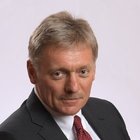
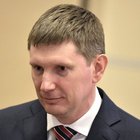
On the Russian side, attending the meeting were Deputy Prime Minister Alexander Novak, Deputy Chief of Staff of the Presidential Executive Office Maxim Oreshkin, Deputy Chief of Staff of the Presidential Executive Office – Presidential Press Secretary Dmitry Peskov, Ambassador Extraordinary and Plenipotentiary of the Russian Federation to the Republic of Ghana Andrei Ordash, Minister of Agriculture Oksana Lut, Minister of Economic Development Maxim Reshetnikov, Deputy Foreign Minister Georgy Borisenko, Head of the Federal Agency for Subsoil Use, Russian Co-Chair of the Russia-Ghana Intergovernmental Commission on Economic, Scientific and Technical Cooperation Oleg Kazanov, Head of the Main Directorate of the General Staff of the Russian Armed Forces – Deputy Chief of the General Staff of the Russian Armed Forces Igor Kostyukov, Deputy Head of the Main Directorate of the General Staff of the Russian Armed Forces Andrei Averyanov, member of the Russian Union of Industrialists and Entrepreneurs (RSPP) Board Bureau Oleg Deripaska, Director General of State Atomic Energy Corporation Rosatom Alexei Likhachev, member of the Russian Union of Industrialists and Entrepreneurs (RSPP) Board Bureau Dmitry Pumpyansky.


* * *
President of Russia Vladimir Putin: Mr President, friends,
I am delighted to welcome you to Moscow once again.
Our meeting today offers a wonderful opportunity to exchange views on issues of current relevance to Russian-Ghanaian relations. We are, of course, grateful for your active participation in the programme of the third Russia–Africa Summit. Mr President, we are most grateful to you for your personal participation in these events.
See also
Relations between our countries rest on foundations laid in the years of Ghana’s emergence as an independent state and its struggle against the legacy of colonialism. We were among the first to establish diplomatic relations with Accra – we have been developing them since 1958 – and we helped to create industrial facilities and social infrastructure, and to train national personnel. Today, in a rapidly changing world, we seek to preserve and build upon this shared heritage.
We note with satisfaction the intensification of contacts at various levels: the political consultation mechanism is functioning, and dialogue between our parliaments and political parties is developing.
Ghana ranks twelfth among all African countries in terms of trade with Russia. Yet our trade is among the largest in sub-Saharan Africa. In January to August, trade grew by 6 percent. In other words, the trend is broadly positive.
We will, of course, continue to assist Ghana in the field of education, and to help train national personnel. At present, 649 young Ghanaians are studying in Russia. I know that during your visit you were awarded the title of Honorary Doctor by a Russian university.
We are keen to strengthen coordination with Ghana in international forums, and we are grateful for your traditional support for Russian resolutions at the United Nations.
And, of course, we welcome the independent policy pursued by Accra under your leadership, Mr President, in the fight against neo-colonialism and in foreign policy more broadly.
May I emphasise once again how very pleased I am to meet you, Mr President.
President of the Republic of Ghana John Dramani Mahama:Thank you, Mr President. Let me express my appreciation for your invitation to attend the third Russia-Africa Summit and to thank you for the hospitality and warm friendship of the Russian people since we arrived in Moscow.
This summit will deepen the relations and economic cooperation between Africa and Russia. I believe that the summit also promotes cooperation in trade, investment, agriculture, energy, infrastructure, education, health, science and technology.
We want to commend Russia’s solidarity with Africa during the period of decolonisation. Russia was by Africa’s side in the fight against apartheid. Russia was a solid supporter in getting us out of apartheid.
Apart from that, recently, when the COVID pandemic struck, the first vaccines that we received in Africa were the Sputnik V vaccines from Russia. And it does show that Russia is always in solidarity with Africa, and we appreciate that.
In Ghana, we have historic relations with Russia, because Ghana was the first sub-Saharan African country to break from colonialism. As early as 1958, Russia recognised Ghana and established diplomatic relations. In 1961, our first president, Dr Kwame Nkrumah, visited Russia and met with Nikita Khrushchev. It was a historic visit, the first pan-African leader, and since then our relations have grown from strength to strength.
Today, Ghana is the eighth largest economy in Africa, with a GDP of about 120 billion, with a stable economic environment and a growth rate of about 6 percent per annum. We believe that the time has come for us to move from just political cooperation to economic cooperation, and the environment is right for mutual investments between Russia and Ghana.
We are going to hold the permanent joint commission for cooperation meeting next year, in 2027, and we are hoping that it will provide us with a proper framework for our cooperation going forward.
There are several other points, but I will now wait and continue after you, Mr President.
<…>