


Modular units are to be launched in Tambov, Donetsk, Yekaterinburg, and Simferopol.
Prior to the videoconference, Vladimir Putin toured an exhibition of domestically produced medical supplies and emergency medical equipment. During the tour, he was shown a mobile treatment and diagnostic complex with a deployable field operating room, Class C and Class B (armoured) ambulances, the Ansat multipurpose helicopter, and the AIST unmanned aerial system for transporting medical supplies and providing telemedicine consultations.
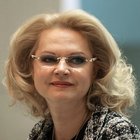
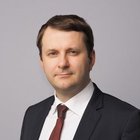
The President was accompanied by Deputy Prime Minister Tatyana Golikova, Deputy Chief of Staff of the Presidential Executive Office Maxim Oreshkin, Minister of Healthcare Mikhail Murashko, General Director of the Pirogov National Medical and Surgical Centre Oleg Karpov, and Director of the Federal Centre for Disaster Medicine Alexei Osipov.

The Federal Centre for Disaster Medicine is an emergency response system with its own air ambulance service, emergency medical units, and multispecialty field hospitals. In the event of an emergency, the Centre coordinates the response, including full control of ambulance service resources.
* * *
President of Russia Vladimir Putin: Friends, good afternoon,
Today I have a wonderful opportunity to congratulate you – the staff of the Federal Centre for Disaster Medicine at the Pirogov National Medical and Surgical Centre, and all the doctors, paramedics, nurses, healthcare assistants, and ambulance crews – on your professional holiday.
Russia’s emergency medicine is truly unique: it provides immediate and free help to patients, maintaining unified standards and algorithms, and responds urgently to cases of illness or injury regardless of time of day.
See also
Emergency medical service personnel keep their professional watch non-stop, being at the forefront of struggle for the lives and health of the people every day, being the first to respond to calls for help.
As of today, 130 emergency medical stations and over 1,600 emergency departments are operating in Russia. The system employs over 160,000 people, with more than 12,000 mobile teams having been established.
I would like to express sincere gratitude for your hard work, which carries enormous responsibility and, at times, an overwhelming workload. All of this requires deep knowledge, experience, expertise, and – I would like to emphasise – it demands exceptional personal qualities as well.
In our nation, the history of emergency care began as far back as the 19th century, but we began officially marking its creation not so long ago – in 2020, during the pandemic, as we have just been discussing it with colleagues, when the entire healthcare system was subjected to severe trials, as was, to a large extent, the work of the emergency medical service.
The decision to make this day a national holiday became a sign of recognition of your contribution to the fight against the outbreak of a dangerous, at that time still little-studied illness, a high assessment of your noble mission and unwavering devotion to your medical duty.
I would especially like to commend the dedicated work of ambulance crews and disaster relief teams working in the zone of the special military operation, responding to enemy drone attacks targeting our peaceful cities and towns, and helping in emergencies and natural disasters.
Currently, the emergency medical service has over 20,000 vehicles. More than 14,000 vehicles were purchased using federal budget funds and supplied to the regions between 2016 and 2023.
Almost 57 billion rubles over the last ten years have been allocated towards the development of the air ambulance service – this has translated into thousands upon thousands of sorties, and patients promptly evacuated and transported to medical facilities.
Digital technologies are becoming an essential tool for saving lives as they make it possible to streamline the entire chain from prompt logging of a call and collecting patient information to tracking patient transportation in real time, including with the help of space-based systems such as GLONASS, as well as follow-up treatment of a patient or a casualty at a medical facility.
Digitalisation projects are being implemented locally. Unified ambulance dispatch centres have been set up, and crisis management centres have been created within disaster medicine services.
Naturally, ambulance personnel must be provided with all the necessary tools and the full range of the latest means and technical capabilities.
Additional capacity for admitting patients and casualties is being created in the regions. This work is ongoing. Today, we have Tambov, Donetsk, Yekaterinburg, and Simferopol join us.
The new modular emergency departments are being opened in these cities, intended to reinforce this vital healthcare sector and improve both the accessibility and the quality of healthcare, making it possible to save even more lives.
I would like to stress that these modules are, as I have just been told, adaptable and versatile and can be used both for emergency cases and for routine treatment, consultations, and diagnostics.
By 2030, we should create 99 modular admission units. So far, 12 such units have been built, including the ones we are going to see now; 28 more units will be completed by the end of this year.
I would like to thank everyone involved in implementing this ambitious project.
I would also like to note that the equipment, including the most advanced, the best equipment, is being increasingly produced in Russia. In my view, it not only matches global standards but in many respects even surpasses them.
Once again, I congratulate ambulance workers on their professional holiday and wish them every success and all the very best. Thank you very much for the good work.
<…>
Vladimir Putin: Colleagues,
In conclusion of our pleasant events held to launch the facilities we have discussed, I would like to emphasise once again that all the programmes aimed at developing and strengthening healthcare in Russia will certainly continue. This includes staffing, the development of new pharmaceuticals, modern equipment, and the construction of new facilities.
Naturally, the ultimate result can only be achieved through dedicated work of those on the front line of safeguarding people’s lives and health, above all – medical professionals across all specialties.
Today is a special day for emergency medical workers. I would like to conclude with what I began: by warmly congratulating you on your professional holiday, thanking you for your service, and wishing you every success and best of luck.
Thank you very much and all the best.