


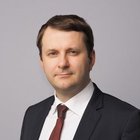
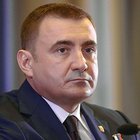
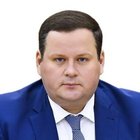
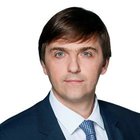
Taking part in the meeting were Deputy Chief of Staff of the Presidential Executive Office Maxim Oreshkin, Presidential Aide, Secretary of the State Council Alexei Dyumin, deputy prime ministers Tatyana Golikova and Dmitry Chernyshenko, Minister of Labour and Social Protection Anton Kotyakov, Minister of Education Sergei Kravtsov, Minister of Healthcare Mikhail Murashko, Minister of Science and Higher Education Valery Falkov, Minister of Digital Development, Communications and Mass Media Maksut Shadayev, CEO and Chairman of the Management Board of Sberbank of Russia German Gref, Chairman of the State Council Commission on Human Resources, Governor of the Kaluga Region Vladislav Shapsha, representatives of the federal authorities, development institutions, state corporations, business associations, and regional leaders.


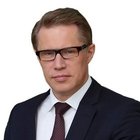
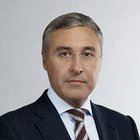
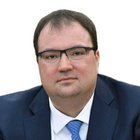
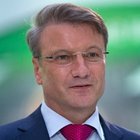
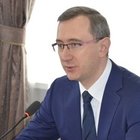
At thematic panels chaired by regional governors, the meeting participants discussed key issues related to personnel training, such as forecasting labour market needs, career guidance models, developing a national qualifications system, and the role of employers in professional development, including for veterans of the special military operation, training of highly qualified personnel to ensure technological leadership and training of specialists for the digital economy.
In his remarks, Maxim Oreshkin outlined three horizons for personnel training: overcoming the labour shortage, fine-tuning the education system, and responding to technological challenges related to the introduction of autonomous systems, artificial intelligence, and platform solutions, all of which are driving significant changes in the labour market.
Alexei Dyumin noted that the expanded meeting of the Commission is addressing issues of critical importance, as a wide range of economic sectors are experiencing a shortage of specialists. The personnel training system is failing to keep pace with employers’ constantly evolving demands. Mr Dyumin emphasised that the goals of achieving technological leadership, as set by the President, and mastering new technologies that are entering our lives require substantial human potential. He stressed that ensuring adequate personnel was a complex task affecting not only economic development but also the country’s defence capability.
Anton Kotyakov reported that the unemployment rate in the country currently stands at 2.2 percent. The number of unemployed citizens is virtually equal to the number of job vacancies. In the 30–39 and 40–49 age groups, labour market participation has practically reached its peak. Further economic growth will depend directly on the increase of labour efficiency. There are also skills-related challenges: new technologies require a systematic update of current workers’ competencies. According to forecasts, by 2032, an average of 1.7 million people will need to enter the economy annually, which is comparable to the number of graduates. Key objectives include accurate forecasting of future demand, high-quality career guidance, aligning needs and training programmes, as well as expanding continuing education in line with new technological developments.
In his speech, German Gref addressed the role of artificial intelligence in tackling human resource challenges.
The expanded meeting of the State Council Commission on Human Resources confirmed the effectiveness of a joint approach to addressing these issues and made it possible to identify priority areas for personnel policy for the coming period. The participants discussed all the proposals in detail and refined the wording of the initiatives. The finalised materials will be included in the draft list of presidential instructions for the upcoming State Council meeting, scheduled for the end of the year.