


Prior to the meeting, Vladimir Putin toured an exhibition on unmanned technologies, which was set up at the metro depot.
The head of state saw Moscow’s achievements in the development of urban autonomous systems. The President was shown a driverless tram and a driverless metro train. The capital is currently implementing an intelligent traffic management system, unmanned aerial monitoring of real estate, and systems for assessing forest fire risks. Drones are also being utilised to create and update Moscow’s digital model (“digital twin”).
At the Autonomous Systems in Transport stand, the President viewed driverless trucks, copters, self-driving taxis, and delivery robots built by domestic companies. Beginning on March 1, 2026, all civilian unmanned aerial vehicles will be monitored through a unified system based on the ERA-GLONASS system. In agriculture, the work is underway to introduce unmanned tractors, combine harvesters, and aerial agricultural drones. Vladimir Putin was also informed about the use of drones in such fields of natural resources and ecology, as well as in trade and industry.
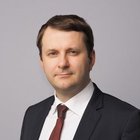
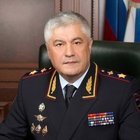
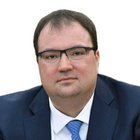
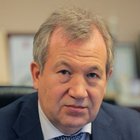
The meeting was attended by Deputy Prime Minister Vitaly Savelyev, Deputy Chief of Staff of the Presidential Executive Office Maxim Oreshkin, Minister of the Interior Vladimir Kolokoltsev, Minister of Industry and Trade Anton Alikhanov, Minister of Natural Resources and Environment Alexander Kozlov, Minister of Agriculture Oksana Lut, Minister of Transport Andrei Nikitin, Minister of Economic Development Maxim Reshetnikov, Minister of Finance Anton Siluanov, Minister of Digital Development, Communications and Mass Media Maksut Shadayev, President of the Russian Academy of Sciences Gennady Krasnikov, Moscow Mayor Sergei Sobyanin, Deputy Minister of Defence Alexei Krivoruchko, Director of the Federal Service for Technical and Export Control Vladimir Selin, General Director of the Roscosmos State Corporation Dmitry Bakanov, and Special Presidential Representative on Digital and Technological Development, Director General of the NTI Platform Dmitry Peskov.









* * *
The President’s opening remarks at the meeting on the development of autonomous systems
President of Russia Vladimir Putin: Good evening, colleagues.
Our agenda today includes the accelerated and advanced development of Russia’s national industry of unmanned and autonomous technologies. This is an extensive scope of transport, industrial, and service systems, some of which are still externally controlled by human operators, while others are already fully autonomous and capable of operating in all environments: on land, in the air, at sea, and in space.
We have just reviewed a wide range of advanced solutions at the exhibition and discussed their various application scenarios. The latter include precision agriculture, as Ms Lut noted; forest protection, as reported by Mr Kozlov; cargo delivery; construction; urban development; and security.
It must be said frankly: this is impressive, both in terms of the boldness and diversity of the designers’ proposals and the way these technologies are fundamentally transforming everyday life, shaping what can truly be called an economy of autonomous systems. Naturally, this field is now at the centre of attention for all leading countries, as it largely determines competitiveness in both civilian and defence sectors.
We are fully aware of this. That is why, a year ago, at a meeting in Tolyatti – my colleagues and I were just recalling this today – we adopted decisions that pave the way for the widespread use of civilian drones and, more broadly, for the development of unmanned transport in our country across all operational environments. We also addressed this topic again, at a meeting earlier this year.
I would like to repeat that important steps have already been taken – yet, we still significantly lag behind a number of other countries in certain areas. For instance, in some cities across the globe, unmanned taxis are no longer experimental projects, but are already operating on a mass scale, transporting passengers. Even more importantly, certain countries have achieved full technological sovereignty in the production of all key components for autonomous vehicles. It is evident that Russia possesses the necessary scientific, human, and industrial potential to become a global leader in the development, production, and, most importantly, the extensive deployment of autonomous systems.
These key technologies, along with digital platforms and artificial intelligence, are shaping the future of the entire world. The efficient implementation of our major plans and initiatives will undoubtedly depend on them. This issue was also discussed extensively at the recent meeting of the Council for Strategic Development and National Projects.
I would like to emphasise once again: the deployment of autonomous and unmanned solutions is certainly not a passing trend but a necessity. It is a path toward strengthening our country’s global competitiveness, addressing socioeconomic development challenges in the context of a tight labour market and demographic constraints, ensuring security, and, ultimately, safeguarding Russia’s sovereignty.
In this regard, the first point I would like to highlight is the following. I instruct the Presidential Executive Office and the Government to submit proposals aimed at improving the efficiency of governance in the development of the national autonomous systems industry. These decisions should ensure close coordination among ministries, agencies, constituent entities of the Russian Federation, technology companies, and scientific organisations.
Second, I would like to ask the Government to prepare detailed action plans for the implementation of unmanned technologies in key sectors of the economy. I am referring to boosting labour productivity and improving the quality of life for our citizens. These systems should replace low-skilled and hazardous labour and contribute to the formation of a high-wage economy. Our colleagues have just spoken about this at length. Obviously, the elimination of low-productivity, low-prestige, and low-paid jobs will free up labour resources, creating opportunities to redirect people into other, more promising areas of employment.
I would like to draw the attention of all participants in this meeting and my colleagues in the Government: we must move more resolutely from trial and error to the extensive deployment of autonomous solutions. We must lead this process rather than merely manage it. And by saying “we,” I mean the Presidential Executive Office, the Russian Government, and the heads of the regions.
It is crucial to develop fundamentally new technological and business processes across industries based on the use of unmanned systems, and to support entrepreneurs in selecting ready advanced solutions. Equally important is a clear assessment of the needs of economic sectors for unmanned aerial vehicles, both in terms of volume and required technical characteristics, so that technology companies can accurately understand medium-term market prospects and plan investments and production expansion accordingly. For its part, the Government must continue to promptly and consistently eliminate administrative barriers that hinder the rapid and safe deployment of autonomous solutions across the economy. We discussed this issue in detail at our meeting a year ago.
Third, the Russian regions play a decisive role in the work to advance the unmanned systems economy. I would like to ask governors to make more confident and proactive use of the existing regulatory framework governing civilian drone flights. Last year, in 2025, a new class of airspace for civilian unmanned aircraft was introduced nationwide. This creates fundamentally new opportunities for the use of drones in the regions. We must act responsibly, thoughtfully, and, at the same time, as swiftly as possible.
It is also necessary to scale up best practices already being implemented in Moscow, which is the undisputed leader in building a driverless economy. I would like to ask Mr Sobyanin to establish a mechanism for sharing experience with his colleagues from other regions, particularly in the use of data processing systems, autonomous solutions, and artificial intelligence, including for enhancing the quality of passenger transport. This is an important social aspect of deploying advanced technologies.
Fourth, pilot regulatory regimes are already in effect in Moscow, the Moscow Region, the federal territory of Sirius, and the Sakhalin Region. Last year, a decision was made to extend these regimes to all regions in Russia’s Far East. These measures are aimed to test innovations and subsequently adapt national legislation as quickly as possible to ongoing technological and societal transformation. In today’s conditions, those who are among the first to respond effectively to this challenge will secure leadership in building an economy of autonomous systems.
Drawing on the experience already acquired, we must urgently establish legal frameworks not only for large autonomous vehicles but also for smaller devices, such as delivery robots. It is necessary to organise certification for different types of unmanned systems, to define clear, comprehensive, unambiguous, and measurable requirements and standards for them, and to develop approaches for determining liability for the actions, and in certain cases the inaction, of unmanned vehicles in the event of traffic accidents. (Addressing Minister of the Interior Vladimir Kolokoltsev) Obviously, this is not a simple task, but, Mr Kolokoltsev, it is absolutely essential.
I want to stress that all these efforts must be implemented with a clear understanding of the ultimate objective: we must increase the use of autonomous systems in all areas of life many times over. Therefore, creating barriers or obstacles to technological advancement, or avoiding decision-making based on a “just in case” principle, is the wrong approach and, frankly speaking, such behaviour is unacceptable.
Security issues unquestionably demand particular attention. This includes the work to prevent unauthorised access to the control of autonomous systems, as well as to the data they transmit and receive. Relevant scientific and engineering projects in the field of cybersecurity must be supported. We are extensively developing this area, and I am confident that viable solutions do exist.
In addition, we must more vigorously develop a legal framework for the end-to-end control of autonomous objects using satellites and near-space capabilities – and, as the head of Roscosmos has reported today, such capabilities are already available. This year, amendments to the regulatory framework and other regulatory documents must be adopted, and technological measures must be implemented to promptly introduce end-to-end identification of unmanned systems across all environments, as well as their real-time monitoring.
This represents the first, but critically important, step toward creating a system capable of simultaneously controlling any number of autonomous objects. In other words, we are gradually moving toward a seamless “digital sky” where drones, unmanned ground and maritime vehicles, and spacecraft are integrated into a single network to exchange information with one another, and transmit and process vast volumes of data.
In this context, I consider it essential to promptly develop a comprehensive and integrated legal framework to govern the use of autonomous systems. I request that the Government, with the involvement of experts and, of course, the business community, ensure that this task is addressed and that efficient work is carried out in this regard.
Colleagues,
We can see a true revolution taking place now in transportation both in our country and across the globe. In terms of its scale, it is comparable to the technological and infrastructural transformation that occurred at the turn of the 20th century. Back then, largely due to the construction of railways as well as the development of the navy and other transportation systems, Russia achieved immense progress in its advancement. Outstanding Russian scientists and engineers made major contributions to addressing these challenges.
Today, we likewise face the task of building a national unmanned vehicle industry on a sovereign technological and production foundation, relying on our own scientific and engineering schools, including in such areas as microelectronics, new materials, and optics. As we have agreed, we will certainly meet separately soon to discuss microelectronics in detail. We should create comfortable and favourable conditions for Russian businesses to increase the production of both unmanned vehicles and their components. At the same time, these components must become more standardised and suitable for use across different types of autonomous systems.
It is also critically important to develop a full range of domestic communications and navigation technologies and products for a comprehensive space-based and ground-based system to control autonomous objects, which I have already mentioned.
I would like to draw the Government’s and Roscosmos’s attention to the fact that we are speaking about truly advanced technologies that allow for the use of various radio-frequency bands, ensure the required signal strength, speed, and coverage area, and transmit data with minimal latency. Domestic businesses obviously need to provide extensive support to the projects that are already being implemented in this field.
It is of fundamental importance that our own engineers define the objectives and write the algorithms for drones; this is a key factor in ensuring the safety of their operation. Therefore, developing autonomous systems in all environments also requires sovereign AI technologies, above all in the rapidly evolving generative segment. This includes national foundational language models. In the very near future, we will discuss plans for their development and implementation with the involvement of domestic technology companies and high-tech businesses.
The development of unmanned systems, as well as AI solutions, requires a substantial reassessment of personnel training mechanisms, including in transportation, logistics, and passenger and freight transport. Given the future demand for specialists with new qualifications, the Government must take comprehensive decisions, including the work to develop new educational standards and programmes and the revise existing ones. We speak about this on a constant basis, but now we should take a tangible approach to address these issues.
There is another major issue that I would like to focus our attention on today. I instruct the Government, jointly with the Defenders of the Fatherland Foundation, to create additional opportunities to engage veterans and wounded military personnel in the work on developing, producing, and operating autonomous systems. The experience, knowledge, and skills of our soldiers, our heroes, including combat drone operators who have successfully destroyed – and continue to destroy – enemy equipment, should be applied in civilian life, at the forefront of technological progress. Here as well, we must eliminate the remaining administrative barriers and clearly outdated regulatory requirements. I want to ask the Presidential Executive Office, jointly with the military and law enforcement agencies, to carefully consider all these issues and promptly implement the necessary measures.
Colleagues,
Building a truly powerful and cost-effective unmanned systems industry requires efforts to boost exports of these advanced products and expand our presence in global markets. And this global market is enormous. They are waiting for us there, I assure you; I know this for a fact. Everyone – our friends and partners – is talking about it. Among the most urgent measures is making customs and other procedures as convenient as possible for domestic companies, so they can withstand intense competition from foreign manufacturers. Please make sure that the relevant decisions be taken without delay.
Alongside the development of exports, we must establish a joint, unified unmanned aerial vehicle framework with our friendly partners, build fully operational UAV industries in friendly countries, and create enterprises, training centres, and infrastructure for drone operations on their territories.
I would also like to note that cooperation in the field of unmanned systems was discussed, among other things, at a specialised international forum in Moscow last August. We will substantially expand its scope and hold the International Transport and Logistics Forum in St Petersburg this April, with a particular focus on supporting young engineers, roboticists, and developers of civilian autonomous transport systems across all environments. This should become Russia’s meaningful contribution to supporting talented youth from across the globe. And there is evident demand for such cooperation.
Let us continue our work. Mr Nikitin, you have the floor. Please proceed.
<…>