


Alexander Brechalov began his report with the special military operation, outlining three main areas of work related to the topic. The first area is comprehensive support for military personnel and their families. The second is preserving historical memory. In this regard, the Head of the republic highlighted the activities of the Desantnik military patriotic club in Votkinsk, the improvement of Patriot Square in Izhevsk, and the creation of the Severny Rubezh military patriotic centre in Glazov. The third area concerns employment opportunities for veterans, with agreements already signed with 60 entrepreneurs. Even those with serious injuries are being successfully employed. For example, defence industry enterprises such as Elekond and Kupol employ veterans with serious injuries and assist them in adapting to civilian life, including supporting their involvement in sports and providing comprehensive assistance. In cooperation with the Russian Presidential Academy of National Economy and Public Administration (RANEPA), programmes have also been launched to train veterans for municipal public service.
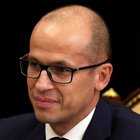
Alexander Brechalov also spoke about support provided to the Lutuginsky District in the Lugansk People's Republic, which the republic assists. Last year, to mark the 80th anniversary of Victory, a major memorial in the district was renovated, and, at the residents’ request, an Eternal Flame was installed. Schools and kindergartens in the district are also receiving assistance with equipment and textbooks.
The Head of Udmurtia also reported on the progress in addressing issues raised by residents during the Direct Line with Vladimir Putin. Key areas of attention include social policy, infrastructure development, and the economy. According to Mr Brechalov, demographic development remains the primary challenge for the region. Since January 1, in addition to the federal maternity capital programme, a regional maternity capital payment of 300,000 rubles has been introduced for families having a third or subsequent child, as well as for young families under the age of 35. Infant mortality rates are declining, and medical institutions continue to receive modern equipment. The number of large families is increasing and currently exceeds 34,000. In 2025, their number grew by nearly 5,000 compared to 2024.
Vladimir Putin recalled that, during the Direct Line, residents of Udmurtia had pointed out the relatively high number of schools where children study in a second shift, among other issues. Alexander Brechalov noted that this problem mainly affects the republic’s capital, Izhevsk, where no new schools were built between 1999 and 2017. Several large school construction projects are currently planned, and the situation is expected to improve in the coming years.
Alexander Brechalov recalled a remark made by the President during their previous meeting regarding the low staffing levels in ambulance services. Overall, the republic has a fairly good level of medical staffing, with an indicator of 0.85, but emergency medical services had indeed been lagging behind. The situation is improving: as of January 2025 there were 7.5 specialists per 10,000 residents, while the figure has now risen to 8.
More broadly in healthcare, a modern outpatient clinic has opened in Sarapul that will serve around 80,000 people. Major renovation work continues at the interdistrict hospital in Glazov, which will provide medical care for about 180,000 residents. In addition, hospitals, outpatient clinics and paramedic stations across the republic are undergoing major refurbishment.
Another point of particular pride is that, with support from the federal centre, specialists in the republic are mastering new types of medical procedures. Last year, for example, eight kidney transplants were performed, as well as four minimally invasive heart surgeries.
The discussion also covered sport. Last year, the Arena Universal Sports Palace opened in Izhevsk with over 1,000 children and adults training there. Stadium renovation is continuing, and sports and fitness centres are being established in rural areas.
Alexander Brechalov also outlined the main flagship projects planned for 2026–2028. Under the Comprehensive Development of Rural Areas programme alone, farmers in Udmurtia will receive 4.5 billion rubles throughout 2026. The programme includes road construction, not only public roads but also access roads to farms, as well as landscaping and amenities, housing and utilities, and workforce support.
Among the achievements of the agricultural sector last year, he cited the production of 1.11 million tonnes of milk and the creation of new robotic farms. Agricultural exports grew by 48 percent over the year, expanding not only to neighbouring countries but also to markets such as Egypt, Mongolia, China and Saudi Arabia.
Another area discussed was housing and utilities. Federal support has been provided under the Utilities Infrastructure Modernisation programme. This year, funds are being directed to address the most critical issues in Sarapul, Mozhga and Balezino as quickly as possible, particularly in heating and wastewater systems.
Alexander Brechalov also reported that 80 percent of all communities have been connected to the gas network. Over the past five years, 58,000 families have gained access to gas. Plans agreed with Gazprom for 2026 have been approved and will be carried out.
He also noted strong results in housing construction, with 1.24 million square metres completed. The programme to relocate people from dilapidated and unsafe housing has been largely fulfilled. Responding to the President’s question, he confirmed that the amount of dilapidated and unsafe housing is steadily declining.