


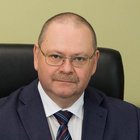
Oleg Melnichenko began his report on the results of his five years as governor by highlighting steady growth of the gross regional product. While gross regional product (GRP)stood at around 272 billion rubles in 2021, its growth is projected to exceed 1 trillion rubles by 2029 and reach approximately 1 trillion 140 million rubles by 2030.
According to the governor, despite certain economic turbulence, the region has maintained a positive industrial production index. The volume of shipped goods increased from 530 billion rubles in 2024 to 577 billion rubles in 2025. This growth has supported rising wages: the average salary in industry has climbed from 67,292 rubles at the end of 2025 to 76,508 rubles, while unemployment remains low at 1.5 percent as of January 1, 2026.
Addressing the agricultural sector, which is essential for the Penza Region, the governor noted that the region has prioritised bringing unused land back into cultivation. Arable land has now reached 2,198,000 hectares, nearly restoring the levels seen during the Russian Soviet Federative Socialist Republic period. A total of 87,400 hectares has been returned to agricultural use. Remaining lands are largely low-quality or forested, and the governor proposed transferring them to the State Forest Fund rather than attempting to cultivate them, an initiative supported by the Ministry of Natural Resources and the Federal Agency for Forestry.
Oleg Melnichenko also reported expanding the cultivation of winter and spring grains, forage, and industrial crops, with solid yields. The governor added that the Penza Region continues to be a sugar-producing area, with three major sugar factories in operation. Sugar beet yields rose from 44.1 tonnes per hectare in 2022 to 46.5 tonnes in 2025, while average grain yields reached 3.95 tonnes per hectare.
Oleg Melnichenko also spoke about a major investment project to expand turkey meat production. Work on this programme began in 2021. The flock has now reached six million birds, an increase of one million over the period. While deep processing of turkey amounted to just 3,000 tonnes in 2021, it has now reached 31,000 tonnes.
Looking ahead, there are currently 649 large poultry yards located at large feeding grounds, with plans to increase this number to 850 by 2030. The Governor emphasised the strong export potential of turkey products: 40 percent of output is exported to Southeast Asia, Africa, Latin America and the Middle East.
In addition, Mr Melnychenko noted that a number of other agricultural projects are underway, including the MOLKOM project. This dairy plant is undergoing a major upgrade, with state participation, to launch the production of lactose-free infant milk products.
The governor identified as a strategic objective for the Government of the Penza Region the achievement of processing 70 percent of all agricultural output produced in the region.
In industry, a major investment project by Ultradecor is under implementation, focused on the production of particleboard (PB) and laminated particleboard (LPB), with investment of around 12 billion rubles. The Governor also highlighted SV Mebel, an office furniture manufacturing cluster. The region accounts for 25 percent of Russia’s production and market in this segment. A large production and logistics centre is being developed for the cluster, with investment of approximately eight billion rubles, featuring a high level of automation and robotics and based on advanced technologies.
He also referred to MedInzh, which produces artificial heart valves and stents for cardiac surgery. The company currently holds around 70 percent of the Russian market for such products. This reflects import substitution following the departure of US manufacturers. As part of import substitution efforts, the governor also mentioned the GRAZ project for the production of petrol station equipment. These projects offer significant prospects for the Penza Region.
The discussion also covered another key project for Penza – the reconstruction of the airport complex. The project envisages a facility of around 10,000 square metres with a capacity of up to 700,000 passengers per year. Design and cost documentation has already been completed, and preliminary survey work may begin later this year.