


President of Russia Vladimir Putin: Good afternoon, Ms Moskalkova.
I understand you have much to share regarding your work over recent years, particularly the ten years you have served as Human Rights Commissioner of the Russian Federation as well as the results achieved over the past year. Where would you like to begin?
Human Rights Commissioner Tatyana Moskalkova: Let us begin with the past decade.
Vladimir Putin: Please.
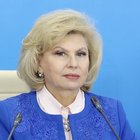
Tatyana Moskalkova: In accordance with the law, I am presenting to you my annual complete report as Human Rights Commissioner of the Russian Federation.
First and foremost, I would like to convey words of gratitude from the entire community of human rights commissioners, and you can see the entire community. At one of the Russian Coordinating Council meetings, you said that you considered us your allies, and we have sought to live up to that trust.
Over the past ten years, demand for the institution has nearly tripled. This is reflected in the number of appeals we have received: from 42,500 in 2016 to nearly 129,000 today. This demonstrates both public trust in state human rights defenders and a growing demand for the protection of citizens’ rights. Our efficiency has also increased significantly: nearly twenty-twofold over the decade.
Vladimir Putin: Nearly 700,000 appeals over ten years?
Tatyana Moskalkova: Around 700,000 people contacted us, but we were able to assist approximately two million individuals, because many cases affected entire groups. For example, when residents of unsafe or deteriorating housing sought help, each request often represented dozens of families, not just one person. We are very glad that we have built this system on strong cooperation with federal agencies, municipal authorities, and our network of regional human rights commissioners.
Of course, we must continue improving staff professionalism, because the Human Rights Commissioner does not possess binding legal authority. Instead, the office relies on the power of persuasion, convincing institutions to reconsider or correct unjust decisions.
Recently, I received an appeal from university faculty members in the Donetsk and Lugansk people’s republics. They had been participating in a preferential mortgage programme with a two percent interest rate. However, after their universities became branches of Moscow or other federal universities, they were moved into the general mortgage scheme, under which their rates would have risen to 20 percent.
Vladimir Putin: Do they still live where they originally lived?
Tatyana Moskalkova: Yes, they continue to live and work under the same conditions. I raised the matter with the Ministry of Finance and presented the relevant reasoning. They listened, and amendments to the applicable regulations have now been introduced. Justice has been restored.
Vladimir Putin: Excellent.
Tatyana Moskalkova: Over these past 10 years, I have repeatedly turned to you, Mr President, on the most difficult issues, and thanks to your instructions and clear directives, unconventional solutions were found to extremely complex problems. This made it possible to preserve housing for 20,000 families with foreign currency mortgages, for Russian citizens subject to resettlement from Baikonur, and for Navy servicemen.
Vladimir Putin: In Sevastopol.
Tatyana Moskalkova: Exactly. Their registration had been terminated on entirely lawful grounds because they could no longer reside in those military communities, but you found a solution to restore both their registration and their housing rights. They are deeply grateful to you for that decision.
Among your more recent instructions was the introduction of free vocational secondary education for returning special military operation participants, and that decision has already been adopted. A decision has also been taken regarding the widows of special military operation participants, allowing them to use family cars before inheritance rights formally take effect. A solution was found following your instruction. And there have, of course, been many such cases. Hundreds of thousands of people have effectively been rescued from extremely difficult life situations.
Vladimir Putin: Inheritance rights there only take effect after six months, correct?
Tatyana Moskalkova: Yes, of course.
Vladimir Putin: Under the law, inheritance proceedings begin after six months, as do inheritance rights themselves.
Tatyana Moskalkova: You wrote a unique resolution on my letter: “I know the Civil Code, and inheritance law as well – find a solution.” And one was found. The law has been adopted. Women are, of course, very grateful that you became involved in resolving this issue.
Today, legislation is constantly being fine-tuned. Under the federal constitutional law, it is our duty, when working with citizens’ appeals, to identify systemic problems and approach lawmakers with proposals to improve legislation.
But I would like to mention one thing in particular: the Federal Law On Human Rights Commissioners in the Constituent Entities of the Russian Federation, which you signed in 2020. It was the first law of its kind in the history of the Russian state, and it made it possible to unify approaches to state legal protection, strengthen guarantees of citizens’ rights, and enable our regional human rights commissioners to work more effectively.
Of course, we have also engaged in promoting awareness. At our initiative, a module entitled “Rights and Responsibilities” is now taught in upper secondary school as part of the social studies curriculum.
And naturally, we have almost completely reformatted our international activities. We withdrew from integration associations that operated using double standards and sought to impose their own rules on us. Our experience has attracted considerable interest. Today, we work within the framework of the Eurasian Alliance of Ombudsmen, which had four participants in 2016–2017, and now has 11. Every year – and thank you for your support – we hold an international conference devoted to the best practices exchange. Last year, despite extremely difficult logistics, representatives of 64 countries and international organisations attended. We can clearly see that our experience is attracting strong interest.
The work of the CIS Human Rights Commission, established on your initiative together with six other heads of state, is now fully operational. Last year, I had the honour of presenting the Commission’s results at meetings of the Council of Heads of State and the Interparliamentary Assembly.
A scientific and educational centre for human rights has also been established. In addition, the Federal State Information System, launched last year, has simplified the process of handling citizens’ appeals, enabling requests to be processed and correspondence to be handled more swiftly. At the same time, nothing can fully replace direct human interaction.
I would also like to express my special gratitude for the Human Rights House. The building had remained closed for nearly 20 years, but today it has been transformed into a remarkable facility, allowing video conferences to be conducted from virtually any room. This photograph shows us during a video conference with residents affected by flooding in the Republic of Daghestan. Everyone had the opportunity to speak directly about their concerns. We responded promptly by arranging deliveries of water and other humanitarian assistance. It is truly a great achievement to have such a beautiful and technologically advanced centre. I believe there is no comparable facility anywhere else in the world.
Mr President, during the special military operation, our primary focus has been on supporting the families of those participating in the operation, as well as our servicemen themselves. We established a hotline and developed a dedicated action plan based on the principle of direct engagement with families – discussing their circumstances, clarifying their needs, and doing everything possible to provide assistance.
During this period, thanks to close cooperation with the Defence Ministry, the FSB, and our special services, we were able to establish a highly complex yet productive framework of interaction with the Ukrainian side regarding mutual visits to prisoners. The goal has been to minimise the risk of abuse, humiliation, and the use of unlawful methods. We also organised the delivery of care packages to prisoners, as shown here in the photograph taken at the camp – our servicemen received warm clothing, food, and, perhaps most importantly, letters and postcards from home. But above all, what matters most is bringing people back. And this work is producing results.
We take part in exchange initiatives organised by the Defence Ministry and our special services. Last Easter, for example, an exchange was arranged so that each of our servicemen could receive Easter bread, holy water, and the opportunity to speak with a priest. We arranged the same [for the Ukrainian PoWs].
Work is also underway to locate missing persons. In order to improve coordination and enhance the effectiveness of this effort, I visited the Central Tracing Agency of the International Committee of the Red Cross in Geneva. With their assistance, as well as with the support of the Ukrainian Ombudsman, we have been able to successfully locate individuals in camps and hospitals. During one of the recent exchanges, there was a serviceman whose wife had already received the official notification of his death. However, she contacted us and said, “We do not believe it and we will continue searching.” We joined the effort, found him, and he was able to return home. There have been many such cases. This work must continue in close cooperation with our Defence Ministry and special services.
I would also like to express special gratitude to our fraternal Belarusian people. These prisoner exchanges are taking place today at the Belarusian-Ukrainian border, but Belarus has done far more than simply provide a venue. They have helped create the necessary atmosphere and conditions, and in some cases have taken concrete steps to facilitate the process.
I would also like to acknowledge the work of Vladimir Medinsky, who assisted in securing the return of civilians and in ensuring that the exchange procedures moved forward as planned. Of course, one of the greatest moments of relief was the return of 165 residents of the Kursk Region [who had been abducted]. The exchange process began with a large group, but over time the numbers became smaller and negotiations increasingly difficult. Every stage required tremendous effort. I appealed to the Pope, asking him to help convince the other side that civilians must not be held hostage. I also appealed to United Nations High Commissioner for Human Rights Volker Turk and to other international bodies.
But the most important lesson is that when humanity is placed above all else, progress becomes possible. It is essential that these efforts continue.
We have also been working on family reunification, which is an especially difficult process. The border remains closed; many people’s documents have expired. Nevertheless, we have been able to reach the necessary agreements. In this work, we are grateful to our border guards and the FSB Border Service, which open the border specifically for these small groups of people and, under our responsibility, allow people to cross and reunite with their families and loved ones. At the same time, we continue to work closely with governors, local authorities, and our regional commissioners.
Vladimir Putin: Do you remember how many children were transferred to Ukraine?
Tatyana Moskalkova: You mean for family reunification?
Vladimir Putin: Yes.
Tatyana Moskalkova: In total, around 20 children were transferred through the Office of the Human Rights Commissioner alone. The Children’s Rights Commissioner has also been actively involved and is helping reunite families as well.
Vladimir Putin: This work must be continued.
Tatyana Moskalkova: Of course, absolutely.
Vladimir Putin: And how many of our children have returned?
Tatyana Moskalkova: Slightly fewer children have returned to Russia. In most cases, elderly parents remained there while the children were here. But seven children were also brought back to Russia for reunification.
Vladimir Putin: To Russia?
Tatyana Moskalkova: Yes, to Russia.
Vladimir Putin: Good.
Tatyana Moskalkova: We encountered a truly unique case two years ago, when mothers from Donetsk contacted me regarding their children who had been taken to Germany. At first, it was difficult to believe that such a situation could even occur. As it later became clear, during our advance and the liberation of occupied territories, Ukrainian forces had used schools, kindergartens, and boarding institutions as defensive positions, while the children were evacuated through Lvov, and, in this particular case, to Austria. We were able to locate the children of these two mothers and, with the assistance of our Foreign Ministry as well as the Turkish and Austrian ombudsmen, successfully arranged for their return home.
Today, 22,000 people remain in temporary accommodation centres across Russia. Of these, around 15,000 are those who arrived from Ukraine before and after the start of the special military operation and later obtained Russian citizenship. However, because they do not have permanent registration, they are unable to apply for housing assistance. I have prepared an appeal for you proposing a special mechanism that would allow these people either to participate in state support programmes or to obtain registration.
Vladimir Putin: Good. I agree, this is a very important issue.
Tatyana Moskalkova: And of course, Mr President, what we traditionally refer to as citizens’ appeals also remained in our field of attention – appeals from people dissatisfied with decisions taken by government bodies or officials. These concern social welfare, as well as socioeconomic, cultural and political issues.
Using the mechanisms available to us, we managed to help 86,000 people obtain housing, especially low-income citizens and former orphans who are now adults and who, despite having court rulings confirming their right to housing, had been unable to secure it for various reasons. We appealed to courts, including through administrative lawsuits, and succeeded in obtaining positive decisions.
We also provided assistance on issues related to relocation from unsafe housing, the recognition of housing as unfit for habitation, the elimination of illegal dumping sites, as well as matters concerning healthcare and education. We will, of course, continue this work, or at least my successors will continue it.
Traditionally, the largest number of appeals still comes from participants in criminal proceedings and people held in detention facilities. However, both in these areas and in social matters, we have seen a steady decline in the number of complaints over the past four years. For example, complaints about detention conditions have fallen sixfold, while social complaints have decreased by a quarter. This is, of course, the result of national projects, targeted assistance measures, and the strong framework of social support available to people.
At the same time, most complaints concerning criminal proceedings relate to refusals to open criminal cases, excessively long investigations, and the fairness of court rulings. In most cases, reviews ultimately confirm that the decisions were lawful, but there have also been rulings overturned following our appeals, including by the Supreme Court and prosecutorial oversight bodies. We will continue working in this area.
As for social issues affecting special military operation participants, many problems are linked to delays in referrals to military medical commissions. Payments are being made, but the timeframes are often excessively prolonged. There are also issues with restoring documents, including certificates confirming participant or combat veteran status. We examine every case individually, work to resolve it, and in most instances we succeed.
Vladimir Putin: The work is extensive and multifaceted. I would like to thank you for everything that has been done over all these years – you and all the people working alongside you, those standing beside you and dealing with this entire range of complex and highly sensitive issues affecting people.
Thank you very much.
Tatyana Moskalkova: Thank you very much as well. I would also like to thank our Great Russia for the trust placed in us and for the opportunity to create this institution of state human rights protection, with its own identity, capabilities and assistance to people. And of course, Mr President, many thanks to you for your help and support.
Vladimir Putin: Thank you.
<…>