


President of Russia Vladimir Putin: Good afternoon, comrades.
Today we are holding a regular working meeting to assess the current situation in the special military operation zone, as well as to review and evaluate the latest combat results.
The Chief of the General Staff provides reports on the situation on a nearly daily basis. In this regard, I would like to note that the formations and military units of the Joint Force are carrying out their assigned tasks in accordance with the plans of the General Staff of the Armed Forces.
The liberation of the Lugansk People’s Republic has recently been completed in full. Meanwhile, operations to eliminate formations of the Armed Forces of Ukraine in the Donetsk People’s Republic, as well as in the Zaporozhye and Kherson regions, are underway. The establishment of a security zone in the border areas of the Kharkov, Sumy, and Dnepropetrovsk regions of Ukraine is also progressing according to plan.
Enemy forces are attempting to maintain their positions, but under the pressure of our troops they are sustaining heavy losses and are being forced to withdraw.
Since the beginning of this year, Russian forces have liberated 133 settlements and established control over more than 3,000 square kilometres of our territory in Donbass and Novorossiya.
Today’s discussion will focus on developments in the areas of responsibility of the North and South groups of forces. We will also review the results of combat missions carried out by other formations and military units.
In addition, during a restricted attendance meeting, as previously agreed with the Chief of the General Staff, we will examine the tasks assigned to the Joint Force for the summer period and discuss the most pressing issues related to supporting ongoing offensive operations.
But first, before we proceed to the commanders’ reports, I ask the Chief of the General Staff, in accordance with established procedure, to provide an overview of the general situation in the special military operation zone.
Please begin, Mr Gerasimov.
Chief of the General Staff of the Russian Armed Forces and First Deputy Minister of Defence Valery Gerasimov: Comrade Supreme Commander-in-Chief,
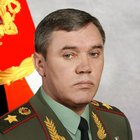
The troops of the Joint Force continue carrying out their mission during the special military operation to liberate the Donetsk People’s Republic and the Zaporozhye and Kherson regions.
In June, 29 settlements and a total of 636 square kilometres of territory were liberated.
Unable to achieve results on the battlefield, the Kiev regime is making attempts to persuade its Western sponsors that it has regained the initiative and made significant advances. To achieve this goal, the Kiev regime is conducting an information campaign highlighting the alleged successes of AFU formations while concealing territories liberated by Russian troops by describing them in neutral terms as “moved into the grey zone.”
At the same time, units and formations of the Joint Force continue advancing in every operational direction. The fastest rates of advance have been recorded in the areas of responsibility of the North and East groups of forces.
The North group of forces, advancing simultaneously along several axes, continues expanding the security zone in Ukraine’s Sumy and Kharkov regions bordering the Russian Federation. Progress is being made toward Sumy and in the vicinity of the village of Bely Kolodez in the Kharkov Region. In June, eight settlements came under Russian control.
The West group of forces continues advancing along a broad front within its area of responsibility in the Kharkov Region and the northern part of the Donetsk People’s Republic.
In the Kupyansk direction, the enemy continues efforts to retake previously lost positions. To support this objective, it has redeployed 11 additional battalions to the area, including units from two marine brigades. These forces have repeatedly attempted to break into Kupyansk and push our units back across the eastern bank of the Oskol River, but without success. Ukrainian forces have suffered substantial losses: since May 10, some 2,500 Ukrainian servicemen, including more than 550 marines, as well as 772 pieces of weapons and military equipment have been destroyed in this sector.
Operations to eliminate enemy formations on the eastern bank of the Oskol River south of Borovaya are continuing. Four settlements – Sheykovka, Novy Mir, Cherneshchina, and Druzhelyubovka – have come under our control. Street-to-street fighting is ongoing in Podliman. The liberation of Krasny Liman, a key administrative centre and major railway hub, is approaching completion. Its capture is of significant logistical and operational importance for the continued offensive in this direction.
The South group of forces continues offensive operations aimed at liberating the Donetsk People’s Republic. Units of the group liberated the town of Konstantinovka, one of the enemy’s principal defensive strongholds within the Slavyansk–Kramatorsk–Konstantinovka fortified area.
In addition, in June, elements of the 3rd Army, advancing toward Slavyansk and Kramatorsk, took control of four more settlements.
Heavy fighting continues in the Centre group of forces’ area of responsibility. Its formations and units are advancing north of Krasnoarmeysk, with the front line now approximately 8.5 kilometres from the city’s outskirts.
Kutuzovka, Vasilyevka, and Novy Donbass were liberated in June. Forward units of the Centre group entered Dobropolye and Annovka. Fighting continues in Belitskoye, Shevchenko, Sergeyevka, and Krasnoyarskoye. Meanwhile, part of the group continues operations to establish a security zone in the Dnepropetrovsk Region, while combat is underway to capture Novopavlovka.
Troops of the East group of forces continue to maintain the initiative across their offense sector and are advancing in the Zaporozhye and Dnepropetrovsk regions.
On the northern right flank of the group’s area of responsibility, formations and units of the 29th Army repelled attempts by Ukrainian assault units to penetrate Russian defensive positions. After thwarting the enemy’s effort to halt our offensive in this sector, the group resumed its advance in the southern part of the Dnepropetrovsk Region, expanding the security zone. In June, Bogodarovka and Novoskelevatoye were captured in this direction, and on July 2, Alexandrovka was liberated. Fighting continues in the large settlement of Velikomikhailovka.
Along the group’s main axis of advance, troops of the East group continue to push westward on a broad front in eastern Zaporozhye Region. Approximately 115 square kilometres of territory came under Russian control in June. The settlements of Komsomolskoye, Novoselovka, Lesnoye, Rovnoye, and Kopani were liberated. Fighting continues in the village of Lyubitskoye.
Units of the Dnepr group of forces are conducting offensive operations in the Zaporozhye direction. The command of the Ukrainian Armed Forces sought nothing less than to halt Russia’s advance by regaining control of territory around the villages of Primorskoye and Stepnogorsk. For this purpose, some of Ukraine’s best-trained and most motivated special operations forces of the main intelligence directorate, together with foreign mercenaries, were dispatched. All enemy attacks were repelled.
Assault units of the Dnepr group of forces continue to increase the pace of their offensive. Advance groups have now pushed forward to within nine kilometres from the southern outskirts of Zaporozhye, engaging Ukrainian positions within the city limits. Fighting is also ongoing in Orekhovo and Preobrazhenka.
In addition, in accordance with the General Staff’s operational plan, Russian forces have continued to carry out large-scale and coordinated strikes against Ukraine’s military-industrial complex and the energy infrastructure supporting it. In June, five large-scale strike operations were conducted, targeting 55 facilities across Ukraine, including 34 military-industrial enterprises involved in producing Flamingo cruise missiles, long- and medium-range unmanned aerial vehicles, robotic systems, and electronic warfare equipment; as well as 10 airfields used to base Ukrainian combat aircraft; and five fuel and energy infrastructure facilities.
During the night of July 1–2, the Russian Armed Forces carried out another large-scale strike using long-range precision-guided weapons and attack drones against military-industrial facilities in Kiev. The strike damaged five key Ukrainian aviation and electronics enterprises manufacturing long-range UAVs, cruise missiles, and related components.
In addition to this, the strike damaged a logistics centre; four fuel and energy facilities; and infrastructure at five military airfields. As a result, the strike has substantially reduced Ukraine’s industrial capacity to manufacture long-range weapons, including cruise and ballistic missiles, which has also increased the Kiev regime’s dependence on Western supplies of components, explosives, and fuel.
Comrade Supreme Commander-in-Chief,
The formations and military units of the Joint Force will continue carrying out their assigned missions to liberate Donbass and Novorossiya in accordance with the approved operational plan.
The report is over.
To be continued.