


Oleg Belozerov: Mr President,
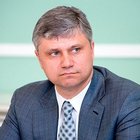
First of all, I would like to thank you for your continued attention to and support for railway workers. Your backing serves as a powerful source of motivation for the entire Russian Railways team as we work to achieve the country’s national goals and objectives.
Russian Railways’ key strategic priorities remain safety, reliability, and sustained development, ensuring steady, uninterrupted growth.
Vladimir Putin: Are your investment programmes now 45 percent complete?
Oleg Belozerov: Yes, and they are currently being implemented. Following the reallocation of certain funds, we have increased this year’s investment volume in order to deliver on the additional tasks you set, including work on the Eastern Operating Domain and the procurement of additional locomotives.
But first of all, I would like to emphasise that Russian Railways is the safest and most reliable railway system in the world. According to the International Union of Railways, our safety performance is three times better than the global average. In terms of the number of accidents per million train-kilometres, we are also twice as safe as the United States. These results are made possible by the dedication of our workforce – the largest in Russia. Today, the Russian Railways Group employs 851,000 people.
Vladimir Putin: But you have reduced your workforce, haven’t you?
Oleg Belozerov: Yes. That is part of a separate effort to improve labour productivity. We never reduce staff without first achieving the necessary technological improvements. Workforce reductions occur naturally, as employees retire. We value our people highly, and the overwhelming majority continue working with the company.
Vladimir Putin: And wages have increased by more than 8 percent, haven’t they?
Oleg Belozerov: Yes, Mr President. The average salary across Russian Railways has now reached nearly 119,000 rubles.
At the same time, the company is stable, not only economically but also financially. We can report a profit and also a very good Net Debt-to-EBITDA ratio of 3.3.
Vladimir Putin: Is it correct that your operating revenue amounts to 1.7 trillion rubles?
Oleg Belozerov: Yes, Mr President, it is our revenue for the first six months of the year, which is a substantial increase.
The beginning of this year was not very good for us because of the weather, as you know, because you are regularly updated. But we have seen strong growth since March, and our tariff freight turnover started growing year on year and against our plans. Very good results – a growth of 4.5 percent – were reported in June.
Vladimir Putin: A growth of what?
Oleg Belozerov: A growth in freight turnover.
Vladimir Putin: But the volume of freight has decreased.
Oleg Belozerov: Yes, Mr President, freight turnover has increased because the haul distance has increased and the destinations have changed. Besides, freight turnover does not include transit cargo, the volume of which is growing, but it is not included in freight turnover.
We can also report good figures for export shipments, which increased by over 3.4 percent from January to June.
Vladimir Putin: What has increased?
Oleg Belozerov: Export shipments.
In June, export shipments increased by over 4.4 percent, namely freight transportation via the North-South International Transport Corridor, and container transportation, which grew by over 13 percent in June [year on year]. We plan to report record figures for container transportation this year.
Meanwhile, friendly countries account for over 93 percent of transportation. Our mutual shipments with China are growing too. We report record figures every year, and growth has become consistent thanks to the agreements you have signed. The increment this year is 5.5 percent, which means that we will set a new record. Freight traffic is also increasing with Belarus (by 3 percent) and EAEU countries.
At the same time, the share of unfriendly countries is seriously decreasing. Shipments with Finland have slumped by nearly 25 percent and with Estonia by 42 percent. In other words, our interaction is limited.
Thank you very much for your decision regarding the Eastern Operating Domain. All of the original targets have been confirmed, including a freight capacity of 180 million tonnes, which will be fully achieved this year. We are also seeing growth in exports of non-coal cargo. It is not just coal – our overall cargo base is expanding. In line with your executive order, shipments of grain, fertilisers and containerised cargo are increasing. These are precisely the high-value cargoes transported along this route. At the same time, we are fully implementing your instructions under the agreement on coal shipments from the Kemerovo Region.
Vladimir Putin: Do not forget the miners. I understand that the company needs to generate profits and transport the cargoes that bring in the highest returns. That is perfectly understandable.
Oleg Belozerov: Mr President, we are implementing those instructions without fail.
You declared the current year the Year of Unity of the Peoples of Russia. For our part, we proposed an initiative that reflects what defines our country best – passenger rail transport. Accordingly, we have designated 2026 within Russian Railways as the Year of the Passenger to further promote domestic passenger services. During the first six months of this year alone, we carried 625 million passengers, an increase compared to the same period last year. As a reminder, last year was an all-time record, with 1.311 billion passengers transported.
Vladimir Putin: Does that figure include both suburban and long-distance services?
Oleg Belozerov: Yes.
Vladimir Putin: And if you break it down?
Oleg Belozerov: Long-distance services have seen a slight decline, while suburban services have posted solid growth. The increase in suburban traffic reflects investment in transport hubs. In accordance with your instructions, virtually all suburban routes have been preserved. We work closely with the regions, and these services remain in high demand.
We continue to make support for participants in the special military operation a priority. We have launched the No One Left Behind project in cooperation with the Defenders of the Fatherland Foundation. We currently operate 36 tours across 10 routes, enabling nearly 7,000 participants in the special military operation and their families to take advantage of our travel programmes. Our railway company’s medical service is also performing very well: more than 21,000 participants in the special military operation, including our own employees, have received medical care through our healthcare system.
Vladimir Putin: Thank you. Please continue this work.
Oleg Belozerov: We certainly will, Mr President. We are continuing to expand this cooperation.
You have noted that the workforce at Russian Railways appears to be in decline, but we are offsetting this through gains in labour productivity.
Vladimir Putin: Through the introduction of new technology.
Oleg Belozerov: Indeed, from a systemic standpoint, over the past 15 years, labour productivity has doubled in technological terms – based on technical performance metrics – and has quadrupled in economic terms, specifically in terms of ruble-denominated output per unit of production and transport activity. Accordingly, we regard ourselves as a leader in this respect, and we are actively engaging with the Government on this front.
Vladimir Putin: That’s right. That’s right, you are one of the leaders, and you are succeeding.
Oleg Belozerov: Thank you very much.
On the technology side, I would emphasise that we are the most capital-intensive enterprise in the country. This is particularly true of our infrastructure: the more efficiently it is utilised, the stronger our operational performance. To that end, we need to run trains at higher speeds and with shorter headways. We are reducing the interval between trains from 12–15 minutes to 3–4 minutes, and we are currently trialling this in passenger operations.
At the same time, we have already reduced freight headways to 7 minutes on the Eastern Operating Domain, and we are now aiming to set new benchmarks in passenger traffic. These improvements should deliver traffic growth of several tens of percent and a corresponding rise in efficiency. We are making steady progress: on the Moscow – Adler route, which was tested last year without passengers, we successfully achieved a 4‑minute interval, and we will be rolling this out gradually.
Vladimir Putin: Good.
Oleg Belozerov: Mr President, turning to your instruction on the development of quantum communications: this is proceeding according to plan, in line with the agreed roadmap. To date, we have laid 7,800 kilometres [of quantum trunk network], connecting 27 regions and 13 cities with populations of over one million.
We have completed the technical groundwork, obtained the necessary certification, and are now moving into the service provision phase. We are monetising this offering directly. The service is primarily focused on securing the backbone channels and communications networks of our holding company’s structures, and we are already working with any organisation that requires enhanced information security.
Thank you for entrusting us with this exciting initiative. Mr President, I would like to assure you that we will deliver on all the objectives that you will set.
Vladimir Putin: Work on quantum technologies is, of course, very important, and I hope it will also be profitable.
Oleg Belozerov: My colleagues and I also recognise that, given the current environment, in which cybersecurity is reaching an entirely new level – we laid a strong strategic foundation some time ago that will now enable us to safeguard our networks effectively. We hold a substantial volume of data and are already putting the system to use, with very encouraging results.
Vladimir Putin: Good. Thank you.
<…>