


The meeting was devoted to the performance of the Russian judicial system in 2025 and goals for 2026.
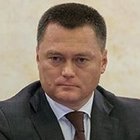
President of the Supreme Court Igor Krasnov delivered a report.
* * *
President of Russia Vladimir Putin: Good afternoon, colleagues.
Today, just like every year, the agenda for this annual meeting will focus on important topics that matter not just for the judiciary but for all people across the country. I am referring to the essential and instrumental role of the judicial authority.
It is my hope that through your efforts, you will succeed in coming up with solutions for addressing present-day challenges. It goes without saying that there are still quite a few challenges of this kind, as is always the case for any major undertaking.
Let me emphasise that all steps in this direction must contribute to strengthening and developing the judiciary by enhancing its legitimacy, improving performance and ensuring its accessibility. We know very well that being able to produce well-grounded and fair verdicts has a direct bearing on human destinies, as well as on whether people and society in general trust not only the judicial system, but also the authorities in general.
The heavy workload the judges face is one of the most serious challenges. Of course, being constantly pressed for time and facing an excessive workload has a negative effect on performance, forcing judges to overlook the people they deal with.
There are measures underway to manage this workload. Last year, the number of cases in the courts of original jurisdiction declined for the first time, with a 20 percent decrease. Moreover, this was true for almost all types of cases. There is no doubt that this is largely attributable to the increase of state duties in September 2024 for cases filed with general jurisdiction courts, magistrates and commercial courts.
As for criminal cases, there is no doubt that the effort to humanise criminal law has helped reduce this workload.
In addition, the extra-judicial procedure for recovering mandatory payments and other penalties was introduced in November 2025 and could contribute to reducing the workload in administrative cases.
At the same time, as we know well, we lack judges – about 15 percent in the federal courts of general jurisdiction and commercial courts. I know that these matters – I mean the issue of recruiting people with a high level of competence to work as judges – are among the key topics on your agenda.
We live in an age of technological and digital transformation across many spheres of life, a process that is proceeding in nearly all areas. This leads to the development of new legal situations and new disputes. That is why candidates to judicial positions should be selected from the most qualified lawyers, capable of deftly meeting modern technological challenges and reacting to the dynamic development of legislation in all spheres and sectors.
The Supreme Court and the bodies of the judicial community should maintain the high standards on the basis of which candidates are selected. In 2025, 2,763 judges were appointed to federal courts of general jurisdiction, and 423 judges were appointed to federal commercial courts.
I believe that we should make broader use of the institution of mentorship, attracting the most experienced judges to share knowledge and basic principles of judicial culture and ethics with younger generations of justices.
It is worth supporting the initiative of President of the Supreme Court Igor Krasnov on the redistribution of judge vacancies specifically within the limits of the total approved number of judges in favour of the regions where judges have been working at maximum capacity for a long time.
Strengthening the potential of the courts created in our historical territories is an important personnel and managerial task. One hundred courts have been created in these regions. The number of cases they heard last year increased for all types of legal proceedings, including by 35 percent for criminal and civil proceedings, and 56 percent for administrative cases. The number of cases heard at commercial courts has increased by 40 percent. The judges in these territories, as well as in the border areas of the Belgorod and Kursk regions, are working in difficult conditions that sometimes involve risk to their lives, yet they have demonstrated the best professional and human qualities. I would like to use this occasion and this audience to express gratitude to them for their loyalty to the profession and their dedication to their duties.
(Applause)
Colleagues,
I would like to emphasise the special importance of the plenary meeting and the Presidium of the Supreme Court in formulating clear, systemic and timely legal positions, for improving judicial practice and ensuring consistency in the application of law. As a result, we minimise the subjective interpretation of legal norms by the lower courts and, which is especially important, improve the certainty of court decisions. Taken together, this directly influences the stability and quality of the application of law and helps reduce the number of judicial errors.
I would like to point out that the development of uniform judicial practice is only possible if judges strictly comply with the decisions of plenary meetings of the Supreme Court, and each case of disregard must receive a principled assessment. I believe that we should consider the possibility of creating an effective system monitoring compliance with the decisions of plenary meetings at the Supreme Court. The consistent application of law is a common goal, a guarantee of quality and a significant factor in the competitiveness of the national jurisdiction.
Incidentally, your colleagues beyond Russia have provided a very good reason for highlighting the quality of Russian jurisdiction. Many of our compatriots, who relied on the unbiased and objective nature of the foreign judicial system, have found quite the contrary.
A key priority for our courts is the protection and observance of citizens’ social rights, above all ensuring the legal rights of those participating in the special military operation, as well as their families. I understand that the Supreme Court has set out clear legal positions on the guaranteed benefits and compensation due to the families of our fallen heroes. Furthermore, we must continue to pay close attention to the judicial protection of women, children, large families, disabled people, and other vulnerable groups.
I also want to say a few words specifically about the courts’ efforts to humanise the application of criminal law. In this connection, a number of legislative initiatives from the Supreme Court were implemented last year. These included broader use of suspended sentences for pregnant women, for single parents (men and women) with a child under 14, and also restrictions on remanding women with young children, individuals with serious health conditions, and those suspected or accused of non-violent crimes in custody.
The number of cases in which pre-trial detention was imposed fell by 6.2 percent, while the use of house arrest increased by 2 percent. This suggests a slight shift away from custodial measures that restrict the right to liberty. There has also been a noticeable rise in the use of alternative sentences in criminal cases: suspended sentences, fines, community service, and so on.
I have the figures here, though of course you are familiar with them – around 125,000 people, or 26 percent of those convicted, received custodial sentences, while nearly 320,000, or 71 percent, received alternative punishments.
I would ask the Supreme Court to keep a close watch on compliance with time limits in criminal cases involving defendants held in pre-trial detention. In particular, I want the justification for pre-trial detention to be carefully scrutinised in cases involving suspects or accused individuals facing charges related to entrepreneurial or other economic activity.
Of course, as that well-known Soviet film put it, and we all remember the line – “a thief must be in jail.” But there are nuances. Locking someone up for a minor offence is not always justified. The essential principle – and we all learned this during our time at university – is that punishment must be inevitable. But the question of what form that punishment should take is precisely the decision you are entrusted to make.
An important topic, which I have already touched upon today, is the introduction of new information technologies into the work of the courts. Systemic digitisation of the judiciary is actively underway, which enhances the efficiency and speed of case consideration and ensures greater transparency of judicial procedures.
Digital technologies are changing everything – absolutely everything in life – and, as we know, unfortunately, they are not always used for good: they are also actively employed for criminal purposes by terrorist and extremist groups, as well as by organised criminal communities. New forms of criminal activity are emerging. For instance, there is a growing number of cases where digital currency serves as a means of committing crimes, as a source of illegal income, or as the subject of criminal offences. In these instances, the practices and situations faced by citizens and businesses often lack systemic regulatory frameworks. Life, as they say, outpaces the law. This has always been the case, as we all know well. A norm is adopted, but life has already moved forward, and many things remain unregulated. This has always been true, especially during periods of rapid change, and the Supreme Court must respond promptly, establish unified approaches, and clarify them to the courts, while actively exercising its right of legislative initiative.
Colleagues,
Naturally, technologies are advancing at such a pace that it is hard even to keep track of them, and it is difficult to predict what tomorrow will bring. But it is indisputable that, at least today, no technology can replace a judge. Court decisions affect people’s lives and must be rendered by a human being. Only a human can see, feel, and understand the most precise and subtle nuances in the cases brought before the court. Qualities inherent only to humans – based on their experience, general culture, intuition, character, and sense of justice and humanism – often determine the outcome of legal disputes.
I wish you success in your complex and highly responsible work. I hope that your professionalism and unwavering commitment to the principles of legality, objectivity, and impartiality will help strengthen our citizens’ trust in the judicial system.
Thank you.
<…>
Vladimir Putin: Mr Krasnov presented a comprehensive report. I would like to highlight that all the important issues have been addressed, and he even cited Alexander II and Peter the Great.
In this context, I am also reminded of another of our monarchs, Emperor Alexander III, who once said, “Whatever you do, they will turn into a royal command.” He said this ironically, but what I would definitely like to note in this regard is that the decisions of the Plenum of the Supreme Court, as well as the decisions of the Constitutional Court, must carry the force of a royal command. This, of course, guarantees both the stability of legislative activity and the quality of decisions, as I already mentioned in my opening remarks. The domestic political situation, especially during election campaigns, as well as the economic and social situation, and the wellbeing of society as a whole, depend on the quality of your decisions and the quality of your work.
I wish you success in your work and thank you for what you have already done, especially during this difficult historical period in the life of our country.
Thank you very much, and all the best.