


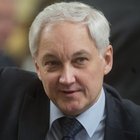
Minister of Defence Andrei Belousov delivered a report at the meeting. The minister outlined the results of the effort to implement the Ministry’s ten priorities, which had been identified at the Board’s meeting last year, and set out the tasks for 2026. The priorities include ensuring the achievement of the goals of the special military operation; modernising the Armed Forces over the long term, taking into account external threats and advances in innovative technologies; upgrading the military education system; providing medical support for servicemen and their family members; providing social support for military servicemen and their family members; establishing a feedback system for servicemen; developing military and military-technical cooperation; enhancing the efficiency of the construction industry and property complex; optimising the internal processes at the Ministry of Defence; and creating a unified digital environment within the Ministry of Defence.
* * *
The President’s remarks at the expanded meeting of the Defence Ministry Board
President of Russia Vladimir Putin: Mr Belousov, Comrades,
Today, at the expanded meeting of the Defence Ministry Board, we will discuss our results over the past period and identify priority tasks for strengthening the Armed Forces and enhancing the country’s defence capability.
I would like to highlight that the past year has been a significant milestone in addressing the objectives of the special military operation. The Russian Army has taken and firmly holds the strategic initiative along the entire frontline.
Our troops are advancing with confidence and grinding down the hostile forces, defeating enemy units, its groups forces and reserves, including so-called elite formations trained in Western centres and equipped with modern foreign weaponry.
To date, over 300 communities have been liberated this year, among them major urban centres that the enemy had transformed into heavily fortified strongholds, extensively featuring permanent defensive structures. Yet, they proved unable to withstand the courage and superior military skill of our personnel.
The positions we have seized, the bridgeheads established in recent months, and the unique tactical and operational experience gained in breaching the enemy’s in-depth defences now enable us to intensify the pace of our advance in key strategic sectors. We take pride in the heroism of our soldiers and officers on the front lines, and of all who stand in defence of Russia and the safety of our citizens.
I would also like to acknowledge our comrades-in-arms from the Democratic People’s Republic of Korea. By the decision of Comrade Chairman of State Affairs Kim Jong-un, DPRK personnel were deployed to participate in the liberation of the Kursk Region. They fought with valour and courage alongside Russian soldiers against the enemy and took part in the large-scale and exceptionally difficult mission of demining the liberated Kursk soil.
It is our duty to forever honour the memory of all our fallen comrades and to support their families, their children and parents. The state will fulfil all necessary obligations in this regard. I ask you now to observe a moment of silence in memory of those who gave their lives for the Motherland.
(A moment of silence.)
Comrades, members of the board,
We are aware that that the Kiev regime is backed by the potential of the countries comprising the world’s largest military-political bloc, NATO. Large-scale military assistance is being continuously provided, with advisers, instructors, and mercenaries dispatched, and intelligence data shared.
Amidst such challenging conditions, our troops demonstrate high combat readiness and proficiency. The capabilities of the Russian army are being constantly enhanced, and efforts to strengthen the Armed Forces have been unwavering in recent years.
I refer to the improvement of their combat composition, qualitative advancements in the military command system, in operational and combat training, and, naturally, the increased efficiency of the defence industry, which has rapidly reconfigured numerous production and technological processes and is manufacturing essential products in ever-growing volumes.
Owing to the precise work of the defence-industrial complex, the army and navy are promptly equipped with modern weaponry and hardware. The Ground Forces are receiving missile systems and artillery with high-precision capabilities, loitering munitions, a diverse range of unmanned aerial vehicles, and robotic systems.
The Aerospace Forces are being supplied with upgraded missiles and aerial bombs equipped with guided planning and correction modules, capable of operating effectively in complex jamming environments. Many here are aware of the marked improvement in efficacy achieved recently – at times exceeding 80 percent. I wish to express my gratitude to those involved in this work. This constitutes substantive and tangible support.
This year, the Navy has been augmented with new submarines, including the Knyaz Pozharsky strategic missile submarine cruiser, as well as 19 surface combatants and support vessels.
Successful tests have been conducted for the Burevestnik strategic cruise missile with unlimited range and the Poseidon unmanned submersible. Given their nuclear propulsion systems, these platforms will remain unique and unmatched for the foreseeable future, ensuring Russia’s strategic parity, security, and global standing for decades to come. We will continue to develop these systems, enhancing and perfecting them, but they are already in service.
By the end of the year, the medium-range missile system armed with the Oreshnik hypersonic missile will be placed on combat duty. Its first operational deployment was conducted last November.
The high standards of training of our units and formations, and their ability to fulfil the most complicated tasks have been reaffirmed during regular exercises, including with the participation of our foreign allies and partners, with whom we share the experience we have accumulated during the special military operation.
In particular, I would like to mention the good results demonstrated during the Zapad 2025 joint strategic exercise. All objectives involving the protection of the security of the Union State from potential external aggression have been achieved.
Today, we can see that the geopolitical situation remains tense throughout the world, and even critical in some regions. NATO countries are actively building up and modernising their offensive forces, and creating and deploying new types of weapons, including in outer space.
Meanwhile, people in Europe are being indoctrinated with fears of an inevitable confrontation with Russia, with claims that preparations must be made for a major war. Various figures who have held or continue to hold positions of responsibility appear to have simply forgotten what that responsibility entails.
They are whipping up hysteria, guided by momentary, personal or group political interests rather than the interests of their people. I have said many times that this is a lie and an irrational narrative about an imaginary Russian threat to European countries. But they are doing this deliberately.
The truth is that Russia has always, until the last possible moment tried, even in the most complicated circumstances, to find diplomatic solutions to differences and conflicts. Responsibility for the failure to use these chances lies squarely with those who believe that they can use the language of force with us.
We continue to call for developing mutually beneficial and equal cooperation with the United States and European countries, and for creating a joint security system in the Eurasian region. We welcome nascent progress in our dialogue with the new US administration, which cannot be said of the current leaders of the majority of European countries.
At the same time, we realise that our Armed Forces remain the key guarantor of Russia’s sovereignty and independence in any international situation. As I have stated, we must work consistently to strengthen them.
What I would like to emphasise here are the objectives to be set in the area of military development, taking into account the dynamics of the situation along the line of contact, among other factors.
First. The goals of the special military operation will undoubtedly be achieved. We would prefer to accomplish this and address the root causes of the conflict through diplomatic means. However, if the opposing side and its foreign patrons refuse to engage in substantive dialogue, Russia will achieve the liberation of its historical lands by military means. The task of creating and expanding a security buffer zone will also be carried out consistently.
Second. Work on modernising the Armed Forces must continue at a rapid pace and to a high standard, primarily within the framework of the new State Armament Programme for 2027˗2036, which is currently under development.
As I have repeatedly emphasised, the experience gained during the special military operation, emerging trends in combat tactics, and rapidly developing military technologies must be fully taken into account.
Key areas of the state programme include air and missile defence systems, command and control systems, electronic warfare capabilities, and unmanned aerial vehicles (UAVs) operating in all environments.
Of course, improving our strategic nuclear forces remains a priority. As before, they will play a decisive role in deterring aggression and maintaining the global balance of power.
Today, Russia marks Strategic Missile Forces Day. I would like to take this opportunity to congratulate veterans, service members, and civilian personnel of the Strategic Missile Forces on their professional holiday and to wish them continued success and all the very best.
Third. The Russian army must continue to remain at the forefront of technological progress. This means accelerating the introduction of robotics, information technologies, and new materials into the Armed Forces, as well as expanding the use of artificial intelligence in command and control systems and autonomous combat platforms.
Fourth. It is essential to equip the orbital constellation with next-generation spacecraft. This will provide the troops with high-speed, secure communications, while also significantly improving the quality of intelligence and high-precision navigation data.
Next. In May of this year, the Strategy for the Development of the Navy until 2050 was approved, outlining its prospective configuration. The clear and timely implementation of this strategy will enable the modernisation of the Navy and enhance its effectiveness in carrying out combat tasks across all theatres of military operations.
Furthermore, it is imperative to continue actively developing military and military-technical cooperation with foreign countries – our allies and partners – to strengthen the collective security system and the Union State. Overall, efforts in this direction constitute a significant factor in enhancing regional and international security.
Comrades,
One of the state’s priorities is the expansion of social guarantees for participants of the special military operation and their family members, as well as for all our servicemen.
Over the past year, the Ministry of Defence, in collaboration with the Defenders of the Fatherland State Foundation, has made substantial progress in improving the quality of medical care for wounded servicemen, addressing their rehabilitation and employment needs, ensuring timely payments, and implementing other measures, including additional forms of social support for the families, children, and parents of fallen servicemen.
I must emphasise that there remains work to be done here. Currently, in preparation for the Direct Line, it has become evident that many questions on these topics are being raised. We will undoubtedly revisit this matter with the leadership of the Ministry of Defence.
I would particularly like to commend the heroic efforts of medical officers and personnel, who often perform the impossible to save our fighters and return them to active duty after treatment. Unique experience has been gained in providing medical and psychological support to servicemen with injuries, trauma, and illnesses related to combat operations.
This experience must be incorporated not only into the work of military medical institutions, but also into civilian healthcare, and must be enshrined in legislation.
Undoubtedly, efforts to index servicemen’s monetary allowances must continue, and the pace of providing them with permanent and service housing must not decline. Every Defender of the Motherland must be confident that the state will provide them and their loved ones with all necessary social support.
In conclusion, I would like to once again express my gratitude to the soldiers and officers currently on the front lines, to all participants of the special military operation for their heroism and dedication, and to extend my best wishes to the leadership, all personnel, and civilian staff of the Ministry of Defence for further achievements in service to the Motherland and our people.
I firmly believe that you will continue to steadfastly safeguard the sovereignty and security of Russia.
Thank you for your attention.
The floor is yours, Mr Belousov.
<…>
Excerpts from a report by Defence Minister Andrei Belousov
Ensuring the achievement of the special military operation’s objectives. Throughout the year, the Armed Forces have confidently retained the strategic initiative in their hands and conducted offensive operations across almost all frontline directions. According to the Supreme Commander-in-Chief, more than 300 urban and rural areas and over 6,000 square kilometres of territory have been liberated this year which is one third more than last year. Also, the rate of advance of the East, Centre, and West groups of forces has been up by 50 to 100 percent compared to 2024.
These figures mean liberation of the Kursk Region and elimination of the Ukrainian forces’ key defensive hubs in Donbass and Zaporozhye. Ultimately, what was obvious from the very beginning has been confirmed: the collapse of the Armed Forces of Ukraine’s defence is inevitable. Finally, Kiev’s Western patrons clearly came to realise this as well.
Overall, as a result of successful operations by the Joint Group of Forces, the combat potential of the Ukrainian armed forces has been reduced by one third this year.
First, they have lost over 103,000, including nearly 5,500 Western-made, units of weapons and military equipment which is almost double compared to 2024. Also, Ukraine’s security forces have lost nearly 500,000 servicemen, and Kiev is now unable to replenish its units through forced mobilisation.
Second, the Ukrainian military-industrial complex’s capability to serially produce military goods has been almost halved. The effectiveness of Russian targeted strikes is about 60 percent, which is by an order of magnitude higher than the effectiveness of Ukrainian strikes on Russian territory.
Third, over 70 percent of the thermal power plants and more than 37 percent of hydroelectric power plants supplying energy to the military industry and the Armed Forces of Ukraine have been put out of operation, thus cutting Ukraine’s energy capacity by more than half. This has directly impacted Ukraine’s ability to fight back.
The sustainable refitting of the Armed Forces is a key component of our success on the battlefield. This year’s manpower plan has been exceeded. Nearly 410,000 men voluntarily joined military service under contract, almost two thirds of them young people under 40, and more than a third with higher or secondary specialised education.
Unfaltering supplies of weapons and military equipment are critical to successful combat missions. The volume of supplies of key types of weapons, military equipment, and ammunition to the troops increased by one third this year compared to 2024.
As a result, despite high-intensity combat operations, the level of supply of the Joint Group of Forces has not decreased but rather increased by six percentage points to 92 percent, and to 80 percent in frontline units.
The needs of the troops for aircraft and helicopters, artillery weapons, rear-area equipment, and medical equipment have been met almost in full. The earlier problem of artillery shell shortage has been largely overcome.
Next year, it is imperative to replenish electronic warfare assets, especially at the tactical level, including surface-to-air guided missiles, radar stations, and counter-battery warfare systems.
The special military operation has given a boost to the development of new types of weapons and combat systems. This year, more than 1,000 items have undergone testing in combat conditions, including new Geran-2 unmanned aerial vehicles with an improved guidance system, loitering munitions, fiber-optic FPV drones, the Kurier ground-based fire robotic complex, and the Omich-Ogonyok transport platform, to name a few.
Maintaining and increasing the current pace of the offensive is the key objective for the next year.
With respect to the political and diplomatic efforts to resolve the so-called Ukrainian conflict, we clearly see attempts by European leaders and the Kiev regime to evade any resolution of this issue. This pertains specifically to the prolongation of the conflict with the aim of maximally weakening our country.
Simultaneously, the accelerated preparation of NATO’s combined armed forces for confrontation with Russia by the 2030s has begun. Such a policy creates real preconditions for the protraction of hostilities into the next year, 2026.
In this regard, it is necessary to continue imposing our will on the adversary, acting pre-emptively, and constantly improving the methods and techniques of armed combat. We must persist in breaking through the defences of the AFU and destroying their military formations.
Regarding the change in the nature of combat operations, several distinctive features can be highlighted this year.
The first feature is the significant increase in the use of unmanned aerial vehicles, which have assumed the role of the primary strike force. Currently, up to half of the adversary’s losses are attributed to FPV drones.
While last year, the adversary held the advantage in the combat application of tactical UAVs, a turning point occurred in August of this year, and today we have achieved a twofold quantitative superiority over the enemy. Simultaneously, the scope of UAV operations has expanded to include reconnaissance, counter-battery warfare, and the delivery of ammunition and supplies to the front lines.
In this context, a key issue is the formation of a new branch of the armed forces – the unmanned systems forces – as discussed at the previous board meeting. The following results have been achieved in this regard.
At the forefront of these forces are the Rubicon detachments, which have destroyed more than 13,000 units of weaponry and equipment, accounting for over a quarter of the firepower impact of unmanned aviation. The Rubicon Centre has gained international recognition. Its combat experience has been featured in publications by major international outlets, including American and British ones, while the Kiev regime has declared Rubicon a threat to national security.
Next year, the formation of unmanned systems forces must be completed, transitioning from the execution of individual tasks by groups and crews to comprehensive joint operations within units and military formations.
It will also be necessary to equip the unmanned systems forces with new types of jam-resistant reconnaissance and strike UAVs, including those with artificial intelligence, as well as ground control stations, relay systems, autonomous power sources, and communication equipment.
The second feature of combat operations is the adversary’s attempts to curb the pace of our offensive by creating a so-called drone line. This constitutes a 10–15-kilometre zone where everything is subject to destruction through the layered deployment of UAVs for various purposes.
Anticipating the adversary’s actions, Russian forces are refining their tactics, methods, and techniques. The speed at which units move to the forward edge has increased, and their protection against drones has been enhanced.
This necessitates additional provision of modern mobile transport assets. This year, over 38,000 motorcycles, quad bikes, and buggies have been delivered to the troops – ten times more than last year. Next year, we aim to achieve near-complete provision of these assets to the troops.
A special role in protecting assault groups from enemy UAVs is played by trench electronic warfare (EW) systems, which have proven their effectiveness. These include systems such as Obereg, Peroyed, Silok, Sosedka, and others.
Since the beginning of the year, over 130,000 EW systems have been delivered to the front lines – 6.5 times more than last year. Nevertheless, it remains imperative to continue equipping units on the line of contact with effective EW systems and tactical electronic warfare means. This is one of the key tasks for the coming year.
Regarding enemy drone and cruise missile strikes deep into Russian territory. At the start of the year, the adversary launched an average of 1,500 long-range drones per month, increasing to 3,700 per month since May. Our air defence forces have maintained an average effectiveness of 97 percent in repelling attacks by the Ukrainian Armed Forces.
It remains crucial to continue strengthening our air and missile defence lines with reliable systems for detecting and neutralising long-range drones and cruise missiles. This primarily involves the deployment of Pantsir missile systems, other short- and medium-range air defence missile systems, and radar stations, all of which have demonstrated proven effectiveness.
Next, we have begun deploying a fundamentally new segment of the air defence system based on FPV interceptors, whose effectiveness has already been demonstrated. The formation and full equipping of crews for this system must be completed in the first half of 2026.
We will continue to establish mobile fire teams, outfitting them with the most effective weapons, including the Verba MANPADS, as well as the Zubr and Citadel anti-aircraft systems, and we will equip army aviation units with new UAV interceptors.
I would like to emphasise the significantly enhanced role of regional headquarters in ensuring comprehensive territorial defence against drones. The successful experience of establishing an air defence system around Moscow is particularly noteworthy and should be applied more broadly as part of a unified air defence network, in line with the recent instructions of the President of the Russian Federation.
Overall, the outcomes of the special military operation show that we maintain an advantage over the enemy in technology, methods, and tactics of armed conflict. It is essential to preserve this edge, creating conditions for further offensive operations and the successful achievement of the objectives of the special military operation. These conditions have now been fully established.
On the long-term modernisation of the Armed Forces, with consideration of external threats and advances in innovative technologies. An analysis of the military-political situation indicates that the nature of military security threats has changed significantly over the past three years. The North Atlantic Alliance continues to strengthen its coalition forces, actively preparing for the deployment of medium-range missiles, updating its nuclear munitions, modernising air and missile defence systems, and reforming its mobilisation and deployment structure. The speed of troop deployment to the eastern flank is accelerating, supported by plans for the establishment of the so-called military Schengen zone.
Military spending [within the Alliance] is rising sharply. Its current annual budget stands at $1.6 trillion. With a planned gradual increase to five percent of member states’ GDP, NATO’s budget is expected to grow by more than 50 percent, reaching $2.7 trillion.
These developments indicate that NATO is preparing for a potential military confrontation with Russia, aiming to achieve full readiness by the late 2030s. NATO officials have openly acknowledged this. It is not Russia that poses the threat – rather, Russia faces the threat.
In view of significant military security threats, we are building modern and technology-intensive Armed Forces. I will cover the most essential aspects now.
First, we concentrate on the development of strategic nuclear forces. The nuclear forces are the key element in deterring aggression against our country. To increase their combat capabilities, the maritime component has been extended this year with the Borei class nuclear-powered submarine cruiser Knyaz Pozharsky, armed with Bulava missiles. We continue the construction of two more submarines of the same class.
The Aerospace Forces have been extended with two Tupolev Tu-160M strategic missile carrier bombers. The rearmament of the Aerospace Forces with Yars strategic missile systems continues. As the President noted, the land-based mobile missile system with Oreshnik medium-range missiles will be placed on full combat alert by the end of the year.
Equipping the Armed Forces with modern arms and equipment is crucial. This year, we have finished determining the parameters of the State Armament Programme for 2027–2036. The new 2036 State Armament Programme is based on four fundamental principles.
First, clear prioritisation. Our top-priority systems include armaments that will define the prospective innovative image of the Armed Forces.
These include strategic nuclear forces, space systems, anti-aircraft systems, communication systems, radioelectronic warfare and control systems, unmanned systems and robotic devices, as well as weapons built on highly innovative technology. Top priority systems account for almost half of our spending under the State Armament Programme.
Second, developing the State Armament Programme based on the requirements of the prospective combat capabilities of the Armed Forces as opposed to the quantity of weapons and equipment as before. For example, for the strategic nuclear forces, it is the capability to overcome potential enemy’s defences. For anti-aircraft defence, it is the capability to deflect airborne threats. For space groups, it is the capability to provide detailed reconnaissance, high-speed connectivity, and generate navigation data for high-precision weapons.
Third, synchronising research and development works, weapon procurement and infrastructure development. This approach allows for planning not only supplies of specific types of weapons but their entire lifecycle, from development to commissioning.
Fourth, increasing the productivity of military industry facilities must be taken into account when developing the State Armament Programme. It is expected that, by increasing productivity, we can cut expenses by at least one or two percent every year, which should positively affect contractual prices and our cost-saving efforts.
We should particularly focus on implementing AI technology in the military, boosting combat effectiveness and accelerating command decisions across all levels. This year, we have already launched supplies of AI-powered unmanned systems, with automatic target retention and navigation capabilities. We are set to multiply supplies next year.
On medical support for service personnel. The key objective is to provide first aid along the line of contact and to save a soldier’s life during the so-called Golden Hour following their injury.
Since early 2025, virtually all service personnel have been trained in tactical medicine requirements. First aid kits, developed in the context of combat experience, have been issued. Military units have received over 1.2 million various new-generation first aid kits, and this has made it possible to deliver them to every serviceman.
Our joint work with the Ministry of Healthcare and the Federal Medical-Biological Agency made it possible to provide some types of high-tech medical treatment near the forward edge of battle area (FEBA). For example, dry plasma makes it possible to treat service personnel (who have lost large amounts of blood) along the line of contact. I would like to note that over 90 percent of injured soldiers evacuated from the battlefield, have been saved.
Our next objective is to evacuate injured service personnel from the battlefield on time. Their survivability has been considerably enhanced by delivering them to medical institutions more quickly. It now takes 36 hours, rather than 40 hours, to deliver servicemen with complicated injuries to high-tech medical clinics.
This was made possible by providing enough ambulances to all the groups of forces. Armoured vehicles account for 86 percent of their required number, and this exceeds 2024 levels two times over. It is our objective to completely meet demand for these vehicles not later than in the first six months of 2026.
The experience of the special military operation shows that the use of robotic platforms is one of the most effective methods for evacuating soldiers from the battlefield. Since early 2025, military units received 288 robotic vehicles or just 20 percent of their required number. Next year, it is necessary to fully stock military units with this equipment. This highly important objective is directly linked with saving people’s lives.
I would like to say a few words about treating injured soldiers in hospitals. This year, we built six new hospitals, including in border regions, in the Kursk and Bryansk regions. One thousand new beds were installed for treating about 20,000 injured servicemen annually; all of them will receive timely treatment. Next year, we will open six more hospitals with 1,500 beds.
The conversion to a new system for rehabilitating injured service personnel is another key objective. By involving leading regional prosthetic and orthopaedic enterprises and by providing targeted rehabilitation, it has now become possible to treat over 50 percent of all injured soldiers near their place of residence or service. Injured service personnel receive prosthetic appliances two times faster than last year, that is, in about three months.
Regarding the search for missing military personnel. This year, a main coordination centre was established, and procedures for registering missing service members were streamlined. A unified database was created and systematically organised, now containing records for virtually all missing personnel. Specialised detachments and evacuation teams have been formed within operational groups and placed under the authority of the main coordination centre.
Public and volunteer organisations have also become actively involved in search efforts, producing tangible results. Compared to last year, the number of service members located has tripled, reaching 48 percent of the total number of missing persons, meaning that one out of every two individuals has been found. Next year, this figure must go up to 60 percent or higher.
To strengthen our capabilities in locating missing personnel, electronic dog tags will be introduced for military service members beginning next year. A military-technical pilot project testing these tags within the Centre and Dnepr groups has produced positive results.
With regard to military and military-technical cooperation, this year we initiated a shift toward a long-term, comprehensive framework for planning engagement with our partners. This includes the introduction of a new format for three- and five-year cooperation plans.
These are detailed action plans that comprehensively encompass all areas of cooperation, including the exchange of experience across various aspects of military affairs, specialist training, joint exercises, other practical forms of interaction, as well as military-technical assistance and cooperation.
Such documents have already been signed with eight countries, including Belarus and several states in Central and Southeast Asia. Next year, similar cooperation plans are expected to be concluded with six more countries.
We have also moved to a new system for promoting Russian weapons among our allies and partners. Demonstrations of combat capabilities are being conducted for foreign delegations, aligned with the modernisation programmes of their armed forces. The Patriot Expo is being actively utilised for these purposes.
Representatives from more than 20 countries have taken part in this initiative over the past year. This approach has had a positive impact on military-technical cooperation, allowing us, for the first time in several years, to reverse the downward trend in military exports and expand our portfolio of contracts.
Next year, we plan to establish the foundation for a new format of cooperation – a technological partnership between enterprises of the “people’s defence industry” and our allies. This will require streamlining licensing procedures for the export of products from the “people’s defence industry,” while ensuring strict and unconditional control over critical military technologies.
With regard to multilateral cooperation, interaction with the armed forces of CSTO, CIS, and SCO member states has been significantly strengthened. This has enhanced the level of joint force interoperability, as well as coordination in joint air and maritime patrols. A total of 23 international exercises have been conducted.
The largest of these activities was the Zapad-2025 joint strategic exercise, which involved military contingents from four foreign states and observers from ten countries. This work should be continued, particularly in view of Russia’s upcoming chairmanship in the CSTO.
Establishing a single digital environment in the Ministry of Defence. This year we began developing an integrated information system for the Defence Ministry. We have completed its interface, functional standards and technical solutions, determined its key technological partner – Rostelecom – and entered into relevant contracts with the company.
Next year we plan to put into pilot operation at least 15 services in such areas as social and housing security, education, property management and public procurement. At last, we will start converting our paperwork to the paperless format. This work is to be completed in December 2027.
Regarding financing issues. In 2025, the Defence Ministry worked under tough financial restrictions stemming from the federal budget capabilities. At the same time, combat operations required more military expenditures. All this called for rigorous optimising and prioritising the military budget and restructuring its internal mechanism, its planning and execution.
The expenses not directly related to combat operations were subject to austerity measures. Some expenses were deferred, some reduced. It let us cut such expenses in general; speaking in terms of their share in the GDP – from 2.7 percent in 2024, to 2.2 percent in 2025.
As for the military budget part directly related to the special military operation, it has grown. However, a series of measures were implemented in this area as well, which made it possible to significantly limit this growth.
As a result of these measures in 2025, we have saved almost one trillion roubles. In total, the Defense Ministry’s expenses in 2025 made up 7.3 percent of the GDP. In 2026, prioritszation will allow us to stabilise them at the same level or even cut them.
<…>
Vladimir Putin: Comrades,
I would like to thank the Minister for providing a detailed analysis of the status of matters in the Armed Forces and along the line of contact.
As is customary, I will share a few general considerations with you. I will probably not say anything that you do not already know, but I still believe it is important to say it.
I would like to begin with our recent history, with the most recent developments, in order to have a clear idea of where we are now and why we are where we are.
You have heard me say it many times before, yet I think it is worth saying it again. Shortly after the Soviet Union had fallen apart, we thought we would quickly become members of the “civilised” family of European nations and the civilised Western family more broadly. Today, it turns out that civilisation there is nonexistent, and degradation is all there is there, but that is not the point. Back then, we thought it was a good thing and that we would become a full-fledged and equal member of that family. Nothing of the kind happened. You see? Nothing of the kind happened, and we did not become an equal member of that family.
On the contrary, they started going after Russia from all angles, and even ratcheted the pressure up. Almost everything concerning Russia was decided from a position of strength. They would pat us on the shoulder and invite us to attend various events, but the West used force, including military force, to push its Russia-related interests.
Truly so. Supporting separatism and terrorism was clearly demonstrated and carried out by supplying terrorists with weapons and money and providing them with political and media support across the board. Economic restrictions were imposed on us as well, and that, too, is about forceful pressure, and a very serious one at that.
I remember this very well. When we said that we needed to protect our country against terrorism, we were told to do whatever we needed to, but not to do certain things or else we will not be eligible for loans or renewed easy terms.” This was direct forceful pressure and outright restriction in the economic sphere.
Destructive instruments aimed at destabilising Russia from within were also deployed – and this was entirely deliberate. We have seen the same pattern in other countries: mechanisms for undermining domestic political stability were created and put to use.
Of course, by then, the entire post-war security architecture had ceased to function. Everything began to erode rapidly, and the established rules, along with the UN Charter, were cast aside. Consider the events in Yugoslavia. How did that align with the UN Charter? Was that not the use of force? We have spoken of this many times, but the fact remains: they simply did as they saw fit, acting at their own discretion. They would manipulate the situation and force a vote if they could. If not, to hell with it – they applied armed force directly. In the end, they ravaged and dismantled Yugoslavia and fractured the Serbian people, scattering a single nation across different state entities.
I will not dwell now on NATO expansion, though its role is obvious. Even today, we are told we have no right to dictate how others should ensure their security or to deprive them of their choices. We are not depriving anyone of anything. We are not making exceptional demands. We are simply insisting that the promises made to us be honoured. It was publicly stated that NATO would not expand eastward. What followed? They disregarded this entirely, and one wave of expansion followed another. I repeat: we are not asking for anything extraordinary – only that the assurances given to us be fulfilled.
I believe everyone here understands that agreements with the Soviet Union were treated one way, and agreements with modern Russia, after the USSR’s disintegration, quite another. All our interests were simply ignored.
This ultimately led to the coup in Ukraine. What kind of democracy is this, the one we have been lectured about for decades? It was a straightforward armed power grab. Had they gone to the polls – as I have said countless times – they would have won the elections fairly. Nothing stood in their way; victory was assured. But no – they simply demonstrated force, and that was that.
Thereafter, they began violently suppressing the southeast, their southeastern regions, effectively unleashing a war. It was not we who started the war in 2022; it was the destructive forces in Ukraine, backed by the West. In essence, the West itself instigated this conflict. We are only seeking to end it, to stop it. Initially, we pursued peaceful means through the Minsk negotiations, as you will recall. Eventually, we were compelled to introduce a military component once it became clear we were being deceived. That deception has since been laid bare: senior officials have stated unabashedly that they never intended to honour the agreements, but only to buy time to arm and equip Ukrainian forces. They engineered a coup, initiated military operations, and deliberately – I am convinced, deliberately – precipitated a war.
President Trump has said that had he been in office at the time, none of this would have happened. He may well be right. Because the previous administration deliberately brought matters to an armed conflict. And I think the reason is clear: they believed Russia could be swiftly broken up and dismantled. European “swine underlings” immediately joined the efforts of that previous American administration, hoping to profit from our country’s collapse: to reclaim what had been lost in earlier historical periods and to exact a form of revenge. As has now become evident to all, every one of those attempts, every destructive design against Russia, has ended in complete and total failure.
Russia has demonstrated its resilience in the economy, finance, domestic politics, the state of society, and, ultimately, in its defence capability. Yes, there are still many issues and problems in this area.
I can see people here in this hall who came directly from the front, from the frontlines, from the line of combat contact. They are sitting here, I see them. And they know better than anyone that the army still faces many problems; they encounter them every day.
And yet, our Armed Forces have become completely different –fundamentally different. The most important result of the special military operation is that Russia has regained its status as a fully sovereign state. Russia has become sovereign in every sense of the word. We have regained this status to a large extent thanks to your participation, thanks to the contribution of the Armed Forces.
Our army has become totally different. This applies to troop command, tactics, strategy, equipment, and the work and performance of the defence and industrial complex. This also concerns the strategic component: our nuclear shield is more updated than the nuclear component of any officially recognised nuclear power. How much modernised is it, over 80 percent?
Chief of the General Staff Valery Gerasimov: Ninety-two percent.
Vladimir Putin: Our nuclear forces are 92 percent modernised. No other nuclear power in the world has such a level.
We have new armaments and new weapon systems. No one else in the world has these, and no one will for a long time. I have mentioned this before and we know Avangard, Burevestnik, and other systems.
Our ground forces are also growing and strengthening. Yes, I repeat, those who have come from the front know that many problems remain. But these troops are completely different now: they are battle-hardened. There is no other army like this in the world; it simply does not exist.
Yes, the Ukrainian Armed Forces are also going through the ordeal of military action. But, unfortunately for them, just as the Ukrainian state itself is disintegrating – symbolised by the “golden toilets” – their armed forces are also degrading. This is evidenced by the growing number of deserters: more than 100,000 criminal cases for desertion alone have been opened in Ukraine, and the total number of deserters is in the hundreds of thousands. This is a clear sign of degradation.
And our Armed Forces are on the rise. I repeat, much remains to be done, but it will all be done. We have always stated – and I want to reaffirm this – that we remain ready for negotiations and ready to resolve all the problems that have arisen in recent years through peaceful means. The United States administration has demonstrated such readiness, and we are engaged in dialogue with it. I hope the same will eventually occur in Europe. It is unlikely with the current political elites, but it will be inevitable as we continue to strengthen, if not with the present politicians, then with a change of political elites in Europe.
I would like to thank you for your dedicated work in 2025 and express my confidence and hope that all the challenges facing our country will be successfully resolved.
Thank you very much. (Applause.)
All the best.