


The current state and prospects of Russian-Armenian strategic partnership and alliance, integration cooperation in Eurasia, and current issues on the regional agenda, in particular the development of economic, transport, and logistics ties in the South Caucasus, were discussed.
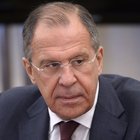
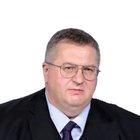
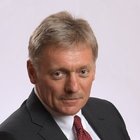
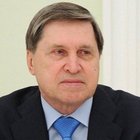
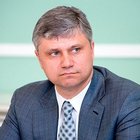
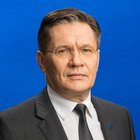
Taking part in the talks on the Russian side were Foreign Minister Sergei Lavrov, Deputy Prime Minister – Chair of the Russian part of the Russian-Armenian Intergovernmental Commission on Economic Cooperation Alexei Overchuk, Deputy Chief of Staff of the Presidential Executive Office – Presidential Press Secretary Dmitry Peskov, Presidential Aide Yury Ushakov, Director of the Federal Service for Military Technical Cooperation Dmitry Shugayev, Chief Executive Officer – Chairman of the Executive Board of Russian Railways Oleg Belozerov, and Director General of the State Atomic Energy Corporation Rosatom Alexei Likhachev.
* * *
President of Russia Vladimir Putin: Mr Pashinyan, friends,
We are delighted to welcome you in Moscow. Thank you very much for accepting our invitation and coming here.
We can see that domestic political processes in Armenia are gaining momentum, with elections approaching. In this context, I would like to emphasise several key points: such processes often become more intense during election campaigns, as is the case not only in Armenia, I believe, but also in Russia and other countries. However, this escalation must not be allowed to affect relations between Russia and Armenia.
We have discussed this many times. Russia and Armenia have special relationships which have evolved over centuries rather than decades. We are united by our common history as well as our cooperation to solve the challenges that we faced in years past. Crucially, we are also united by civilizational affinity. I have already told you this privately before, and I can say it publicly now: we are always in favour of anything that benefits the Armenian people, and you can always rely on it.
As for economic cooperation, it continues to develop at a solid pace. Trade reached approximately $11 billion the year before last, and amounted to $6.4 billion in 2025. For comparison, trade with neighbouring Azerbaijan stands at under $5 billion –around $4.9 billion, to be exact – which is indicative. Of the $6.4–6.5 billion in trade with Armenia, about $1.2 billion are agricultural products, including vegetables, fruits, and wine – key exports from Armenia.
In this context, we have also discussed several areas that are of particular importance for the future of our cooperation, such as energy, and agriculture that I have already mentioned.
We observe that there is an ongoing discussion in Armenia concerning the development of relations with the European Union. We remain entirely calm about this, understanding that each nation endeavours to maximise the advantages of cooperation with third countries. However, this must be transparent and articulated honestly, in advance, as it were, “on the shore,” beforehand.
Simultaneous membership in the Customs Union with the European Union and the EAEU is impossible; it is simply untenable by definition. The issue is not even a political one; it is purely economic. Some matters require extensive collaborative efforts that must be undertaken over years. These include differences in the evaluation of specific product groups, their market entry, and phytosanitary supervision for agricultural products. Russia and the European Union have entirely different, markedly divergent requirements concerning phytosanitary matters.
There are also numerous other issues today, at this present moment. Perhaps years will pass, and we – the EAEU and the European Union – I hope this will eventually be the case, given that we reside on the same continent – will be able to resolve them. Yet even before the Ukrainian crisis, when we attempted to reach an agreement with the Europeans to collaborate, nothing came to fruition. They adopt an exceedingly rigid stance on virtually every matter, even on issues that seemed minor to me at the time.
Now, regarding energy. I hope the situation will improve there as well. However, currently, as you are aware, energy prices, gas prices, for instance, in Europe exceed 600 dollars per 1,000 cubic metres, whereas Russia provides gas to Armenia at 177.5 per 1,000 cubic metres. The disparity is vast, the difference is substantial.
We frequently debate this issue as well. I understand that you advocate for certain alternative methods for determining energy prices. Nevertheless, this remains a different order of magnitude: 600 compared to 177.5.
If we examine the state of Armenia’s economy, I am unsure, but it seems to me that you share the same assessment: after all, Armenia’s exports to EAEU countries have increased tenfold over recent years – tenfold. I reiterate, ultimately, this is your decision, the decision of your team, your experts, regarding where and with whom to collaborate, and on what basis.
Now, turning to security issues. Of course, the most sensitive issue to this day – and we recognise this, we discuss it often – is everything relating to Karabakh. We come back to it time and again. And we know that you and your colleagues have had, and continue to have, questions and concerns regarding the Collective Security Treaty Organisation, the CSTO. We have revisited this on numerous occasions. But I think it is also clear that, after you recognised Karabakh as part of Azerbaijan in Prague in 2022, it simply became wholly inappropriate for the CSTO to become involved in a process that had taken on an intra-Azerbaijani dimension. The question of reuniting Karabakh, if we view it as part of Azerbaijan – and I am not passing judgement on whether that is a good or bad thing from the perspective of organising a peaceful life – I think probably made sense in that context.
Incidentally, thanks to your efforts and those of the President of Azerbaijan, I believe you have now managed to stabilise relations. The US President has played an active role in this, and I understand transport links are being unfrozen, and so on. But I think we also need to draw a line under this matter. And it would be better if this did not become entangled in the domestic political process, especially during an election campaign.
Finally, we have many friends in Armenia – many, we know that. Many Armenians live in the Russian Federation. Estimates vary, but our figures show over two million people, and the statistics from the Interior Ministry bear this out. And there are many political forces that are pro-Russian.
Of course, I will be quite frank with you: we have always conducted our dialogue honestly and directly. We would very much like all these political parties and politicians to be able to take part in domestic political process during the elections. Some, I understand, are in prison, despite holding Russian passports. That is your decision; we will not interfere. But we would like them all to be able, at the very least, to participate in this domestic political process.
Let me say again that, whatever happens, we in Russia will always be guided by what is best for the Armenian people. I have said this to you before, and I want to emphasise it once again.
And I would like to express my hope that, regardless of the outcome of the elections in Armenia, our shared commitment to building and strengthening Russian-Armenian ties will continue.
Thank you.
Prime Minister of the Republic of Armenia Nikol Pashinyan: Thank you very much, Mr Putin.
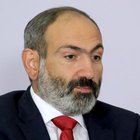
First of all, thank you for the invitation and the warm welcome.
Vladimir Putin: We will also be having lunch with you.
Nikol Pashinyan: Yes, thank you in advance for the hospitality. (Laughter.)
Of course, we recently had a meeting with you in St Petersburg, and we had very successful talks. Our relations are so intense that there is a need for such frequent meetings, and there is always something to discuss at the highest level.
Naturally, our relations with the Russian Federation are very deep; they are very important for us, and, in my view, they are developing dynamically amid the new realities in our region, now that peace has finally been made between Armenia and Azerbaijan.
I believe this is having a positive effect on our relations with the Russian Federation as well, because for the first time since our independence we have a railway connection with the Russian Federation. We are importing from Russia via railway through the territory of Azerbaijan. I hope that in the near future we will also be exporting. This is certainly strengthening our traditional economic ties, and it is reinforcing our ties within the Eurasian Economic Union.
With regard to the European Union, of course we understand that, in principle, membership in both blocs is incompatible. But what we are doing, and the agenda we have, at least at present, they are compatible. That is a fact. And as long as it is possible to combine these agendas, we will continue to do so. When the processes develop to the point where a decision must be made, I am confident that we, the citizens of the Republic of Armenia, will take that decision.
Obviously, in this context, our relations with the Russian Federation have never been in question, nor will they ever be, because, as I have already said, these ties and relations are very deep and are beyond dispute.
Naturally, we are cooperating in the energy sector. Here, too, we have traditionally very strong ties and cooperation. I must say that we are currently working very closely with the Russian side to develop interaction in the field of new technologies as well, by which I mean new technologies in energy, because new energy technologies, solar energy and so on and so forth, are developing very well in Armenia. You are aware that we are also discussing with the Russian Federation the construction of a new nuclear power plant. But on these issues we are completely transparent, because we do not hide the fact that we are discussing these matters not only with Russian partners, but also with other partners, as we are seeking the most advantageous proposal for the Republic of Armenia.
As I have already said, Armenia and Azerbaijan have acieved peace. You have mentioned President Trump who clearly contributed to the peace process. However, it is also clear that you personally have always played a key – essential – role in the process of the normalisation between Azerbaijan and Armenia. Throughout all these processes, we have always maintained close contact, and I regularly updated you on the ongoing processes.
Incidentally, last August, upon returning from Washington, I called you and said that the developments in Washington opened up new opportunities for our relations as well, and now we can see that this has become reality. I have already mentioned the railway connection between Russia and Armenia. We had been working on this issue for decades, but unfortunately, we were never able to reach a tangible outcome.
As for issues related to Nagorno-Karabakh, I have stated clearly and publicly in Armenia that the Karabakh movement should not be continued, as peace has already been made between Armenia and Azerbaijan. Both countries have recognised each other’s territorial integrity, political independence, and sovereignty as enshrined in the Alma-Ata Declaration. This means that independent Armenia is recognised as 100 percent identical to Soviet Armenia, and independent Azerbaijan as 100 percent identical to Soviet Azerbaijan. I believe this provides a solid foundation to further strengthen peace. I would also like to once again express my gratitude for the support that I have consistently felt in the process of achieving peace between Armenia and Azerbaijan.
Regarding Karabakh, we have discussed this issue many times, primarily in a working format. Yes, we have recognised it as part of Azerbaijan. However, this decision was made after the leadership of the Russian Federation publicly addressed the matter on two occasions, and as you recall, we have repeatedly discussed this. At the same time, we have never concealed the challenges in our relations within the Collective Security Treaty Organisation. In 2022, a specific situation arose in which, in our view, CSTO mechanisms should have been activated but were not. This has led to the current state of our relations with the organisation. At present, we are not participating in CSTO activities for a straightforward reason: we have yet to be able to explain to our citizens why the organisation did not respond, despite its obligations under the Collective Security Treaty.
As for our domestic political processes, you know, Armenia is a democratic country. We have ongoing political processes – it has become routine for us. In fact, we hold municipal elections twice a year. They are also highly politicised, because under our political reforms, people vote for or against political parties as well. I mean, not very many, but there are citizens who think there is too much democracy in Armenia.
But for us, this is a fundamental issue. Our social media, for example, is 100 percent free. There are no restrictions whatsoever. And many citizens feel this is excessive. And more broadly, frankly, we don’t have any political actors ‘in less scenic locations.’
I would also note that, for example, we have parliamentary elections coming up – elections for members of parliament – and based on the outcome of these elections, this is essentially, de facto, the election of the Prime Minister. I would like to draw your attention to the fact that only citizens holding an Armenian passport – and no other nationality – can take part in these elections. With all due respect, under the Constitution of the Republic of Armenia, people with Russian passports cannot stand as candidates for parliament or prime minister. So, there are no restrictions in that regard.
And I am 100 percent certain that you know that both our relations with the Russian Federation and our personal relationship have been through many trials over the past few years. I am very pleased and would like to thank you once again for the atmosphere of trust that you, first and foremost, have created. Because if you did not want us to have such an open, trusting relationship, I think I obviously would not be able to achieve this, and I want to thank you again.
I am confident that after our upcoming elections, democracy in Armenia and the people’s power in Armenia will be further strengthened, and our relations will also continue to expand dynamically following the elections.
As I have already said, our agenda is very full, but there are still many untapped opportunities. I am confident that these opportunities will be realised through our dialogue.
Thank you very much.
Vladimir Putin: Thank you.
<…>