


President of Russia Vladimir Putin: The Russian Academy of Sciences held its General Meeting today as a scientific session. Is that so?
President of the Russian Academy of Sciences Gennady Krasnikov: Yes, it took place as a scientific session and focused on ways the Russian Academy of Sciences can contribute to the science and technology development in Russia.
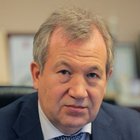
Vladimir Putin: Go ahead with your report, Mr Krasnikov.
Gennady Krasnikov: Mr President, I wanted to report on the Russian Academy of Sciences’ performance. Here is my presentation.
Let me start by saying that the Russian Academy of Sciences drafts a programme for carrying out fundamental research. This effort includes the need to oversee and coordinate over 6,000 research projects in fundamental disciplines across 714 research institutions.
Every year, we hold a review to identify the most important outcomes. There are about 300 of them, and they take several volumes. You can see a summary here. We then send them to the Government and federal executive bodies. We also publish these achievements in the unified state information system, to the Science and Innovation domain.
I would like to provide just a few examples to clarify what I am talking about, since these achievements encompass all research domains. In particular, the mathematics department, represented by the Ivannikov Institute for System Programming, had a major task dealing with neural networks. This discipline has become quite popular lately, even though there are some fundamental challenges in this regard.
In fact, databases are used for training neural networks. However, if you change the database, the network has to be retrained too, which makes this mechanism expensive and time-consuming. We have done a great deal on this front. The healthcare sector offers an example of using distributed databases. Every clinic has its own database, so the training starts with transfer and contrastive learning, followed by fine-tuning. This is what produces fundamental results. This means that we do not have to retrain the network every time…
Vladimir Putin: Instead of starting from the middle of the field.
Gennady Krasnikov: Fine-tuning is a very effective solution.
Another fundamental achievement has been made at the Physical Sciences Division of the Russian Academy of Sciences. It is an optical atomic clock using thulium atoms. Its special properties allow using the clock to compensate for magnetic and electrophysical field errors. As a result, we achieve an extremely high level of precision, ten to the minus sixteen.
But the main point is that this clock is transportable, which means that we can send it into space. The current GLONASS system is only two to three orders of magnitude less accurate, but the use of the atomic clock will improve positioning accuracy by an order of magnitude. This project can be used to further increase the level of precision to ten to the minus seventeen or minus eighteen. This is an achievement on a global scale. It was made at the Lebedev Physical Institute.
Vladimir Putin: It is of major practical significance.
Gennady Krasnikov: Yes, that is correct. At the same time, it is a fundamental science project.
Another interesting project underway at the Department for Nanotechnology and Information Technology has to do with decentralised multi-agent collision avoidance methods for multi-agent navigation.
It is an effective tool to deal with swarms of drones or large groups of robots. It is not based on the centralised but decentralised control approach. In other words, it relies on local surveillance and communications, using unique algorithms for their interaction while avoiding collisions. Our analysis of this method has demonstrated its advantages over global analogues.
Vladimir Putin: This has remarkable importance for the target distribution.
Gennady Krasnikov: Yes.
Vladimir Putin: The distribution of targets among mobile agents. Excellent.
Gennady Krasnikov: Yes, this project has been completed at the Federal Research Centre Computer Science and Control.
The last achievement I will mention, although there are many more, was made at the Department of Chemistry and Materials Science. It concerns research into highly effective flexible perovskite solar cells [for space exploration]. Our space constellation is expanding and needs more energy. It traditionally uses silicon or gallium arsenide solar panels, which are very expensive, and besides, they degrade due to high-energy space radiation.
The perovskite solar cells are, first, cheaper, and second, they have the same effectiveness as silicon panels. Their efficiency is over 27 percent. Most importantly, they are over a hundred times more reliable because of their self-healing capabilities, which means they can repair defects caused by space radiation. This implies radiation resistance, indicating good potential for their use in space.
Moving on, I would like to elaborate on another activity. In fact, carrying out expert reviews has always been an important element of our work, and we are committed to further developing this activity. I should note that we are already conducting over 80,000 expert reviews per year across 40 entities affiliated with the Government. As I have already said, the number of negative opinions has been on the rise. In fact, there was a more than ten-fold increase compared to 2022. It is not that we have become overly critical; rather, experts are now held to a much higher standard and have a greater sense of responsibility for what they do.
Second, we have developed several new important types of expert reviews, including the launch of relevance assessments. This year, we received 1,500 requests for fundamental research from qualified clients, i.e., federal executive agencies and high-technology companies. We are currently reviewing all these proposals.
Furthermore, it’s been more than a year since we started reviewing textbooks, which is another legal obligation we have. This year, we have already completed 478 reviews of textbooks and study guides. Moreover, there is an agreement with the Ministry of Education to write standardised textbooks in mathematics, physics, IT, chemistry, and biology. There are plans to start testing these textbooks as early as in 2027.
These textbooks will be submitted to three councils for expert reviews. This effort will assess their content to ensure that our researchers confirm the provided materials meet the global standards for the respective disciplines. There will also be a separate review focusing on the interdisciplinary approach, to understand where physics ends and mathematics begins, or how we need to guide the educational process in a way that enables studies in both chemistry and physics, for example. The third council also plays a very important role since it deals with physical and mental health assessments. We must ensure that students are able to master the knowledge contained in a textbook without compromising their health or mental wellbeing. We are working on these matters.
There is also an important effort I wanted to bring to your attention. It concerns improving performance under the Programme for Fundamental Scientific Research, as you have mentioned. In fact, as I have already said, the challenge here is that the research effort must cover a very broad spectrum of fundamental science. You cannot pick priorities since 40 percent of what we achieve results from random discoveries.
But we used an insular approach to research. In other words, the mechanism for formulating assignments that was used in the past allowed us to determine where to focus our attention. However, since institutes independently chose state assignments they would address, nearly 69 percent of the assignments that needed attention remained unattended.
We have changed the system. State assignments for 2026 have been formulated so that the number of research issues chosen by our institutes has reached 87 percent. Our goal is to bring this number to 100 percent in 2027, with due regard for their relevance. In short, apart from carrying out research, we have received 1,500 requests for relevant projects from qualified clients. We have compiled a chart under which in 2027, 100 percent of the subjects will be selected in accordance with their relevance.
This is a matter of principle, because the Academy does not only examine projects but formulates state assignments. We are to receive a draft list of state assignments in December, discuss it with various departments and federal executive bodies within two months, and approve it.
There is also one more thing we are doing. We are creating a data bank, which is complicated, so I will not discuss it now. Essentially, we will add the results of previous research to the unified state information system, so that its participants – qualified clients and high-tech companies – can review them, find the projects they need and implement these results in their spheres.
I would also like to tell you about the mechanism of the Academy’s involvement in the science and technology development. Mr President, as per your executive orders, we have established a Science and Technology Council under the Government Commission for Scientific and Technological Development, chaired by the president of the Academy. By doing this, we have accomplished two things: synchronising the Academy’s activities with those of the Commission, and now all key decisions are made via the new Council.
We went even further, because a new law on technology development was adopted last year. Before that, science and technology development was distinguished from technological development. We are now creating an Expert Council [in accordance with the Government Resolution On Planning Technology Policy in the Russian Federation]. We have also agreed to synchronise its operation with the Government. At least 50 percent of the Expert Council members will come from the Science and Technology Council [under the Government Commission for Scientific and Technological Development]. We have therefore created an end-to-end chain going from fundamental sciences to applied sciences and all the way to implementation and concrete technologies and products, which I consider to be extremely important.
Now, I would also like to address the instructions you issued. Following the meeting of the Council for National Projects a year ago, we acted on two key directives. The first was to organise the monitoring of national projects. This task was taken up by the Science and Technology Council and the Russian Academy of Sciences. We now conduct in-depth reviews of approximately two projects each month, focusing specifically on their technological development.
The second instruction was to collaborate with the Government to develop proposals on technological development. The goal was not merely to substitute imports, but to formulate measures that would ensure technological superiority, making our domestic technologies and products leaders on the global stage.
In this regard, I am pleased to report that we have prepared over 100 proposals related to the national projects. These have been categorised according to the relevant project, including the one on technological leadership. A RAS vice president has been assigned to oversee each project, and their current priority is to work with their respective Government supervisors to integrate these measures into the national projects’ implementation.
As a concrete example, I would like to highlight the national project for the Development of Space Activities. As I reported previously, it contains a significant Space Science component. Following your approval of the project at the end of June, I can confirm that the Space Science section is now fully funded. This covers the most critical areas: astrophysics, planetary exploration, solar-terrestrial relations, space medicine and biology, and the lunar programme we are currently implementing. These initiatives truly represent a commitment to global technological leadership and will ensure Russia remains among the foremost nations in space science.
We are already seeing positive results. For instance, the successful launch of the Bion-M No. 2 satellite on August 20 marks a significant achievement. This mission, postponed four times since 2013, was carried out successfully through our close coordination with Roscosmos CEO Dmitry Bakanov. We kept the mission under review – it has already landed. The scientific payload, from mice to insects, is in good condition, and research is now actively underway in our laboratories. We are confident that the findings will make a valuable contribution to global science. In fields such as space and radiation biomedicine, where Russia is a world leader, our results benefit the entire international scientific community.
Second, I would like to discuss the project that has also been completed. We have launched four spacecraft to examine solar and terrestrial activity. Essentially, we have not done this for 30 years, relying on foreign data to study solar weather.
We have launched these spacecraft recently. These four satellites will provide 90 percent of the required data. They were approved for operation without restrictions in November. We can obtain unique world-class measurements, some of which are even better than what we had before.
I would like to note that this project benefits both the Federal Service for Hydrometeorology and Environmental Monitoring and the Russian Academy of Sciences. The BRICS countries are also interested because all spacecraft are interconnected today to obtain additional solar weather data. This is important for the space constellation.
Vladimir Putin: I can see that some research is being conducted not far from us while being relevant for Earth – such as Venus climate developments.
Gennady Krasnikov: Yes, we discussed this in particular. I reported to you on that. We plan to launch Venera-D to explore indicators of life on Venus and conduct research. We have three planets – Mars, Venus and Earth – each with its own timeline. On Venus, the temperature is almost 500 degrees, with high pressure. Mars is lifeless, with barely any atmosphere. And there is Earth. Of course, it is important to monitor how the planets develop.
Vladimir Putin: Mr Krasnikov, what is the situation with funding for state-ordered research?
Gennady Krasnikov: Of course, the funding is on the low side.
But I would like to note that there have been no budget cuts; on the contrary, there has been an increase, which is a matter of its own that I would like to cover. Overall, we believe we can manage with the funding we have to meet our research needs.
<…>