

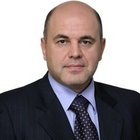
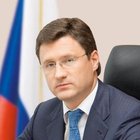
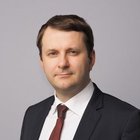
The meeting was attended by Prime Minister Mikhail Mishustin, First Deputy Prime Minister Denis Manturov, First Deputy Chief of Staff of the Presidential Executive Office Alexei Gromov, deputy prime ministers Tatyana Golikova and Alexander Novak, Deputy Chief of Staff of the Presidential Executive Office Maxim Oreshkin, Minister of Labour and Social Protection Anton Kotyakov, Minister of Economic Development Maxim Reshetnikov, Governor of the Central Bank Elvira Nabiullina, First Deputy Minister of Finance Irina Okladnikova, and Deputy Minister of Finance Pavel Kadochnikov.


* * *
President of Russia Vladimir Putin: Good afternoon, colleagues,
Today, we will discuss matters related to increasing wages for public sector employees, raising pensions, further reducing poverty levels, and boosting citizens’ incomes. These are among the state’s top priorities, reflecting the socially oriented nature of governance across federal, regional, and, of course, local levels. They are also of paramount significance for demographic development, the well-being of Russian families and the elderly, and, indeed, for the entire nation.
Wage levels, for instance in healthcare, education, science, culture, and other public sectors, directly impact the efficiency of these industries and, ultimately, the attainment of national development goals.
It is equally vital to continue the systematic enhancement of pensioners’ incomes. As stipulated in the Executive Order of May 2024, pensions shall increase at a rate no lower than inflation. Starting January 1 next year, old-age insurance pensions will be indexed by 7.6 percent, a rate exceeding the inflation forecast for the end of the current year.
Furthermore, social pensions will be indexed from April 1 in line with the increase in the pensioner subsistence minimum for the coming year. Funding for these measures has been secured in both the federal budget and the budget of the Social Fund. The Fund currently maintains a robust revenue base, underpinned by rising nominal and, most critically, real wages throughout the economy. Under all circumstances, the state must guarantee the full provision of pensions to citizens.
One more point. Our decisions on raising public sector wages and pensioners’ incomes are based primarily on the state of the economy. As I have emphasised previously, enhancing the quality of the domestic economy, combating the shadow economy, and tackling tax evasion require the closest attention. This not only strengthens the investment climate and competitive environment but also generates additional budget revenues, which can be allocated, among other things, to addressing the objectives under discussion today.
I would add that wage increase – both in the public sector and across other industries – stimulates domestic demand, supports the expansion of domestic production and services, and contributes positively to overall economic performance. This rise in incomes, along with structural shifts in employment and the formation of a high-wage economy, is essential for reducing poverty and inequality and for improving the living standards of Russian families. As I have previously noted, in recent years we have seen faster income growth among citizens with the lowest incomes, and Russia’s poverty rate has fallen to historic lows. Let me remind you – because this is well known – that in 2000, 42 million people, or 29 percent of the population, lived below the subsistence level, while by the end of last year that number had dropped to 7.2 percent, or just over ten million people.
This positive dynamic has continued into the current year. We are steadily moving towards the goal of reducing the poverty rate to below seven percent by 2030 and to under five percent by 2036.
I would like to emphasise that when assessing poverty levels, it is important to consider an objective, comprehensive view of the financial situation of individuals and their families, going beyond income alone. I urge my colleagues to keep this in mind when analysing anti-poverty measures and to refine the system of citizen support accordingly.
In this context, I would like to highlight that starting next year, a new support measure for families with two or more children, known as the family payment, will be introduced. Eligibility will be granted to families whose average per-person income in the previous year was below 1.5 times the regional subsistence minimum. Under this measure, each working parent will be able to reclaim a portion of the personal income tax paid last year. For them, the effective personal income tax rate will be six percent, with any excess refunded to the family. To receive this payment, applications must be submitted between June 1 and October 1. I would like to remind everyone that this procedure should be as simple, convenient, and easy as possible.
I also want to emphasise that the family payment is being introduced in addition to existing support measures. Families will retain the right to receive other payments and benefits.
I hope that this new measure will be widely used and will help make our social support system even more targeted, effective, and just.
Ms Golikova, please take the floor.
<…>