


President of Russia Vladimir Putin: Mr Manturov, I understand you wanted to address the current situation in the manufacturing industries, which have demonstrated strong performance through 2025. We recognise that a substantial share of this output comes from defence industry enterprises. I would also like to hear your assessment of developments in the space sector, particularly given the dual-use nature of these technologies.
Please, begin.
First Deputy Prime Minister Denis Manturov: Thank you, Mr President.
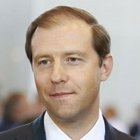
In line with the planned measures to cool the economy, growth in the manufacturing sector has remained positive. We concluded 2025 with growth of around 3 percent, with more precise figures expected in February following the release of official statistics. Performance varies significantly by industry: pharmaceuticals, medical equipment, and electronics are showing strong results, with growth exceeding 15 percent, while the chemical sector, including mineral fertilisers, recorded growth of more than 6 percent.
At the same time, we are observing a decline in the industries most sensitive to weakening demand. The Government is closely monitoring the situation at enterprises – often on a case-by-case basis – to provide targeted support and ensure their financial stability.
Credit is due to our companies, which have sustained strong investment activity despite challenging conditions. During the first three quarters of last year, investment in the manufacturing sector grew by 23 percent, amounting to roughly five trillion rubles. This growth is largely a result of coordinated efforts by the Government and businesses to implement national projects, which are underpinned by state support measures. These include, above all, special investment contracts, concessional loans from the Industrial Development Fund, support for research and development, and a cluster investment platform that subsidises loan interest rates. Together with existing mechanisms, these measures have enabled the steady launch of new production facilities, with 170 new projects initiated through the Industrial Development Fund alone in 2025.
Overall, nearly all implemented projects, especially those supported by the Industrial Development Fund, are aligned with the goals of achieving technological sovereignty and technological leadership set out in our national projects.
Vladimir Putin: How would you assess the performance of each of these industry support instruments? You have just mentioned one, but we have a whole range of them.
Denis Manturov: Mr President, they operate as an integral system. For example, if an enterprise embarks on a major project and we understand that the commercial loan required to implement it would entail substantial budget subsidies – because companies today find it difficult to finance such projects on their own – we step in at the initial stage through the Industrial Development Fund. In particular, during the first cycle, when working documentation is being prepared, support of up to 2 billion rubles is provided per project. In 2025, we reduced this ceiling: previously it was up to 5 billion rubles, but given the current economic environment, it has been lowered to 2 billion.
Additionally, enterprises can enter into special investment contracts, which subsequently provide tax incentives – at both the federal and regional levels. Since 2022, all such special investment contracts have been concluded with mandatory participation by the regions.
Vladimir Putin: This, apparently, is what ensures the volume of investment.
Denis Manturov: Yes, exactly. It creates such an opportunity. Moreover, bringing new competitive products to the market has a direct impact on our exports of competitive goods: over the first ten months of last year, exports grew by 18 percent. This indicates that our enterprises have overcome the initial stage of adaptation to new markets, given that today 80 percent of our supplies go to friendly countries. Prior to 2022, this figure stood at around 60 percent.
I believe this trend will continue to have a significant impact going forward, particularly in view of the fact that we are opening trade missions specifically in regions where we see growing interest in our products. These include Africa, Latin America, Southeast Asia, and the Middle East, not to mention the CIS and the Eurasian Economic Union.
As for the defence industry, our enterprises have fulfilled all state defence contracts. We placed – and will continue to place – particular emphasis on weapons and military equipment tailored to the needs of the special military operation. You have already cited these figures on multiple occasions, including at a meeting of the Defence Ministry Board in late 2025 and at the end of last year during the meeting to finalise the parameters of the State Armament Programme. In some areas the increase is several-fold, in others many times over.
Given the pace we have achieved in line with your instructions, it is essential to maintain this momentum. With the approval of the final version of the State Armament Programme and a gradual, balanced approach to procurement, we – together with the Ministry of Defence, the Ministry of Industry and Trade, and the Ministry of Finance – have determined the key parameters and reached a shared understanding of how this product line-up will be balanced on a year-by-year basis. This planning takes into account the observed growth in labour productivity at defence industry enterprises.
How is this happening? This has been driven primarily by large-scale technical re-equipment carried out under the state programme for modernising the defence industry, as well as by substantial federal budget investments over the past three years. Meanwhile, enterprises themselves have been actively investing in their development. Currently, the defence industry employs approximately 3.8 million people, with 800,000 new employees added over the past three years alone, and we can still observe that labour productivity continues to grow.
Vladimir Putin: This is a very important issue. I would ask you to exclude the second-shift factor and take a closer look at real labour productivity dynamics, including within the defence industry.
Denis Manturov: Mr President, that is exactly what we intend to do. As we agreed, most recently during your meeting on achieving the objectives of the 2027–2036 State Armament Programme, progress in project implementation and rising labour productivity will naturally be reflected in pricing, thereby increasing overall efficiency. This approach will make it possible for us to supply a greater volume of weapons and military equipment within the approved budgetary limits.
In total, more than 1,000 new and upgraded types of military equipment underwent frontline testing in 2025. We plan to present additional systems in the near future, including within the current quarter. All of this is naturally reflected in the demand for Russian arms and military equipment in foreign markets. The greatest interest is currently focused on air defence systems, aircraft, and multiple launch rocket systems, as well as unmanned systems and electronic warfare technologies.
To cite specific figures: prior to 2022, the maximum size of our export order portfolio stood at $55 billion. Today, this figure has reached a record $70 billion in signed contracts. I believe this upward trend will continue, as technologies tested during the special military operation effectively demonstrate their capabilities and competitiveness.
Mr President, another key avenue for the sustainable development of the defence industry is continued diversification. This priority, which you set in 2016, remains firmly in place even as procurement volumes under the previous state armament programme are being reduced. At the same time, despite today’s increased order levels, civilian output at defence industry enterprises has grown by an average of 10 percent annually over the past three years. By the end of 2025, we achieved the previously agreed targets, with civilian production exceeding 30 percent of total output. This is particularly evident in sectors such as modern rail transport, construction and road machinery, medical equipment, pharmaceuticals, consumer electronics, and telecommunications equipment.
We will continue to increase the number of civilian projects undertaken by defence industry enterprises, particularly in line with your instructions to leverage the production capacity of fixed assets upgraded over the past three years.
Above all, we expect defence industry companies to play an active role in projects aimed at achieving technological leadership, as well as in related national projects.
Another key industrial sector you highlighted is the development of the rocket and space industry. In 2025, revenue for space industry enterprises grew by 10 percent, positively affecting the Roscosmos State Corporation, with both average wages and labour productivity on the rise.
Last year, the corporation conducted 17 space launches, including the Angara-A5 launch from the Plesetsk Space Centre. A satellite for the Ministry of Defence was successfully placed into geostationary orbit, a task previously possible only from the Baikonur Space Centre. This marks the first time such a comprehensive mission has been carried out from Plesetsk. Notably, the Angara-A5 uses environmentally friendly oxygen-kerosene fuel, replacing the previously used heptyl.
The next phase will involve the large-scale deployment of the Angara rocket from the Vostochny Space Centre, including missions to support the Russian orbital station, followed by manned spaceflights and lunar missions, as outlined in the national programme, the Space national project.
Overall, our satellite constellation grew from 288 to 300 spacecraft in 2025. Starting in 2026, we will begin offering Earth remote sensing imagery services through a new approach. At your instruction, the full regulatory framework has been prepared, and funding has been allocated in the budget – 5 billion rubles.
Vladimir Putin: In the departmental budgets.
Denis Manturov: That is correct. The budget includes 11 clients, totalling 5 billion rubles to start. As we implement this initiative, we expect it to yield returns in the future. Following your directive to maximise the involvement of private businesses, these companies will also participate in this work. This approach should accelerate our progress and enable us to compete more effectively with global leaders in the space industry.
Vladimir Putin: Thank you.