


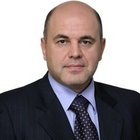
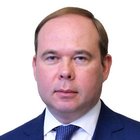
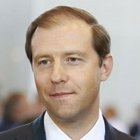
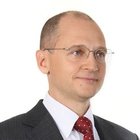
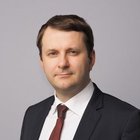
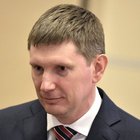
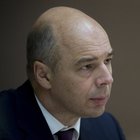
The meeting was attended by Prime Minister Mikhail Mishustin, Chief of Staff of the Presidential Executive Office Anton Vaino, First Deputy Prime Minister Denis Manturov, First Deputy Chief of Staff of the Presidential Executive Office Sergei Kiriyenko, Deputy Prime Ministers Tatyana Golikova, Alexander Novak, Alexei Overchuk, Dmitry Patrushev, Vitaly Savelyev, Marat Khusnullin, Dmitry Chernyshenko, Deputy Prime Minister – Chief of the Government Staff Dmitry Grigorenko, Deputy Prime Minister – Plenipotentiary Presidential Envoy to the Far Eastern Federal District Yury Trutnev, Deputy Chief of Staff of the Presidential Executive Office Maxim Oreshkin, Minister of Economic Development Maxim Reshetnikov, and Minister of Finance Anton Siluanov.
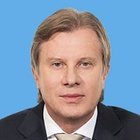
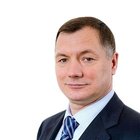

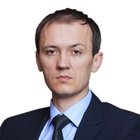
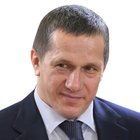
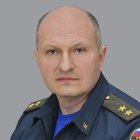
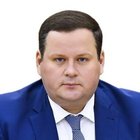
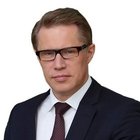
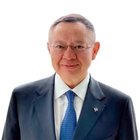
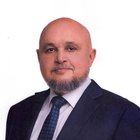
Also invited to the meeting were Minister of Industry and Trade Anton Alikhanov, Minister for Civil Defence, Emergencies and Natural Disaster Relief Alexander Kurenkov, Minister of Labour and Social Protection Anton Kotyakov, Minister of Healthcare Mikhail Murashko, Minister of Transport Andrei Nikitin, Minister of Construction, Housing and Utilities Irek Fayzullin, Minister of Energy Sergei Tsivilev, the governors of the Kamchatka Territory, Belgorod, Bryansk and Kursk regions, State Secretary – Deputy Minister of Defence Anna Tsivileva, and Head of the Russian Popular Front Executive Committee Mikhail Kuznetsov.



* * *
President of Russia Vladimir Putin: Good afternoon, colleagues.
Today, we are holding our first meeting of 2026. The New Year holidays are behind us, and I must emphasise that all levels of government must now transition to intensive and systematic work.
The agenda includes a range of issues. I propose we begin by discussing how regions, including those near the line of contact, are managing the winter season, the functioning of our energy infrastructure, and measures to ensure the supply of electricity, heating, and water to households, businesses, and social institutions.
We will also address the situation in the transport sector, which is dealing with the aftermath of heavy snowfall and low temperatures.
In this regard, I would like to invite colleagues to share their reports. I suggest we begin with Irek Fayzullin. Mr Fayzullin, you have the floor.
(Irek Fayzullin reported on how the winter season was proceeding and the work of the housing and utilities infrastructure with an emphasis on the borderland and rejoined regions. Sergey Tsivilyov commented on the work of the energy sector during the heating season. Governor of the Kamchatka Territory Vladimir Solodov spoke on removing the aftermath of the heaviest snowfall in the region over the past 50 years, which resulted in many-meter thick snow layers in the cities and settlements. According to him, the situation is getting back to normal now and is under control. Andrei Nikitin said that despite the abnormal weather conditions the transport system has fulfilled its function, including freight and passenger traffic as well as the air transport.)
Vladimir Putin: I want to call on all my colleagues both in the federal agencies and in the regions. Still, later this week strong frost and probably repeated snowfalls in many areas are expected both in Central Russia and in the Volga region. This is why we must be ready for such a development of the situation.
Our primary focus today is to review the outcomes of December’s Direct Line conference and to discuss the issues it raised. These are, in essence, the issues brought to us, to the Government, directly by the public, and they span the most pressing concerns facing our citizens.
In total, we received over three million questions during the Direct Line. These primarily concerned social policy, which accounted for over 20 percent, as well as government and public engagement, economic development, infrastructure, the healthcare system, and other key areas.
I would like to emphasise this point: the questions posed by our citizens are not merely a crucial indicator of where the government must double down its efforts and deliver greater results. Each inquiry also represents a direct call to action for federal, regional, and local authorities.
In this regard, I should note that all queries submitted in the run-up to the Direct Line are being processed by the Popular Front and our volunteers, before being forwarded to the relevant agencies and departments for concrete action. This is, of course, a complex and labour-intensive undertaking. I extend my thanks to all involved. I would also add that, as you are aware, the organisers have recently implemented domestically developed AI solutions. Whereas previously, reviewing a request and assigning it to the responsible body could take months – sometimes up to six – this process now takes mere minutes, thereby significantly accelerating the resolution of specific problems. Furthermore, thanks to these new digital tools, federal and regional authorities have begun addressing particularly urgent issues in real time, even prior to the broadcast. I would particularly highlight the initiative of the Ministry of Health, which started acting on callers’ pressing concerns as they came in, beginning on December 5. I would like to offer my special thanks to my colleagues for this responsible approach.
For our discussion today, I propose we examine in detail a selection of the questions submitted to the Direct Line. Several of these were discussed at our last meeting towards the end of last year, where we agreed to work swiftly with our colleagues in the State Duma and in the regions to develop actionable measures.
First among these is the refinement of the support system for families with children. As a reminder, low-income families are eligible for assistance from pregnancy until the child reaches the age of 17. However, citizens have identified certain aspects that require adjustment and clarification – notably, eligibility in cases where a family’s income marginally exceeds the threshold. Proposals were also made to extend the operating hours of crèche groups at kindergartens, allowing parents to collect their children at a more convenient time after work. I have discussed these matters with the Prime Minister following the Direct Line, and with the responsible Deputy Prime Minister. The Government is now advancing work on these and other related initiatives, and the relevant instructions have been issued.
I would like to reiterate: all measures we are implementing in the demographic sphere, particularly in support of families with children, must be rest on the views of our citizens, accounting for their needs and an evaluation of the effectiveness of the decisions already enacted. On this basis, the Government and colleagues in the regions must continuously improve the system of support for families with children, by supplementing and fine-tuning it.
It is evident that only under these conditions will our demographic policy yield tangible, real results. This is precisely the key strategic objective facing Russia.
I would also like, at this juncture, to remind you of the important decisions designed to further protect the interests of citizens, including families with children, in the housing market. As agreed, from January 1 this year, the moratorium on the imposition of penalties for developers who fail to hand over apartment keys within the stipulated timeframe has been lifted. Consequently, if construction companies delay fulfilling their obligations, homebuyers will be able to seek redress for the costs incurred.
I repeat once again: keys to purchased apartments must be handed over on time. Here, systematic work with developers – at the level of local and regional authorities, construction and supply organisations, and through federal legislation – plays a crucial role. This work must be carried out consistently, a point I emphasised during our previous meeting.
Next point. The most important task, duty, and responsibility of the state and our entire society is to support participants and veterans of the special military operation, as well as members of their families. Much is being done in this regard through the Ministry of Defence and the Defenders of the Fatherland Foundation. The Russian Popular Front is making a tremendous contribution, as it unites the efforts of millions of citizens and volunteers who actively and practically assist our fighters, our heroes, and their families.
It is clear that in this extensive and complex work, challenges inevitably arise. During the recent Direct Line event, appeals were received regarding delays in payments, pensions, and benefits for participants in the special military operation and their relatives. I must draw attention to this: in each specific case, we are dealing with people’s lives and families, and any discrepancies and failures in processing must be addressed with the utmost thoroughness.
I expect to hear today a report on what has been done to resolve these issues and how interagency coordination has been established to ensure that veterans of the special military operation, our fighters, and members of their families receive all payments due to them without unnecessary delays or bureaucracy.
A separate topic concerning availability of subsidised medications was brought up during the Direct Line. Unfortunately, after being diagnosed with an illness or having undergone a surgery, people in some communities are not always able to obtain medications, including life-sustaining medications, either free of charge or at low fixed prices.
To reiterate, subsidised medications must be readily available in all regions and communities. They are part of the state’s social obligations, and they must be properly fulfilled by allocating funds to the regions, establishing local operations, concluding procurement contracts in a timely manner, and, of course, establishing logistics, including the use of first-aid stations, post offices, and ambulant pharmacies. Instructions to this end have been issued.
I look forward to receiving a report on this matter today. Please focus on the domestic production of medications and vaccines and boosting the capacity of Russian pharmaceutical companies.
One more thing. As you may be aware, amendments to the tax system came into effect this year. Among other things, they apply to small businesses which tend to outgrow the patent system in terms of volume over time and start paying value-added tax.
As you may recall, during the Direct Line, we were joined by a bakery from the Moscow Region. Its owner made a point that tax amendments may compound small business operations, meaning small businesses that engage in production and marketing of their own products.
In recent years, much has been done at the federal and regional levels to support small businesses, especially the ones engaging in manufacturing. Without a doubt, this sector of the economy must be able to transition smoothly to new taxation arrangements. In other words, it is important to avoid excessively increasing the burden on entrepreneurs, increasing accounting costs, and so on.
I look forward to hearing where the Government stands on ways to protect the interests of the manufacturing businesses and to provide additional support to these enterprises.
In closing, I would like to bring the attention of our colleagues from the Presidential Executive Office and the Government to the fact that an extensive list of instructions is being drafted following the Direct Line. In addition, please formalise the outcomes of today’s meeting as separate instructions.
I will now give the floor to Tatyana Golikova. She and I have discussed the supply of medications to the regions on many occasions. The federal authorities, Ms Golikova told me, are transferring the funds in full and on time, but there are many minor issues that arise constantly, and we must deal with them constantly as well.
Ms Golikova, please, the floor is yours.
(Tatyana Golikova spoke in her report about streamlining the system of single child support benefits. Speaking on a related issue, Dmitry Chernyshenko commented on the situation with kindergarten nursery groups for children aged between two months and three years, in particular, the renovation of kindergartens, extending their working hours and staffing them with preschool education personnel. The President noted that these issues must be closely monitored, the activities of regional authorities must be amended appropriately, and that the relevant federal agencies must react to these issues accordingly. Denis Manturov also commented on that subject.
Anna Tsivileva’s report was devoted to the improvement of interaction between federal agencies and the Defenders of the Fatherland Foundation on the issue of payments to participants in the special military operation and their families. She said that the provision of all due payments and social support measures to military personnel and their families is a priority task of the Defence Ministry. Vladimir Putin spoke about the importance of digitising all decisions on the issues under discussion in order to make the system more effective and efficient. He also emphasised the importance of interaction between the Defence Ministry and civilian agencies. Anton Kotyakov spoke about this in his report. The President pointed out that addressing social matters and implementing the state’s obligations to service personnel and their families is also extremely important for the fulfilment of combat tasks, because our personnel on the battlefield must know that the state reliably safeguards their interests and the interests of their families. As the President said, support for military personnel and veterans constitutes a major part of motivation for effective work in combat conditions, as well as a moral obligation of the state.
Maxim Reshetnikov reported on changes in the taxation of small businesses scheduled for 2026. According to him, the new rules are aimed at supporting fair competition and preventing artificial fragmentation of enterprises.
Mikhail Murashko spoke about the availability of subsidised medications. Anton Alikhanov commented on this issue. He also described the situation in the domestic pharmaceutical production, saying that a substantial growth of production facilities in the past 15 years increased the share of domestically produced medications in the open market to 63 percent. State procurement orders provide over 80 percent of medications for the state healthcare system. At least 10 new enterprises are to be built by 2030. As for breakthrough technologies, such as biotech and radiopharmaceuticals, systematic efforts are being taken within the framework of national technological leadership projects. The minister also proposed creating a new innovation support mechanism, in particular, the reimbursement of actual costs in clinical research that results in the creation of unique, first-in-class medications. Vladimir Putin pointed out that the Russian pharmaceutical industry, a sphere where a great deal is still to be done to increase its independence, has taken a huge leap forward in the past few years. The President supported the proposal to increase the volume of research that will increase its self-sufficiency and independence.
Marat Khusnullin, speaking at the President’s request, reported on the performance of the construction sector in 2025 and the protection of interests of buyers in shared-equity housing projects. Vladimir Putin congratulated the sector on good performance last year.)
Vladimir Putin: I would like to thank you all for your active participation in addressing the tasks highlighted by our citizens during the Direct Line. These are the priorities our people have set. We are well aware – this is not our first experience of such an event. The Direct Line has been functioning, one might say, for many years, and each time it serves not only as the most accurate sociological snapshot of the issues concerning our citizens but also as a guideline for our joint work. There is a distinction between our correct, important, and large-scale policy objectives and the feedback we consistently emphasise. It is this feedback that helps us structure our work in practical and tangible terms.
I would like to thank everyone once again for your proactive involvement in our joint efforts and express my hope that we will continue to implement everything discussed today with the same consistency. All of this holds immense importance for our country and for millions of our citizens. We will maintain this approach moving forward.
Thank you very much. I wish you all the best.