


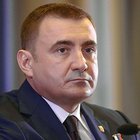
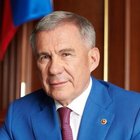
Taking part in the meeting were Presidential Aide and State Council Secretary Alexei Dyumin, via videoconference; Head of the Republic of Sakha (Yakutia) and Chairman of the State Council Commission on Energy Aisen Nikolayev; Head of the Republic of Tatarstan and Chairman of the State Council Commission on Infrastructure for Life Rustam Minnikhanov; Energy Minister Sergei Tsivilev; representatives of the Presidential Executive Office and other federal government agencies, regions, businesses, and experts.

The meeting participants addressed issues related to ensuring technological sovereignty and technological leadership in the energy sector, the development of domestic power engineering, and the progress of the New Nuclear and Energy Technologies national project.
In his opening remarks, Alexei Dyumin noted that the global energy sector was undergoing a profound transformation, with the structure of the energy balance changing.
“Building on traditional fuel and energy technologies, as well as nuclear and renewable energy, it is essential to advance hydrogen and other promising solutions while maintaining a balanced approach. The key objective is to transit from a demand-driven model, focused primarily on meeting current needs, to an economy oriented toward long-term demand planning and broader technological accessibility for new categories of consumers. This transition requires systemic measures aimed at attracting investment into the sector, improving production efficiency, accelerating digitalisation, and minimising the burden on end users,” the State Council Secretary said.
Alexei Dyumin also emphasised that power engineering was a backbone industry – its sustainable and accelerated development is not merely important but essential for the energy sector, forming the foundation of economic security and long-term growth.
“We face ambitious tasks: by 2042, we must commission nearly 88.5 GW of new generating capacity. The New Nuclear and Energy Technologies national project is already delivering results: the share of domestically produced equipment in the fuel and energy sector exceeds 80 percent and keeps growing. However, the pace must be intensified. Technological leadership in energy is not just a goal, but a prerequisite for the country’s overall progress,” Aisen Nikolayev stressed.
Rustam Minnikhanov noted that Republic of Tatarstan was increasingly serving as a key platform for discussions on energy policy, reflecting strong recognition of the region’s infrastructure and industrial potential.
Sergei Tsivilev highlighted that, within the framework of a technological sovereignty model, a comprehensive inventory of existing energy technologies had been compiled, with specific energy companies assigned responsibility for each area.
“We also invite leading international companies to cooperate. We are open to all countries and businesses that share our views and principles. While some actors seek to assert dominance through weapons, thus advancing their interests whereas our approach is different: we aim to promote global development through cooperation to create technological sovereignty and energy equity,” the Energy Minister concluded.