


President of Russia Vladimir Putin: Where shall we begin, Mr Shokhin?
President of the Russian Union of Industrialists and Entrepreneurs Alexander Shokhin: Mr President, I would like to begin by thanking you. On May 8, you signed an executive order to bestow a high state decoration, the Order For Valiant Labour, on the Russian Union of Industrialists and Entrepreneurs.
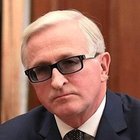
This year, the RSPP marks its 35th anniversary. Of course, it is quite heartening for us to know that you and the Russian state appreciate RSPP’s contribution as the leading business association and a national association of employers.
Mr President, I would like to report on the way we have been carrying out the instructions you gave us as part of the RSPP’s congress. It took place on March 26 and we submitted several proposals to you, which you used to issue your instructions.
I would like to begin by telling you that we are working on bringing up to date the institution of the commissioner for entrepreneurs’ rights. During our meeting in late March, you suggested that it was time to upgrade this institution. Moreover, the most effective option would be to transform the commissioner’s functions into a public and state institution rather than keeping it as a purely state institution. We held a series of consultations with the Presidential Executive Office and the business community to draft the corresponding proposals for amending the Law on the Commissioners for Entrepreneurs’ Rights.
Vladimir Putin: Are you suggesting establishing an autonomous non-profit organisation to replace the commissioner’s offices?
Alexander Shokhin: Yes, and here is the chart which shows the way we would like to advance on this matter. This will not be an exclusively public institution. Instead, it will be a public and a state institution at the same time, because we believe that the state must be involved in this autonomous non-profit organisation’s operations as its founder. The leading business associations, which, apart from the RSPP, include the Chamber of Commerce and Industry, Delovaya Rossiya, and OPORA Russia, will also stay on as the founders.
Today, this autonomous non-profit organisation operates as a structure with a primary focus on processing applications from businesses. Moreover, all our law enforcement agencies, and the Prosecutor General’s Office adopted regulations for working with these applications. This ensures that complaints dealing with excessive pressure are reviewed in the central offices instead of being sent to the very level that is targeted in these complaints.
We believe it is possible to consider transferring the office’s functions to the bodies serving the commissioner’s needs. In our opinion, the commissioner should permanently head the supervisory council of this non-profit organisation.
Mr President, if you consent in principle to this arrangement – as I have said, we have worked on this matter with the Presidential Executive Office, including Anton Vaino, Maxim Oreshkin and Larisa Brychyova – we have drafted legislative amendments to this effect. In addition to the law on commissioners, there may be small, targeted changes to a couple of other laws. For example, the funding is currently processed through the Civic Chamber while it could be directly routed through the Administrative Directorate.
Similarly, if the commissioner’s post is not a government position, certain wording in the law will have to be slightly relaxed. In particular, the commissioner currently has the power to suspend municipal bodies’ decisions for six months and also to file motions with the court to cancel decisions. However, we believe that this power could be frozen for now. Since the commissioner is not a government body, the arrangement should be different.
Vladimir Putin: Do you believe it is excessive?
Alexander Shokhin: Yes, I do. Of course, it would be right to adopt this law as soon as possible. Why? First of all, because, since Boris Titov was transferred to another post – he is now the Presidential Plenipotentiary Envoy for Sustainable Development and Relations with International Organisations in this area – this position has been vacant for quite some time. And since all the parties interested in preserving and increasing the effectiveness of this institution agree with this arrangement, corresponding draft laws could be passed rather quickly, provided that you submit them.
Vladimir Putin: Mr Shokhin, I agree with this part. Let’s do it.
Alexander Shokhin: Thank you.
Regarding other instructions, Mr President, we have discussed this several times, including in March. I am referring to the statute of limitations on privatisation deals. I would like to thank you for supporting the respective draft law. The Government also upheld it. We worked closely with the Ministry of Economic Development and the Presidential Council for Codification and Enhancement of Civil Legislation. The State-Legal Directorate also supported this arrangement, but without your personal support, I think the approval process would have continued for a long time. The fact that this draft law is being considered by the State Duma and may be passed by the time of the St Petersburg Economic Forum can also be a positive outcome.
As we have reported to you several times, this law does not restrict opportunities for law enforcement agencies or the judicial system to fight against dishonest businesses and those involved in corruption schemes. There can be no statute of limitations in those cases. Nevertheless, the privatisation deals themselves and applying the Civil Code norms to them, in my opinion, can give certain stability to business operations, which we really need, unfortunately, given the current global uncertainty.
There is another topic that deals with elevating the status of employers’ associations. We do not support imposing an obligation in our laws for specific employers to join these associations. However, we believe that the existing norms regarding economically and socially significant entities set specific criteria, which include having four thousand employees or more, earning a specific level of revenue, holding assets, etc. According to our estimates, about 600 major corporations fall within this category. We believe that having them join regional, sectoral, inter-sectoral or national employers’ associations would be a gesture of assuming greater social responsibility on their part. These are the leading companies in our economy, and they must also be at the forefront in terms of corporate social responsibility at the same time.
We believe that having these entities join the associations of employers would make these associations stronger, while also helping companies improve their image and reputation.
This would enable us to create a whole system of employers’ associations so that every association, be it regional, sectoral, etc., can obtain membership in a higher-level association. This would create a whole system of interconnected associations of employers.
There is one more topic, if we return to the subject of defending the rights of entrepreneurs. We raised it in March at the congress, and we had a meeting in a narrower format. It concerns easing judicial restraints. In particular, in terms of injunctions, there has been a policy for quite some time now to have fewer arrests while prioritising other provisional measures instead of placing people in detention. There has been an instruction to this effect.
We are currently working with the Ministry of Justice and other government institutions, as well as the Presidential Executive Office, to establish a single set of definitions. What does it mean to manage an organisation? Or what does it mean when we say that a private entity engages in business activity? This is a key topic, and you were the one who proposed amending the laws to ensure that provisional measures do not become an obstacle for economic and business activity. We must have clear definitions so that the courts, law enforcement agencies, and investigative bodies have a shared understanding of what this means.
We would like to raise the topic of using bail as a provisional measure in this context. We worked with the Government and law enforcement agencies to come to a shared understanding on this matter. It is our belief that bail has not been used much so far because courts do not know how to determine the amount of the bail. There was an agreement among us that the bail must be set depending on the extent of the damage.
Apart from bail, there can be provisional measures other than arrest, for example, a travel restriction order or a guarantee, which means that this can include a series of measures.
There are several other topics currently under discussion. In particular, we are working on a mechanism for interaction between businesses and the government – specifically, the Ministry of Defence – in countering terrorist threats. Major enterprises are naturally interested in protecting their facilities and operational areas, and all responsible large companies are paying close attention to this issue. At the same time, a number of practical matters still require resolution. These concern procurement mechanisms for weapons systems, not only standard 7.62 mm small arms, but also heavier equipment, including electronic warfare systems, laser technologies, and other types of armaments, as I have already mentioned.
In addition, businesses are prepared to finance this work, but there is a need for a clear and transparent mechanism for managing such funding. This could take the form of a dedicated foundation or another type of targeted financing structure.
We are also facing challenges related to the recruitment of reservists assigned to guard these facilities. A corresponding decision has already been adopted, but in practice reservists may be assigned to one location today and reassigned elsewhere tomorrow. As soon as they begin taking responsibility for a facility, new operational demands inevitably emerge, which is understandable.
As for the economic dimension, delays sometimes arise in the fulfilment of certain obligations affecting businesses, including those connected with state support measures. Naturally, companies that are forced to devote significant time and resources to restoring damaged facilities should not face additional sanctions during that recovery period. It would therefore be advisable to establish mechanisms allowing for the suspension of penalties, the deferral of tax payments, and other forms of temporary relief.
We are also actively working on cultural heritage preservation – a topic you have raised not only at the congress, but on many other occasions as well. A dedicated commission for the protection of cultural heritage sites has now been established. We are currently preparing a registry of sites already under business management and examining ways to encourage companies to take a more active role in this work.
At the same time, several regulatory issues have emerged that we intend to discuss with the Government. In particular, restoration requirements should take into account the actual condition of a site. One approach is needed when only a foundation remains, and another when the work is limited to restoring façades and interiors.
Many companies are already viewing the preservation of cultural heritage sites as an important element of regional development, not only to improve living conditions and prevent population outflow, but also to promote tourism in the regions where they operate.
In December, during our meeting with the business community, Mr President, we discussed environmental issues, including payments for environmental impact. I would like to report that your intervention provided significant momentum. Together with the Ministry of Natural Resources, we are now finalising work on possible adjustments to regulatory decisions and payment schedules in this area.
In conclusion, I would like to note that this format of direct engagement – where we discuss specific matters, you issue instructions, and we move promptly towards legislative or governmental decisions – has proven highly effective. I would also like to express my appreciation to your Executive Office for maintaining close oversight of these instructions. Frankly speaking, the Control Directorate does not let the relevant agencies relax. Special thanks are due for this work.
Thank you for your continued involvement in matters related to business support and the promotion of investment and entrepreneurial activity. This is of great value to us.
Vladimir Putin: Mr Shokhin, we will continue working together to improve the legal framework and administrative conditions for doing business in Russia.
I am also grateful to you for everything that has been done recently. I hope that your proposals for further strengthening the role of the ombudsman in charge of protecting the rights of the business community will soon be implemented and prove beneficial.
As for the issue we have been discussing for several years – the restoration of statutes of limitations for certain transactions, including privatisation deals – I would like to stress that I believe there is only one category of offence to which statutes of limitations should neither apply nor be applied: crimes against humanity. In all other cases, a statute of limitations is necessary.
In fact, the institution of the statute of limitations is intended to safeguard the interests of both the state and society. However, if it is not applied at all, this ultimately runs counter to those very interests. Therefore, it is important that these matters be regulated properly and in a timely manner. I will do my utmost to ensure that all necessary decisions are adopted as quickly as possible.
Thank you.
Alexander Shokhin: Thank you.
<…>