


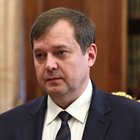
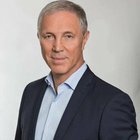
Taking part in the meeting were Prosecutor General Alexander Gutsan, First Deputy Chief of Staff of the Presidential Executive Office Sergei Kirienko, deputy prime ministers Tatyana Golikova and Marat Khusnullin, Deputy Chief of Staff of the Presidential Executive Office Maxim Oreshkin, Interior Minister Vladimir Kolokoltsev, Minister for Civil Defence, Emergencies and Natural Disaster Relief Alexander Kurenkov, Minister of Agriculture Oksana Lut, Finance Minister Anton Siluanov, Minister of Energy Sergei Tsivilev, Director of the Federal Security Service Alexander Bortnikov, Head of the Donetsk People’s Republic Denis Pushilin, Head of the Lugansk People’s Republic Leonid Pasechnik, Governor of the Zaporozhye Region Yevgeny Balitsky, Governor of the Kherson Region Vladimir Saldo, and Deputy Defence Minister Alexander Sanchik.

* * *
President of Russia Vladimir Putin: Good afternoon, colleagues,
Our agenda includes issues of socioeconomic development of Donbass and Novorossiya. Let me remind you that just over three years ago, in April 2023, a corresponding comprehensive programme was endorsed, and large-scale tasks were set to ensure close integration of our historical territories into a single legal, economic, educational, cultural, and information space of the country.
Today, we will assess the results attained, and most importantly, we will once again jointly analyse which areas call for additional efforts, where closer coordination is required, taking into account the current situation and operational information from the regional heads. We will look into where resources should be concentrated as a priority, and where, as I have already mentioned, additional support from the federal authorities is required.
I would like to point out once again that under the plans, the Donetsk and Lugansk people’s republics, and the Kherson and the Zaporozhye regions should achieve Russian nationwide standards in all key indicators, in terms of quality of life by 2030. To this end, the programme provides for about 300 different activities, including the development of social, housing, transport, and utilities infrastructure, implementation of projects to launch new industrial and agricultural enterprises, and creation of additional modern jobs.
Importantly, all federal agencies, 26 state-owned companies and 82 constituent entities of the [Russian] Federation have engaged in this massive work and taken patronage over specific areas and settlements of the reunited regions. In fact, entire Russia, hundreds of work teams, volunteer movements, and public organisations have lent a hand to Donbass and Novorossiya; they united to help unlock the enormous potential of these lands and create conditions for creative and stable life.
I am sincerely grateful to all those involved in these tremendous efforts. I know that we have to work in a very stressful, difficult, and sometimes dangerous combat situation – near the line of contact, under conditions of unmanned attacks and shelling.
Our troops are holding a strategic advantage, confidently moving forward, and no shelling or drone strikes are going to change this situation now. There are advances in all directions. The enemy cannot contain this onslaught and is turning to openly terrorist methods – striking civilian targets and communications as well as passenger transport.
I would like to thank all residents of Donbass and Novorossiya for their courage and steadfastness, and, of course, doctors, teachers, public utilities workers, drivers, employees of many departments, and specialists who conscientiously perform their professional tasks and achieve meaningful results.
I can inform you that in total, more than 25,000 different facilities have been restored or rebuilt, including schools, hospitals and clinics, sports grounds, energy and utilities infrastructure. About one million square meters of housing have been commissioned, almost 260 industrial enterprises have been launched, and about 19 million tonnes of grain have been harvested. Through a wide range of tools and mechanisms, assistance has been provided to businesses, small and medium-sized enterprises.
Next. Over 8,000 kilometres of motorways have been repaired and paved, including sections of the Azov Ring motorway, a modern road connecting our Azov regions designed to improve transport accessibility of these territories, open up new opportunities for investment, logistics, and trade.
In this regard, I would like to mention the recently approved Azov Region Development Strategy. It covers our historical regions of Donbass and Novorossiya and should help expand transport and tourism infrastructure, bring land into agricultural production, take the fishery complex to a new level, and eliminate accumulated environmental damage. Eventually, the resource and recreational potential of the Azov Sea region should substantially increase.
I would like to take this opportunity to ask my colleagues in the Government, jointly with the Agency for Strategic Initiatives, local leaders, and business representatives, to focus special efforts on implementing this strategy.
We essentially need to actively introduce cutting-edge scientific and technological solutions and create conditions for attracting investment in technological development projects in this region. This is the foundation for a long-term, sustainable growth. As a result, the Azov Sea region’s development strategy and the programme for the socioeconomic development of Donbass and Novorossiya will effectively complement each other and provide a comprehensive approach to the recovery of our historical regions.
I would like to reiterate: we need not just to recreate or repair everything that was destroyed or damaged but to lay a foundation for a drastic transformation of the economy and industry in Donbass and Novorossiya, to ensure that all spheres of life in these regions get a powerful boost to development for people to see real changes for the better. This is our key national task, and it must be rigorously carried out.
There is a lot of work ahead, and the programme for the socioeconomic development of Donbass and Novorossiya is designed for the period of up to 2030, as you are well aware. A significant part of the programme has yet to be implemented.
This is what we are going to discuss in detail today. Let us get to work. The floor goes to Mr Khusnullin, please.
Deputy Prime Minister Marat Khusnullin: Mr President,
The social development programme for the reunited regions, approved on your instructions, is being implemented in full. You have declared this year the Year of Unity of the Peoples of Russia, and the development of Donbass and Novorossiya has become an example of how the entire country has united to achieve the common goal.
It is important that the programme is comprehensive and covers all areas of our lives and interests of all our citizens.
The most vital task that directly affects the future of these regions, and with due account of their potential – of the entire country, is the development of the regions’ economies.
As you have already noted, industrial enterprises are restoring their operations, and an increasing number of products from these regions are integrated into our common Russian economic system. Agriculture is developing, and agricultural land is being brought into cultivation.
The free economic zone contributes to the inflow of investments and the growth of business activity. The number of participants in the free economic zone has already exceeded 500, whereas the volume of announced investments in the territory amounts to 383 billion rubles. We see that investors are showing great interest. Regional teams should prioritise provision of comfortable investment conditions, project support, and response to investors’ problems and issues in the reunited regions. The latter have a tremendous potential in industry, agriculture, tourism, and construction, and our task is to actively develop it. This is a priority task for the near future.
Mr President, the banking sector is actively developing, and investments through the banking sector are intensively growing. Last year we saw a significant and serious growth with a loan portfolio of 275 billion already, while the growth since the beginning of this year alone, in five months, has been 30 percent. This is a huge work, which, of course, must be continued and increased many times over.
Of course, preferential mortgages and industrial loans, support for agricultural producers and all types of financial services are of great help here. In addition, a military risk insurance programme for housing construction was launched jointly with the Ministry of Finance.
Jointly with the Federal Service for State Registration, Cadastre and Cartography and the Roskadastr public non-profit company, large-scale work has been organised to take a total inventory and registration of all real estate property; some six million facilities have already been registered – it is an enormous figure. This is very important for people to be able to register their housing and land plots, develop the economy, attract investors, receive loans, and increase tax revenues.
As for tax receipts, we have collected 435 billion rubles in 2025. It is 22 percent more than in 2024. Mr President, we review the figures every month together with the Federal Taxation Service, and we can see that the growth rate this year will be between 10 and 20 percent in different sectors. In other words, our economy is developing and taxes are collected. We can see that the new regions are growing and creating additional demand for the output of our enterprises throughout the country, which is fostering its development.
Since 2025, all four regions have been fully involved in the implementation of the Infrastructure for Life national project. Under this project, 98 key settlements were identified and comprehensive plans for their development have been drafted and approved. These are core development milestones. At the same time, I would like to say that all other territories continue to develop as well. As recently as last week, we held meetings in every region with the heads of these regions and their teams. We are implementing all plans for the development of major settlements.
Our key priority was to rebuild housing and infrastructure, which the people need for comfortable life. Overall, we have rebuilt 7,700 apartment buildings, or about 24 million square metres.
For the first time in the post-Soviet period, we are implementing a programme of major repairs and replacement of old lifts in Donbass and Novorossiya. We are also inspecting dilapidated housing and have launched a programme to relocate people from such housing.
Another priority is the development of investment housing construction. Our ambitious task is to reach the national average in housing construction by 2030. We are addressing this issue comprehensively. In particular, we have prepared 26 master plans and another 75 such plans will be ready by 2030, including for the coastal area in the context of the potential development of tourism and housing construction, as well as the overall development strategy of the Azov Region.
We are taking measures to increase our construction potential. Towards this end, we have created a database of land plots that can be used for housing construction.
While working to rebuild housing, we are also implementing a programme to rebuild and modernise the public utilities sector. It should be said that this sector was in bad shape, as it had not been renovated since the Soviet era. We have approached this task systematically, repairing and modernising networks and installing new systems.
Of course, we pay special attention to the acute problem of stable water supply. Mr President, you focused on this issue on numerous occasions, and we have taken a package of measures to maintain the requisite volume of water supply. We have switched to a daily water supply in Mariupol. That is why we can continue to reduce water losses by changing pipes, and we have good results to report.
Road infrastructure is a vital element of territorial development. To improve these regions’ connectivity, we have approved detailed road development plans until 2030, which include every settlement and every road in it. We have signed these documents with all city heads and the Federal Road Agency (Rosavtodor) and published them.
I can assure you that both federal and municipal roads there have been brought to standard. The next task is to upgrade roads inside the localities, which is why we have increased additional funding to expand the road network in settlements. We also need to expand the municipal road network, which is currently below standard.
We are actively developing the public transit system. I would like to say that we have fulfilled your instructions to increase the share of public transport in the new regions that complies with the national standard to 85 percent. Over the past two years, we have sent many buses there. There is a problem with drivers, but the last time we visited that territory we saw that nearly all buses are running on their routes. This is very important for the people.
I would like to highlight the modernisation of social infrastructure, which is a matter of special significance for us. Overall, we have rebuilt 263 healthcare facilities, 1,700 educational establishments, including universities, schools and kindergartens, and 500 culture, sports and social services facilities. We worked together with the single customer in the construction sector, the heads of the regions, and our colleagues at the ministries of science and higher education, healthcare, education, culture, labour and social protection, as well as sport to formulate sector-specific programmes for the reconstruction of social facilities until 2030. In all, we plan to rebuild 2,300 facilities. We have the necessary funding and plans, and we are working to implement them.
Mr President, I would like to thank you for the attention you are giving to the development of the reunited regions. We would not have achieved these results without your constant support. I would also like to thank the Presidential Executive Office, the heads of the reunited regions and their teams, all participants in this project, namely, federal agencies, the sponsor regions, and state companies. We are also grateful to the State Duma and the Federation Council for the huge volume of their legislative work – they have adopted over 200 legal acts.
I would also like to extend a special thank you to our colleagues in the law enforcement – the FSB, the Prosecutor General’s Office, the Defence Ministry, the Emergencies Ministry, the Interior Ministry, and the National Guard, who ensure security and compliance with law and order.
The tasks ahead are ambitious and complicated, but we know how to address them. We have developed a systemic approach to the development of the new regions. I am sure that we will achieve all the goals you have set to us.
Thank you for the attention.
Vladimir Putin: Thank you, Mr Khusnullin.
Please, Ms Golikova, on the development of the social sphere.
Deputy Prime Minister Tatyana Golikova: Thank you.
Mr President, colleagues, good afternoon.
As Mr Khusnullin has already noted, today our historical regions are fully included in the implementation of key strategic and priority activities, as well as national projects – Family, Long and Active Life, Personnel – and in our state programmes.
Today, a network of government agencies has been fully established: these include authorities of the Federal Agency for Labour and Employment (Rostrud), medical and social assessment offices, employment centres, social protection centres, departments of the Social Fund, the Federal Compulsory Medical Insurance Fund, and the Federal Service for Surveillance in Healthcare. In other words, we have moved from the stage of adaptation to the stage of sustainable functioning and development.
I will briefly report on individual areas of work.
In terms of the social block, today all social protection, labour, and pension guarantees are available to citizens. Currently, federal support measures cover 2.4 million residents of the historical regions. There is a gradual transition to federal pensions going on. Today, more than 1.5 million people have been awarded pensions since 2023, 93 percent of them are pensions meeting federal standards.
From July 1, 2025, according to your instructions, work in Ukraine is included in the pensionable service. And today, pensions have already been recalculated for 27,000 citizens.
Almost 140,000 maternity capital certificates have been issued, with 50 percent practically used. The preferred form of using maternity capital is monthly payments to children under three years of age.
The unified [child] benefit currently covers 36,000 families with 56,000 children, as well as 1,300 pregnant women. And we have preserved the simplified conditions for accepting documents.
We are also implementing a social contract programme. Today, 39 percent of families with children use social contracts in historical regions. And this year, on your instructions, participants in the special military operation receive a social contract regardless of their needs. This work has been launched by the regions.
The support measures that we are implementing are gradually yielding results. Over the past three years, we have seen that the birth rate is increasing albeit slowly. The Donetsk People's Republic is the leader here: the growth amounted to 14 percent over three years.
A few words about the citizens who need our support, perhaps more than healthy citizens. We are talking mainly about the elderly and citizens with disabilities. Today, 104,000 such citizens receive our care in 138 social care institutions, and 1,937 citizens receive long-term care.
We set up and opened 42 coordination centres and 37 nursing schools. The process of disability assessment and categorisation and granting of combat veteran status has been simplified. Interdepartmental commissions which operate in the region have confirmed more than 53 thousand statuses. In three years, we have increased the provision of technical means of rehabilitation almost three-fold. Today, the regions receive support for equipment for comprehensive rehabilitation and habilitation of people with disabilities as per uniform standards. The Lugansk People's Republic is currently receiving funds for the reconstruction of a comprehensive rehabilitation centre.
As far as healthcare is concerned, over the past three years, a three-tier system of medical care has been created both in the regions and throughout the Russian Federation. Now the historical regions are fully integrated into the compulsory health insurance system. And, as Mr Khusnullin has already noted, we are implementing all investment programmes, both for the restoration and construction of medical facilities.
I would also like to note that over the past period of time we have established 11 regional vascular centres and primary departments, and the availability of high-tech medical care has almost tripled. While in 2023, high-tech medical care was provided to 4,300 patients, last year this figure reached 12,000. And we continue to increase these digits.
Five cancer centres have been equipped, and more than 580 equipment units have been supplied. And I should also note that a linear accelerator for radiation therapy has been launched for the first time in Zaporozhye on the basis of the Melitopol cancer dispensary; 98 patients have already been treated. This year, we will continue the construction of 43 medical modules, 22 major repairs, and we will continue to supply medical equipment and vehicles.
Additionally, pursuant to your instructions, we have been actively developing occupational health examinations and preventive medical checkups from the very beginning. Every year, more than 1.9 million adults and more than 530,000 children undergo these check-ups in four regions.
Special attention is paid to participants in the special military operation. Last year, 14,500 soldiers and four thousand veterans underwent occupational health examinations and medical checkups; 12,000 participants were put under observation.
I would also like to note, Mr President, that the development of infrastructure, such as cancer centres or cardiovascular departments at various levels, helps us transfer there all types of care that are developing in other regions of the Russian Federation.
Thanks to this approach, we managed, among other things, to render medical care to patients with cardiovascular diseases, saving the lives of 5,000 citizens in the historical regions because help came quickly.
I would like to particularly praise the work of the emergency medical service. Today, there are 297 crews and 2,300 employees. They are given special attention, because they are exposed to constant danger. And on your instructions, last year, we provided them with armoured ambulances. Last year, it amounted to 33 vehicles and we continue this year with another 31 ambulances.
Medical staffing is also on our agenda. This is a complex challenge, and we have not yet achieved the benchmarks or solved the tasks that we set for ourselves together with the historical regions. Around 46,000 doctors are currently working in the new regions. The Donetsk People’s Republic is closest to achieving the national average. But we continue to work in all areas, including developing higher and secondary medical education in the regions.
On your instructions, we provide social payments to certain categories of medical workers: from 20,000 rubles for ambulance drivers to 100,000 for doctors who deliver medical care to participants in the special military operation. Last year, 16,500 people received these payments for a total of 4 billion rubles. The necessary resources have been allocated, and we continue to make payments in 2026.
We managed to engage 270 medical professionals as part of the County Doctor and the County Paramedic programmes. We make payments in the amount of 2 million rubles to doctors and 1 million rubles to nursing staff. This work is underway, it will be continued this year, and we plan to attract 190 specialists in 2026.
And a few words about culture. In three years, more than 470 cultural facilities have been upgraded and equipped, including libraries, cinemas, and museums, and 140 more will receive support this year. More than a million books have been purchased, and we plan to purchase 300,000 in 2026. We are equipping children’s art schools, of which 257 are ready, and cultural centres – there will be 84 more this year. It is important that we organise sightseeing and study trips for children across the Russian Federation, and 29,000 students have already been on such trips, 8,000 children are expected to go on such trips this year. We continue to open new museums. I must say that cultural facilities are actually in great demand in all four regions.
Mr President, we will continue our work without slowing down, and we will work actively together with our colleagues from historical regions.
Thank you.
Vladimir Putin: Thank you very much.
Colleagues, I want to thank you for what you have done. A lot has been done, and it’s very good, but there are many more unresolved issues. And now I suggest discussing exactly this.
<…>