


Measures to ensure uninterrupted fuel supply to car owners, businesses, enterprises, and socially significant organisations were discussed at the meeting.
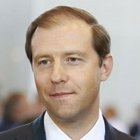
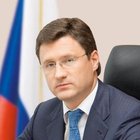
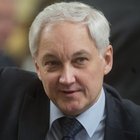
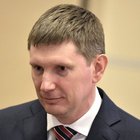
The meeting was attended by First Deputy Prime Minister Denis Manturov, Deputy Prime Minister Alexander Novak, Minister of Defence Andrei Belousov, Minister of Industry and Trade Anton Alikhanov, Minister of Transport Andrei Nikitin, Minister of Economic Development Maxim Reshetnikov, Minister of Finance Anton Siluanov, Minister of Energy Sergei Tsivilev, Moscow Mayor Sergei Sobyanin, LUKOIL shareholder Vagit Alekperov, Surgutneftegaz CEO Vladimir Bogdanov, Gazprom Neft Chairman of the Management Board and CEO Alexander Dyukov, Gazprom Chairman of the Management Board Alexei Miller, Rosneft Chairman of the Management Board and Executive Secretary of the Presidential Commission on the Development Strategy for the Fuel and Energy Sector and Environmental Safety Igor Sechin, and Transneft Chairman of the Management Board and President Nikolai Tokarev.



* * *
President of Russia Vladimir Putin: Good afternoon, colleagues.
A few days ago, we thoroughly discussed the situation on the domestic market of petroleum products at a meeting with members of the Government. I would like to reiterate myself that we need to minimise the consequences of terrorist attacks on our civilian facilities and infrastructure.
Today, with the meeting held in an extended format and the heads of our leading energy companies taking part, I propose to consider additional steps to ensure uninterrupted and stable fuel supply to car owners, businesses, enterprises, and socially significant organisations, as well as to discuss the progress made in implementing past decisions in this area.
We are in constant touch with some of our colleagues, but I have asked everyone to come and share their thoughts on how to build this work together.
The largest oil refineries are employing their full capacities. We have also tapped into the potential offered by SMEs. Additionally, current maintenance has been shortened while scheduled maintenance has been postponed. It is estimated that the production of primary fuels will exceed the June levels as early as July.
I should note in particular that, considering the circumstances, major companies, including private ones, are proving themselves as reliable partners of the state. Emerging non-conventional tasks are being solved accurately, promptly, professionally and in the interests of our country and citizens.
I should add that earlier accumulated fuels have been supplied to the domestic market. Despite the fact that we are using reserves now, Russia’s petrol reserves are currently almost equal to the volume recorded in the same period of 2025. By all means, we must proceed reasonably and carefully.
According to the data provided by the Energy Ministry, the petrol reserves currently stand at 1.7 million tonnes, which is practically equal to the level recorded in the same period last year. There is but a slight decrease, only 4 percent.
Furthermore, in the interests of domestic consumers, we have imposed a temporary ban on exports of petrol and kerosene-based aviation fuel. We are considering a full ban on exports of diesel fuels. I know that during our discussion, the issue of potential oversupply may be raised. This is why we are here today – to prevent any unnecessary steps. We shouldn’t create any additional problems for ourselves. We will talk about this.
At the same time, you are well aware that problems for car owners and businesses persist: unfortunately, there are still queues at petrol stations, and some highly demanded fuel brands may be hard to find. Of course, we are aware of the difficulties agricultural producers and farms face in summer. We need to do our best to ensure that the seasonal fuel supply schedules are strictly met for agricultural enterprises, as harvests depend on these supplies.
Overall, to stabilise the fuel market, systemic steps must be taken that are consistent with the scale of current challenges. These steps include increasing supply and maintaining economically justified fuel prices.
The Government has established a 24/7 situations centre to monitor the developments. In cooperation with oil companies, additional proposals have been put forward to ensure domestic supplies. Let’s discuss all these issues in detail.
I’m giving the floor to Mr Novak.
<…>