


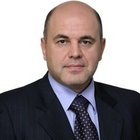
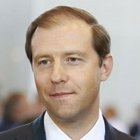
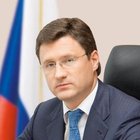
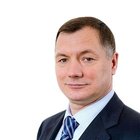
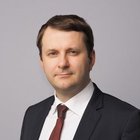
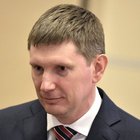
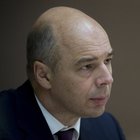
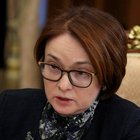
The meeting was attended by Prime Minister Mikhail Mishustin, First Deputy Prime Minister Denis Manturov, Deputy Prime Ministers Alexander Novak and Marat Khusnullin, Deputy Chief of Staff of the Presidential Executive Office Maxim Oreshkin, Minister of Economic Development Maxim Reshetnikov, Minister of Finance Anton Siluanov, and Central Bank Governor Elvira Nabiullina.
* * *
President of Russia Vladimir Putin: Good afternoon, colleagues.
Today we will talk about economic matters. I would like to begin our meeting by saying that the situation in the national economy and its key sectors remains stable, despite external attempts to destabilise the situation in the fuel and energy complex and several other sectors.
At the same time, I would like to emphasise that the difficulties created for us on the fuel market are certainly temporary and cannot affect the overall economic dynamics. It can be described as follows: according to the Economic Development Ministry, the national GDP grew, even if modestly by 0.3 percent, in May, and its growth for the first five months amounted to 0.2 percent.
One of the main factors here is certainly domestic demand from both the government, business and citizens.
It should be said in this context that the bank lending rate is growing.
Is this correct, Ms Nabiullina?
Central Bank Governor Elvira Nabiullina: Yes, this is correct.
Vladimir Putin: I am referring to mortgage loans and lending to enterprises, organisations and the real economy sector. The volume of this loan portfolio is growing, and the money mass is growing accordingly. As of July 1, it has increased by about 13 percent year on year. This dynamic promises continued stable growth in domestic demand.
The public finance system remains stable as well. In June, the federal budget was executed with a surplus. How much was it? It amounted to 196 billion rubles.
A major factor in this sphere was the growth of budget revenues. It is notable that both oil and gas revenues and non-resource revenues increased. These non-resource revenues increased by more than 25 percent in the second quarter year on year.
As for the consolidated budgets of the constituent entities of the Russian Federation, they were executed with a deficit in the first six months of the year, similar to the first half of last year.
In this connection, we should provide additional support to the regions and their budgets, so as to guarantee the implementation of our obligations at the level of regions and municipalities, as well as to continue the implementation of local development programmes.
At the initiative of the United Russia party, an important decision was adopted in June to extend the repayment deadline for the regions’ budget loan debt from the current year, 2026, to 2030. As a result, the regions will have access to more than 100 billion rubles in additional funds this year alone.
I also understand that our colleagues from United Russia have put forward another proposal concerning budget loans that the regions are scheduled to repay over the next three years, from 2027 to 2029. It has been proposed that the repayment deadlines for these loans also be extended beyond 2030.
I know that State Duma deputies from United Russia have been working on this initiative together with the Finance Ministry. I therefore ask the Government to prepare the necessary draft regulations so that, together with the State Duma deputies, most likely those of the new convocation, we could adopt these amendments during the upcoming autumn session.
Mr Siluanov, is this feasible?
Anton Siluanov: We will do it.
Vladimir Putin: In essence, the key objective is to provide Russia’s constituent entities with additional resources, which they can use both to address current priorities as well as to stimulate long-term economic growth and support technological development and business activity.
I would like to stress once again that our economic policy must be focused on long-term objectives. The measures we implement should be designed with these goals in mind at the federal, regional and local levels alike.
As I have said before, our key priority today is to launch a new investment cycle and accelerate structural transformation in the Russian economy. We will discuss a number of new measures in this regard today. We have already touched on some of these issues. Just before this meeting, Mikhail Mishustin and I reviewed several additional matters together.
We will then continue this discussion at the meeting of the Council on Strategic Development and National Projects in August. I hope, and indeed am confident, that we will reach concrete agreements.
Let us begin. Mr Novak, you have the floor.
<…>