


President of Russia Vladimir Putin: Mr Lukashenko,
I am very pleased to see you on the eve of our shared, and in my view the most important, holiday for our peoples – Victory Day in the Great Patriotic War, the victory of the Soviet people in the Great Patriotic War.
Belorussia was one of the republics of the former Soviet Union that suffered the most during the war. It is symbolic that the head of the Belarusian state is here with us today and will be with us tomorrow, taking part in the celebrations on Red Square.
We always have much to discuss, both current economic issues and social matters. Our trade has reached record levels, despite all the difficulties that are being created for us from the outside. Overall, everything is going well.
I will also tell you what is happening in the Russian economy at present. There are positive trends, and they usually have an effect on our partners in the Eurasian Economic Union, and even more so on our relations with Belarus, since in some areas our cooperation is even deeper than within the EAEU.
Mr Lukashenko, I am delighted to see you. Welcome.
President of the Republic of Belarus Alexander Lukashenko: Mr Putin, first of all, thank you for the invitation. Even if you were not happy to see me, I would still have come – it is a kind and bright holiday.
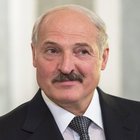
We always think about what to say, especially with such tough journalists, the very best of your pool and mine. But I cannot shake one thought: some of our friends and neighbours, with whom we once lived in a single state, for some reason refuse to recognise this holiday, especially Belarus’s neighbours.
I keep asking myself: why are they doing this? This is our great achievement. Our ancestors once saved not only Europe but the whole world from the plague of Nazism. It is clear what would have happened to us – and not only to us – had our predecessors lost that war.
Why are we celebrating? It has already happened; it is our great heritage. We proceed from this basis: it is the legacy of Russians, Belarusians, and all the Soviet republics. All of them fought, even if the war did not reach every territory, everyone fought and died, hundreds of thousands.
So frankly, it is ugly and disgusting to see some of our so-called comrades who have decided not only to forget but to trample on our Victory. As for some popular individuals whose relatives or grandfathers fought in that war, their behaviour makes no sense at all.
But we cannot give our Victory away to anyone. It is our heritage and our achievement. Belarus has lost a third of its people in that war. Can any Belarusian president allow our Great Victory to be trampled underfoot as a dirty rag? No. That is why I am grateful to you for inviting me here every time.
You can consider the Belarusian people ready for taking part in this great event. Back in the past, our forefathers marched together in Red Square during that first parade and went to the frontline directly from it. I am proud of this, and I know that you appreciate this and are proud of it as well. The day will come when they will ask you to allow them to come here and stand in this square. Today, we have seen who is who.
As you have rightly said, Russia accounts for 60 or even more than 65 percent of trade with Belarus in the CIS and EAEU, which means that Belarus is your main trading partner in the post-Soviet space. Of course, given this huge volume, which is worth about $60 billion, there are bound to be problems, yet we have always lived well all these years, and there have never been any serious disputes between us. There are one or two minor issues, which we discuss or instruct our governments to deal with.
Today, I plan to discuss one and a half questions with you. Everything else will be devoted to our Great Victory.
Thank you for inviting me.
Vladimir Putin: Mr Lukashenko, there will be nothing surprising to you in what I am going to say, yet it is very important for our people, our citizens. We have not sent out official invitations; we simply indicated that we would be delighted to see everyone who will want to come here. I believe that this is especially relevant and logical in the current situation, also considering security issues.
Mr Lukashenko, thank you for coming.
<…>