


At the beginning, the meeting also addressed the current agenda. Minister of Education Sergei Kravtsov reported on the results of the Unified State Exam and the admissions campaign to secondary vocational schools. Deputy Prime Minister and Chief of the Government Staff Dmitry Grigorenko spoke about the new digital services available on the Gosuslugi (public services) website.
* * *
President of Russia Vladimir Putin: Colleagues, good afternoon.
Todayб we will address two issues, or perhaps one issue in two dimensions, covering two key sectors of the economy: how Russia’s fuel and transport sectors are operating under current conditions and how they are developing.
However, before we turn to that, as is customary, I would like to address a couple of current matters.
First, I have a question for Mr Kravtsov regarding the results of the Unified State Exam (USE) and the ongoing enrollment campaigns at secondary vocational education institutions.
(Education Minister Sergei Kravtsov reported that this year 750,000 people sat the National Final School Exam (EGE). The average EGE score is growing, especially in the natural sciences. Almost 50 percent of students have scored 70 points or more. The number of students who scored 100 points is growing as well. An outstanding result has been reported this year: for the first time since the EGE was introduced 25 years ago, a schoolgirl from Moscow, Yelena Malkova, scored 500 points in the five subjects she chose for the exam – Russian, advanced mathematics, chemistry, physics and information science. The Minister noted an important trend: an increasing number of students are choosing natural sciences. This year, 24 percent more students chose physics than last year, 10 percent more chose mathematics, and 7.5 percent more chose biology.
As for secondary vocational colleges, 880,000 state-funded places are available this year, with over half of them in technical professions. Overall, more than 1.4 million students will enrol at colleges this year. More young people are choosing programming, mechanical engineering, medicine and construction. The new curriculum includes artificial intelligence skills. According to the Minister, the level of employment for college graduates has increased from 58 percent to 80 percent over the past five years.
Deputy Prime Minister – Chief of the Government Staff Dmitry Grigorenko spoke about the digitalisation of public services. He stated that Russia is one of the world’s leaders in this sphere. The Public Services portal is one of the main digital services. As of now, over 120 million people, or over 95 percent of the population aged over 14, are registered and have a personal account on that portal. Over 14 million people visit it every day, and more than 80 percent of them access it via mobile devices.
The Deputy Prime Minister reported that a new service, Digital Profiler of a Foreign Citizen, became available on the Public Services portal on June 30. Since then, nearly 5 million people have registered for it. The service is a unified database of information about migrants provided by 16 agencies. The profile includes personal data, information about immovable property and vehicles, education, medical insurance, employment, etc. This has simplified many procedures for foreigners, such as registration, the processing of applications for work permits or temporary residence, employment authorisation, etc. At the same time, the government has comprehensive and regularly updated migration information.
Replying to a question from the President, Dmitry Grigorenko reported on technological and legislative fraud prevention measures. The Government has established an interdepartmental task force, which includes representatives of law enforcement agencies. It analyses the statistics and offers protection measures. According to official statistics from the Interior Ministry, the number of fraudulent actions against citizens has decreased by one third over the first six months of 2026.)
Vladimir Putin: Let’s move to the main issues on our agenda. Please, Mr Novak.
Deputy Prime Minister Alexander Novak: Thank you.
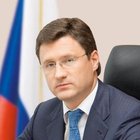
Mr President,
Colleagues,
Continued attacks on our civilian infrastructure, including civilian fuel and energy facilities, have resulted in damage to several refineries. This has led to a temporary decline in the production of petroleum and diesel fuel.
Mr President, the Government, acting on your instructions, has taken the following measures to stabilise the domestic market.
First, production at operating plants has been maximised, all available fuel reserves have been sent to the market, the duration of current maintenance and repair operations has been cut, planned repairs have been postponed, a total ban on the export of petroleum and aviation fuel has been adopted, and the capabilities of medium-sized and small refineries have been put to use.
I would like to note that the situation remains complicated despite these measures, which have partially stabilised the market. In particular, forced cuts in fuel production caused changes in the routes of fuel delivery to end users. The demand for motor fuel has increased by about one third. This is a considerable amount; it is one third larger than in the same period last year.
Taken together, this has increased pressure on filling stations, increased the number of vehicles per pump, and consequently, refuelling time.
It is obvious that this situation at filling stations is a cause of concern for the people. The Government is taking additional measures to deal with this problem and stabilise the situation. Today, we have adopted a ban on the export of diesel fuel, which will help us increase deliveries to the domestic market. In July, we will also import petroleum products and increase production by turning out lower environmental class petroleum products. We have extended the zero duty for imported petroleum products and additives for another year. We have also coordinated with Russian Railways the possibility of rail ticket discounts to create economic conditions for imported fuel.
To increase fuel supplies to the domestic market, amendments to the Tax Code were promptly adopted. Mr President, I would like to thank you for supporting and signing the relevant law.
The mandatory share of motor gasoline sold through commodity exchanges was also reduced from 15 percent to 10 percent. In addition, we refined the exchange trading mechanism to eliminate intermediaries, ensuring that fuel is supplied directly to end consumers. We also introduced limits on price increases during exchange trading, a measure that will further help stabilise prices.
I would also like to note that Russia’s major oil companies have begun prioritising the direct supply of fuel to consumers through their own retail filling station networks, as well as to regions where independent fuel retailers account for the majority of sales.
This is largely because, of the approximately 29,000 petrol stations operating in Russia, just over 9,000 are owned by vertically integrated oil companies such as Rosneft, Gazprom Neft, Lukoil, Tatneft, and Surgutneftegaz. The remainder are operated by independent retailers, which have traditionally purchased most of their fuel through commodity exchanges or intermediaries. They are now transitioning to direct supply agreements with oil companies and regional operators, as has recently been implemented in the Irkutsk Region and the Trans-Baikal Territory.
Mr President, we are also paying particular attention to ensuring stable fuel supplies to the Kaliningrad Region, the Republic of Crimea, Sevastopol, and the border regions, as I have previously reported to you. In addition, we have prioritised seasonal fuel deliveries for agricultural producers, are overseeing fuel shipments to the northern regions, and continue to monitor fuel prices in cooperation with the Federal Antimonopoly Service.
We continue to work closely with the Energy Ministry through a dedicated operational headquarters involving regional authorities, producers, and consumers. Regional task forces have also been established to coordinate fuel distribution and prioritise supplies to specific categories of consumers, particularly providers of essential services.
To help balance domestic demand and prevent speculation, a number of regions have introduced temporary restrictions on the sale of petroleum products.
Together with the Ministry of Transport, we are also paying particular attention to ensuring a stable supply of petroleum products to the country’s transport sector.
Mr President, I will continue to keep you promptly informed of the situation and any additional measures that may be required.
Thank you.
Vladimir Putin: Thank you very much.
Mr Nikitin, please.
Transport Minister Andrei Nikitin: Mr President,

The transport sector has been working smoothly in this difficult situation, ensuring the delivery of cargo and passengers.
The key hubs – airports, railway terminals, ports, municipal transport and motorways – are operating normally.
We are doing everything possible to deliver fuel to the Crimean Peninsula, working in close coordination with Sergei Aksyonov and Mikhail Razvozhayev.
Allow me to report on specific areas.
Aviation. The situation in civil aviation is manageable despite a decrease in the usual amount of fuel. The demand for transportation remains stable. Over the first five months of 2026, the passenger load factor has been around 90 percent. Passenger turnover exceeded last year’s figures and amounted to 106.57 billion passenger kilometres. Overall, Russian airlines transported 39.54 million passengers from January to May. Airports served 77.82 million passengers, including nearly 20 million on international flights. This is 6 percent more than in the same period last year.
We have registered an increase in transportation by subsidised regional flights. Over the first five months of 2026, 2.2 million passengers used subsidised flights.
The Far East and the Republic of Altai have reported good figures. The flight network to and from Abkhazia has been expanded. Thirteen Russian cities now offer flights to Sukhum, including new destinations from Yekaterinburg, Mineralnye Vody and Ufa. These flights are operated by five airlines.
As per your instructions, we introduced a 50 percent discount for children aged up to 12 years in 2025. Our air carriers have sold over 2.1 million such tickets in the first six months of this year, and over 6.1 million since the launch of that programme.
Long-distance and commuter trains provide reliable passenger services. About 62 million tickets have been available for the summer tourism season, which is roughly the same as last year.
The main tourist destinations – the Black Sea coast of the Krasnodar Territory and Mineralnye Vody – are served by 150 pairs of trains. In June, they transported 115.2 million passengers, or 4 percent more than last year. In the first half of 2026, 625 million people used trains for transportation, which is also more than last year.
We have temporarily adjusted transportation to Crimea for security reasons. Seven pairs of trains currently travel to the peninsula along eight routes. We are working to improve passenger comfort in light of increased load on the rail terminal in Kerch.
The situation in the water transport sector remains stable. Cargo transshipment through seaports exceeded last year’s level by five percent over the first five months of the year, reaching more than 360 million tonnes. River passenger traffic is also on the rise, with 2.7 million passengers transported – an 11 percent increase year-on-year. Particularly strong growth has been recorded on sightseeing and leisure routes, 63.5 percent. The River Mainlines project is contributing to this trend: eight high-speed routes operated in 2025, and this year the network is expanding to 27.
Public bus services are operating on schedule. Despite enemy attacks, there have been no widespread disruptions. We continue to modernise public transport fleets in the regions. Passenger flows on public transport during the first five months of this year have remained broadly in line with last year’s figures.
We are also seeing growth in domestic tourism. In June, travel to the cities of the Golden Ring increased by 14 percent, to resorts in the North Caucasus by 22 percent, and to resorts in the Krasnodar Territory by 36 percent.
We are expanding the unified ticket system, which connects trains, planes and buses with convenient transfers. Together with the heads of 21 regions, we have already launched 64 such routes. This allows passengers to travel more easily to destinations including the resorts of the North Caucasus, Sheregesh, Abkhazia, the Baltic coast, Suzdal, and Altai. More than 2.9 million people have already used the service.
Road construction continues at a steady pace. Major projects are underway, including the Yekaterinburg–Tyumen motorway, the Saratov bypass with a bridge across the Volga River, transport infrastructure in Kaliningrad, and the bridge across the Tumannaya River. Altogether, 27,000 kilometres of roads are under construction this year.
Special attention is being paid to access roads serving socially significant facilities. We are maintaining the capacity of the motorway network despite ongoing construction work and increased tourist traffic. From April through September, large families receive toll discounts on federal toll roads. All 314 border checkpoints are operating normally. To facilitate deliveries of fuel and lubricants, vehicles transporting petroleum products are being processed through checkpoints via a dedicated green corridor. Last week, traffic resumed at the Pogranichny road checkpoint, a major gateway for the Russian Far East, whose capacity has been increased by 50 percent, reaching 500 trucks per day.
Mr President,
Russia’s transport system is successfully handling peak demand and remains resilient. We will continue to fulfil all assigned tasks in full.
That concludes my report.
Vladimir Putin: Thank you.
(The President then gave the floor to the heads of several regions attending the meeting. Comments on the main issue were provided by Governor of the Trans-Baikal Territory Alexander Osipov, Governor of the Federal City of Sevastopol Mikhail Razvozhayev, Governor of the Irkutsk Region Igor Kobzev, and Head of the Republic of Crimea Sergei Aksyonov. In particular, proposals were voiced on optimising fuel supplies, attracting small and medium-sized businesses to this task, and pricing policy, including addressing the problem of rising fuel prices and potential price subsidies.)
Vladimir Putin: Of course, it is necessary to meet the relevant requirements of government agencies, law enforcement and security structures. This is obvious. However, a decision on price subsidies should be taken without delay so that our citizens do not feel excessive pressure.
(Addressing Deputy Prime Minister Alexander Novak) Mr Novak, please discuss this issue with the Finance Ministry. I will provide support if you need it, although I think the Finance Ministry is fully aware of the situation, which will not last long. This obvious issue is also connected with efforts to disrupt the holiday season for our people in the south, including Crimea. However, steps must be taken immediately to support local residents and those who come there on holiday. Decisions must be taken as soon as possible. Please review the matter with your colleagues in the region and act on it.
There is no doubt that the opponent is trying to damage our economy, but it is even more important that it wants to foster public unease. We know that it is an impossible mission. The capacity margin of the Russian energy system is very large, one of the largest in the world. We simply must organise its proper operation together with the vertically integrated companies, coordinating issues fast so that they do not keep their products within their distribution grids and their refuelling stations but also provide them to independent fuel stations.
We should also take the proposals of Mr Kobzev into consideration, helping small and medium-sized companies contribute to the production of petroleum products without delay, and creating conditions for our normal operation.
According to the Agriculture Ministry, there is no problem with fuel supplies to farms, which have enough now. I hope that will be the case in the future too.
I ask you to take decisions more quickly. I also ask Mr Novak and Transport Minister Andrei Nikitin to promptly report to me and to the Prime Minister, of course.
That will be all for today. I wish you all successful, well-coordinated, and results-driven teamwork.