


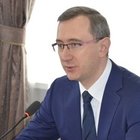
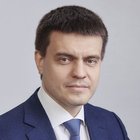
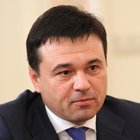
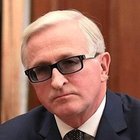
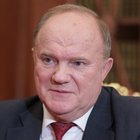
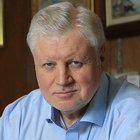
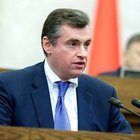
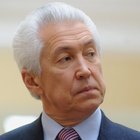
At the meeting, reports were presented by Chairman of the State Council Commission on Human Resources, Governor of the Kaluga Region Vladislav Shapsha, Chairman of the State Council Commission on Technological Leadership, Governor of the Krasnoyarsk Territory Mikhail Kotyukov, and Chairman of the State Council Commission on Data Economy, Governor of the Moscow Region Andrei Vorobyov. President of the Russian Union of Industrialists and Entrepreneurs Alexander Shokhin, deputy prime ministers Dmitry Chernyshenko and Tatyana Golikova, Head of the Communist Party of the Russian Federation faction in the State Duma Gennady Zyuganov, Head of the A Just Russia party faction in the State Duma Sergei Mironov, Head of the Liberal Democratic Party of Russia faction in the State Duma Leonid Slutsky, and Head of the United Russia party faction in the State Duma Vladimir Vasilyev also participated in the discussion.


* * *
President of Russia Vladimir Putin: Good afternoon, colleagues,
As per tradition, we are meeting on the eve of the new year. Let me begin with season’s greetings – I wish you a happy New Year. The year 2026 has been declared the Year of the Unity of the Peoples of Russia. I have just signed the corresponding Executive Order.
Of course, I would also like to congratulate you on the 25th anniversary of the State Council of the Russian Federation. This milestone marks a quarter of a century of intense, patient, and productive work, including during periods of serious and complex challenges. The issues considered by the State Council are always substantive, significant, and relevant to the country and its people. I wish you strength, energy, and good health as you continue to address the tasks before us.
The topic of today’s meeting is training personnel for the economy. This issue concerns literally every region and every sector. Personnel policy is not only comprehensive in nature; today it is one of the most important and fundamental factors for the country’s development.
This year, 19 national projects with clearly defined targets were launched. Eight of them are aimed at ensuring Russia’s technological leadership. All national projects are united by a common strategic goal: ensuring sustainable development and strengthening the country’s sovereignty.
The overwhelming majority of our citizens – young people and representatives of different generations alike – are involved in this large-scale effort. The achievement of our goals directly depends on their professionalism, knowledge, talent, and competence.
For reference, the employment to population ratio has reached 97.8 percent, while the unemployment rate has fallen to 2.2 percent. This is a very high employment indicator and a historically low unemployment rate.
We know that, especially in some regions – in fact, in the country in general, the unemployment rate among young people is always slightly higher, although there have been some positive changes. The unemployment rate among citizens aged below 34 is also steadily decreasing, standing at 3.8 percent in 2024.
Since 2022, approximately 2.6 million people have entered the economy additionally. This is a positive result.
What we now have is a deficit of workforce. Demand in some sectors of the economy is several times higher than supply, especially in professional groups that are essential for manufacturing. Skilled manual workers and engineers are highly sought after. There are currently almost 28 job openings for each registered unemployed person with a vocational profession. Designers, technologists and engineers are also in high demand.
Serious steps have been taken in recent years to turn this situation around. These measures are included in the Personnel and Youth and Children national projects. The system of training engineers is changing, and secondary vocational education is developing.
There is no doubt that we must be even more active and respond effectively to the most complex modern challenges. Therefore, I will outline some further steps that appear to be most vital to us.
I will begin with a long-term horizon of the next 10–15 years. It is becoming obvious that this will be a time of colossal technological transformation and rapid development of artificial intelligence. It is the biggest technological breakthrough that world history has ever seen.
I would like to highlight the following for regional teams, senior members of the Government, and representatives of all industries: this period has arrived, it has literally rushed into our lives. Recently, at a conference on artificial intelligence, I heard someone compare the current changes and their impact on various industries to the space programme. Indeed, the space programme seriously changed the world.
Colleagues, I want to point out that artificial intelligence is a much more comprehensive breakthrough, a multipurpose technology which is quickly expanding into all areas of life. It is rapidly conquering all areas of life, automating numerous tasks. The speed of AI system adoption is increasing every year, drawing almost every person into its orbit, changing lives, the value of professions and the labour market itself.
Listen, everything will change. We must be ready for this, by all means.
As we address current and medium-term challenges in personnel policy, we must consider and be fully prepared for the systemic changes brought about by artificial intelligence. Technological transformations have always resulted in some professions disappearing and others emerging, but today these changes are far more profound and extensive.
The very principles of training specialists and building their careers are being fundamentally redefined. The traditional, linear trajectory, from education to junior positions and then to management, will inevitably change.
Demand for a number of specialities and highly qualified experts will grow significantly. Meanwhile, artificial intelligence will gradually replace entry-level positions, including in creative and intellectual fields.
The growing integration of artificial intelligence into production processes will not only automate individual operations and, consequently, displace certain jobs, but will also – and this is important – create new ones. These will require the ability to set objectives, work with data, think like an engineer, and assume responsibility for results.
In this context, it is essential to ensure clear and understandable professional transitions for people, unlocking new opportunities for education, retraining, and lifelong professional development.
We refer to this issue from time to time, but I want to stress once again: this is extremely important – absolutely critical. We must change the entire paradigm of personnel training, in its entirety.
This is not a slogan or a declaration of intent; it is a key task for the government, businesses, and the education system alike. To address it, we need to create an accessible and flexible infrastructure, which must continuously evolve in step with changes in the economy, technology, and science.
I would also add that today the ability to work as part of a team is becoming a genuine competitive advantage. This, too, has been discussed more than once. It is no coincidence that in the new season of the Leaders of Russia competition, applications are submitted not individually, but by teams of like-minded people. First of all, we will assess the participants’ readiness to work as a team.
Colleagues, please note: the time window for responding to these rapid changes is extremely narrow. At both the federal and regional levels, we must develop approaches to addressing these challenges within the education system and the labour market well in advance.
Above all, we must remember that human resources are not functions but, above all, people. At the heart of our national development goals is the individual, the family, their wellbeing and quality of life.
New technologies call for reassessment of existing approaches and development of new training programmes and methodologies, as well as large-scale retraining of teaching staff at all levels.
We cannot continue to live by outdated models. At the same time, it is crucial not to lose the fundamental principles of our education system: fostering independent and creative thinking among schoolchildren and students, developing analytical skills, including the ability to critically assess proposals generated by artificial intelligence.
In different settings and on various occasions, we have repeatedly emphasised that we must not allow a situation in which society is divided into intellectual elites on the one hand and “human automatons” on the other – people capable of doing nothing more than pressing buttons. This is a critically important task for the education system and for personnel training and retraining systems. A great deal must be rethought here, with a shift towards direct engagement with pupils and students in classrooms, working with them hands-on to develop and support independent thinking. This is a top priority.
The Government is completing work on the Education Development Strategy until 2036. Significant progress has been made, but the Strategy must clearly address the transition to fundamentally new principles that enable every person to remain in demand throughout their entire working life, as well as the formation of new core skills amid the rapid deployment of artificial intelligence. The mechanisms for implementing the Strategy are of critical importance as well.
Colleagues, I would now like to say a few words about our medium-term and immediate priorities.
We must continue efforts to improve the quality of training within the vocational education system and ensure stronger demand in the labour market for graduates of colleges, vocational schools and universities.
The Ministry of Labour has prepared a substantive national ranking of graduate employment outcomes. It shows, for each educational institution, graduate employment rates and salary levels. Naturally, the top performers will be highlighted. However, I propose that, based on this ranking, we also identify each year 100 educational institutions that have demonstrated the weakest results. This is precisely the case where intervention is needed to improve the situation in the interests of students, regions and the country as a whole.
Specifically, for each such institution, we must jointly develop and implement recovery or reorganisation programmes together with regional authorities and all of you, colleagues. This work must be carried out consistently. There must be no stagnation.
Turning to current tasks, it is essential to address the imbalances that have emerged in the labour market. One of the key issues is the regional disparities in unemployment rates. I would like to note that special roadmaps have already been developed and are being implemented for “labour-surplus” regions with historically high unemployment. Of course, this work must be continued.
Naturally, each region of Russia has its unique characteristics. However, conditions for increasing economic activity must be created almost everywhere. I would like to stress that particular focus should be placed on veterans of the special military operation and their families. For reference, over the next seven years, we need to bring 12.2 million people into the economy.
It is also necessary to optimise the sectoral structure of employment by reallocating labour resources from sectors where employment will objectively and inevitably decline. These sectors are already well known: those where artificial intelligence will increasingly perform functions previously carried out by people. This includes wholesale and retail trade, financial and insurance activities, public administration, and a number of others. We must anticipate this shift and train people for sectors where labour demand will grow. These, too, are generally clear: manufacturing, including high-tech industries, information and communications, education, as well as professional, scientific, and technical activities.
The development of career guidance infrastructure for young people is critically important. A number of regions have already established specialised career centres for young people. They help them choose a profession and, in many cases, guide them towards specific jobs. This experience must certainly be scaled up, and regions that genuinely invest in young people and their future should receive comprehensive support.
We can also see strong interest from employers in ensuring that their employees rapidly acquire new knowledge and skills demanded by high-tech enterprises and organisations. This can and should be achieved through the development of continuing professional education. However, I would like to emphasise that this requires a thorough and effective overhaul of the entire system.
We must focus on the development of universities that train personnel for key sectors: energy, transport, agriculture, construction, culture, and healthcare. It is necessary to discuss and develop new development programmes for these universities through close cooperation between the Ministry of Science and Higher Education, sectoral ministries, relevant enterprises, and the business community.
Colleagues, I have not touched upon all the issues, as there are many, and we have a large number of speakers. The most important thing is to propose solutions: not just to list problems, but to offer concrete ways to solve them.
I now give the floor to Chairman of the State Council Commission Vladislav Shapsha.
<…>
Vladimir Putin: Еhere is obviously nothing positive about increasing the fiscal burden. (Vladimir Vasilyev, the leader of the United Russia faction in the State Duma, raised the issue of tax increase in his remarks.) Taxation always represents a load on the economy and must be assessed in terms of its impact on economic growth. Alongside this, there is also a number of other crucial issues we must address: economic recovery, macroeconomic stability, and the fight against inflation.
However, if we all will not limit ourselves solely to discussions about increasing the fiscal burden, but also work together to reduce the shadow segment of the economy, narrow down gray zones, provide targeted support to critically important industries and enterprises, fully meet our social obligations to citizens, and address issues related to ensuring the country’s security and defence capability, including, where necessary, through fiscal measures while maintaining a balanced budget, then such an approach can only have a positive effect on the country as a whole and on the financial wellbeing of our people. This is fairly obvious. In this case, people will clearly understand what we do and why. And this, in turn, will ensure public support.
I would like to ask that all political parties – all factions represented in parliament – be guided precisely by these considerations. Naturally, it is clear that each party and each faction has its own vision of how best to address the tasks we all regard as priorities. Having different approaches is normal. Moreover, it is beneficial, as it allows us to compare positions, identify the most effective solutions, and ultimately choose the optimal path forward.
To conclude our discussion today, I would like to highlight the highly professional work of the State Council’s working group. It has worked intensively and thoroughly, in close cooperation with both the Government and the regions, and has put forward a number of proposals tailored precisely to the area we are discussing now, and based on it, has prepared a draft list of presidential instructions following today’s meeting.
Given that the issues under consideration are of fundamental importance and affect the entire economy, all regions, and the country as a whole, I have a request to the working group. This list of instructions was clearly compiled on the basis of proposals received, including from the regions. However, I am not sure that all members of the State Council currently have this document in the version that I have on my desk. I would like to ask that this list be circulated to all members of the State Council so that everyone has the opportunity not only to read it but also to contribute additional proposals on how, in their view, the challenges we face in this sphere can and should be addressed. This is the first point.
Second, we should work directly with the heads of regions. It is clear that the issue of training personnel for the Russian economy falls within the remit of a certain group of local officials and people in regional administrations. However, I would like this job to be assigned to a specific person at the level of deputy governors or deputy heads of regions, and I ask you to ensure this happens. Of course, deputy governors have many responsibilities, and I would not like the vital issues outlined in the draft list of instructions to be lost among the tasks facing you and your deputies.
Therefore, I am asking you to appoint a special aide to coordinate work in this sphere, for example, an aide to the governor or the head of region, who will coordinate this work in their regions, liaising with educational institutions at all levels –regional, local and federal – keeping an eye on these issues and working jointly with everyone concerned. However, to be able to do that, this person will also need to communicate with businesses and federal authorities.
Therefore, I would like to ask the Prime Minister to choose a specific centre in the Government. There are many people in charge there, which is good, yet we need a single point of contact and a designated person in charge of this matter. I have someone in mind who would be well-suited for this job, but I would like to ask the Prime Minister to make the final decision.
After that, the Government leadership should convene a meeting in Moscow with these regionally appointed aides to provide further guidance, ensuring they know what they will need to do, who they can rely on, and who they will directly contact in Moscow.
I would also like to ask the Presidential Executive Office to be involved in this project on a par with Sberbank. Mr Gref, you have this work well organised. You should meet with these people at your platforms and at the Government platform to thoroughly discuss this matter. It must not remain on paper. This project must be implemented because it is an extremely important matter. The future of our country depends on it to a large extent.
Therefore, work on this list, a draft list so far, should be completed with due regard for the proposals submitted to the working group, coordinated with the Government, and made public. Concrete persons must be assigned to do this job. I would like this to be completed by the end of January 2026.
That will be all. Thank you.
I wish you a happy New Year. Thank you.