


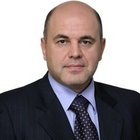
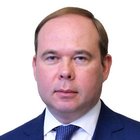
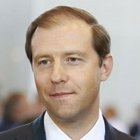
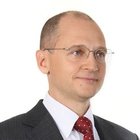
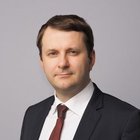
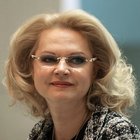
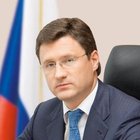
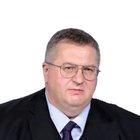
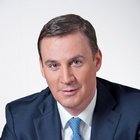
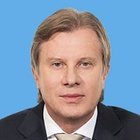
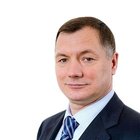
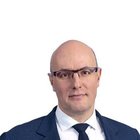
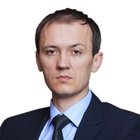
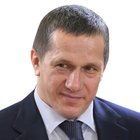
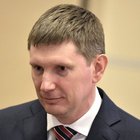
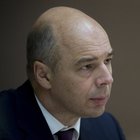
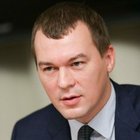
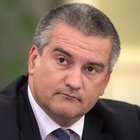
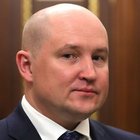
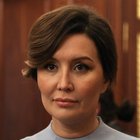
Participants in the meeting included Prime Minister Mikhail Mishustin, Chief of Staff of the Presidential Executive Office Anton Vaino, First Deputy Prime Minister Denis Manturov, First Deputy Chief of Staff of the Presidential Executive Office Sergei Kiriyenko, Deputy Chief of Staff of the Presidential Executive Office Maxim Oreshkin, deputy prime ministers Tatyana Golikova, Alexander Novak, Alexei Overchuk, Dmitry Patrushev, Vitaly Savelyev, Marat Khusnullin, Dmitry Chernyshenko, Deputy Prime Minister – Chief of the Government Staff Dmitry Grigorenko, Deputy Prime Minister – Plenipotentiary Presidential Envoy to the Far Eastern Federal District Yury Trutnev, Economic Development Minister Maxim Reshetnikov, and Finance Minister Anton Siluanov. Minister of Sport Mikhail Degtyarev, Head of the Republic of Crimea Sergei Aksyonov, Governor of the Federal City of Sevastopol Mikhail Razvozhayev and Director General of the Agency for Strategic Initiatives Svetlana Chupsheva were also invited to attend the meeting.
* * *
President of Russia Vladimir Putin: Colleagues, good afternoon.
First of all, I would like to congratulate you and all our people on the Day of Crimea’s Reunification with Russia.
Today, our men, our heroes who are taking part in the special military operation are fighting for this bold and, without exaggeration, historical choice made by the people of Crimea and Sevastopol in 2014, and today by the people in the Donetsk and Lugansk people’s republics, Kherson and Zaporozhye regions to be with their Motherland.
That choice remains firm and unchanged. It is rooted in the destiny of our Fatherland, and it would not be an exaggeration to say that it can be viewed as one of the defining pillars in its millennial history, a symbol of the unity, will and cohesion of our multi-ethnic and diverse nation.
Much has been done over the past years to advance the development of Crimea and Sevastopol. About 1.3 trillion rubles have been allocated to addressing Crimea’s priority socioeconomic issues over a period of 12 years.
Transport and engineering infrastructure, energy supply systems, and industry, education, and healthcare facilities are being rebuilt, and new ones are being created.
New investment projects are being implemented in Crimea and Sevastopol with the participation of the state and private businesses. The newly built production facilities manufacture goods that are in strong demand. High-quality jobs are being created, and wages are rising. The region’s well-functioning free economic zone, now home to more than 1,600 registered residents, is also making a significant contribution.
I would like the Government to continue paying close attention to advancing these constituent entities of the Federation, strengthening their economic potential and industrial base, and improving the local standard of living.
Today, we are joined live by a number of newly completed and successfully operating projects in Crimea and Sevastopol.
We will begin with an indoor ice rink in Sevastopol, which will undoubtedly become a leading centre for ice hockey, figure skating, and other winter sports in this southern region, contributing to their growing popularity primarily among young athletes, children, and teenagers, who will be able to engage regularly in physical activity.
The next facility we are opening today is designed to protect the health of the younger generation. I’m referring to the Federal Children’s Rehabilitation Centre in Yevpatoria. Medical professionals working in its new buildings equipped with advanced medical equipment will provide specialised high-tech care to young patients with diseases of the nervous system, the musculoskeletal system, sensory organs, and other somatic conditions.
We will conclude the videoconference with the commissioning of upgraded water treatment facilities near the city of Sudak which will significantly reduce the discharge of untreated water and improve the environmental situation, which comes under additional strain during the summer months, when millions of tourists come to Crimean resorts.
For your information, a total of 27 sewage treatment plants will be built or renovated: 24 in Crimea and three in Sevastopol. Work has been completed on ten sites: eight in Crimea and two in Sevastopol. Construction is underway at 13 sites, and four more are being designed.
I would like to thank everyone – builders, workers, and engineers, as well as designers and utilities personnel, and many other specialists – who were involved in the wide-scale effort to rebuild our historical regions.
I would also like to take this opportunity to offer my best wishes to you on the occasion of your professional holiday -Public Services and Housing and Utilities Workers’ Day – which was marked on March 15.
The well-being and safety of everyone without exception depend on your daily work, the quality of your performance, and your responsible approach as you continue to ensure the uninterrupted supply of water, electricity, and heating to houses and flats, as well as cleanliness and proper order in the streets of Russian urban and rural areas.
Before giving the floor to Mr Khusnullin who will brief us on these facilities and the current developments in Crimea and Sevastopol, I suggest we first consider a number of current issues, as we usually do.
I would also like to invite Minister of Sport Mikhail Degtyarev to offer a few remarks about the Russian national team’s performance at the Paralympics and about future plans in high-performance sports.
Mr Degtyarev, the floor is yours.
Minister of Sport Mikhail Degtyarev: Mr President,
The Paralympic Games in Italy held special significance. For the first time in 12 years, our athletes competed under the Russian flag. The team was represented in three out of six sports: cross-country skiing, alpine skiing, and snowboarding. We have not yet been admitted to wheelchair curling, biathlon, or sledge hockey, and we are continuing to challenge this in courts.
All six of our Paralympians proved themselves true heroes. Champions and medallists of the Games included skiers Varvara Voronchikhina, Ivan Golubkov, Alexei Bugayev, and Anastasia Bagiyan, together with guide Sergei Sinyakin. They won a total of 12 medals, eight of them gold.
This outcome secured Russia a place in the top three of the overall team standings, which is a record achievement. The international press has been abuzz, and the public around the world is stunned. To put that in perspective, China fielded 70 para-athletes, followed by the United States with 68. Over 600 athletes in all took part in the Games. Thanks to these victories, the sporting world is once again becoming accustomed to the sound of the Russian national anthem.
Sending our six trailblazers was made possible by two developments. At the General Assembly of the International Paralympic Committee, which we reported to you on in October last year, the majority of the countries voted for allowing our athletes to compete with their flag and anthem. The second decision was a Swiss court ruling in a case against the International Ski and Snowboard Federation. As a result, our skiers were able to compete in Milan and Cortina d'Ampezzo.
We engaged in a truly uphill battle to turn these two keys – diplomatic and legal. By the way, thanks to the same court ruling, our skiers Savely Korostelyov and Darya Nepryayeva were also able to take part in the Olympic Games.
The atmosphere at the Paralympics was friendly for the Russian athletes. All competitors showed respect for our national symbols. A couple of incidents merely demonstrated that troublemakers are just a big-mouth minority, and everyone is tired of them and prefers to stay away from them.
Olympic and Paralympic champions and medallists will receive the customary rewards. On your instruction, Mr President, we are working on an adjustment; the Ministry of Sport has drafted a government resolution to this end.
Just a brief remark about the high-performance sport. During the Paralympic Games, the International Olympic Committee responded to calls to suspend Israeli and American athletes in connection with the military actions unleashed by those countries against Iran. The IOC stated that, in a world shaken by conflicts, disagreements, and tragedies, it firmly believes that sport must remain a beacon of hope and a force uniting the world in peaceful competition. We take these words as signalling a new direction from the new leadership towards restoring the integrity of sport and strengthening the principles of Olympism.
As per your instructions, the Ministry of Sport and the Olympic Committee are gradually restoring our athletes’ rights. Over the past two years, we have conducted dozens of negotiations with international partners. The IOC has now decided to allow our young athletes to compete in all international competitions under their own flag and anthem. Sixteen international federations have already implemented this decision, and the rest are expected to follow. The Russian flag is now regularly raised, and the anthem played, at numerous European and world championships.
In addition, we secured a political victory at UNESCO during a five-hour vote: we joined the Project Approval Committee of the Fund for the Elimination of Doping in Sport, defeating the collective West, which had supported Estonia’s candidacy.
Finally, a few figures. More than 70 international federations now allow Russian athletes to compete. Over the past year, 4,500 athletes received clearance. In 2024, we participated in 20 championships abroad, compared to 49 last year, winning a total of 136 medals. This year, we plan to take part in more than 60 tournaments.
The main national event this year is the Spartakiad of the Peoples of Russia for the strongest athletes. Scheduled for August and September across seven regions, in accordance with the Olympic Games programme. We expect over 9,000 participants. This tournament will serve as a test run for the 2028 Los Angeles Games and mark the start of the Olympic team selection process.
Mr President, on behalf of all our Paralympians and athletes, I express our gratitude for your steadfast support and attention.
This concludes my report.
Vladimir Putin: Good.
On the idea of sport as a beacon: that is true. In Soviet times, there was a magician named Amayak Akopyan, if I recall correctly, whose tricks amazed and delighted everyone. I sincerely hope that, with the change in leadership at the International Olympic Committee, the IOC will stop playing games and using international sport as a political tool. Instead, it should embrace the vision of Pierre de Coubertin, the founder of modern Olympism: for sport to unite people, bring the world together, and help resolve conflicts rather than worsen them. Let us hope that this becomes reality in the near future.
As for our Paralympic athletes, they truly achieved something remarkable – it is simply astonishing. You mentioned 60 or 70 athletes representing their respective teams, but our team consisted of only six athletes competing in three sports. Yet, thanks to their medals – gold, silver, and bronze – they secured third place overall. It is truly incredible.
As agreed, I will have the opportunity tomorrow to personally congratulate each of them on this outstanding achievement. We will see them together tomorrow.
Thank you very much. Let us move on.
(Next, Economic Development Minister Maxim Reshetnikov spoke at the President’s request about support for small technology companies, which he described as a driver of the structural adaptation of the economy. There are over 6,500 such companies. Tentative estimates put their turnover last year at 1.5 trillion rubles. They are operating in 80 regions, predominantly in the IT sector, artificial intelligence, and the production of medical goods, electronics and equipment (including for the oil and gas sector), as well as robotics. Director General of the Agency for Strategic Initiatives Svetlana Chupsheva, who continued on the topic of small tech companies, reported on the annual competition of Russian brands.
Deputy Prime Minister Marat Khusnullin delivered a report on the main subject of the meeting. He spoke about the results of the comprehensive socioeconomic development programme of the Republic of Crimea and Sevastopol, which was launched in 2014. Since then, over 760 facilities and projects have been completed, including 58 in 2025. Another 224 facilities and projects will be completed by 2030. They have to do with the development of transport infrastructure, the construction of purification facilities, the renovation and construction of education, healthcare, culture and sports facilities, housing construction, the creation of a unique cultural cluster on Cape Khrustalny in Sevastopol, the development of the Artek International Children’s Centre, and the completion of the first phase of the Federal Children’s Rehabilitation Centre in Yevpatoria, a key healthcare facility on the peninsula.
The Deputy Prime Minister also noted the increasing tourist flow in Crimea. In 2025, 7.4 million people spent their holidays on the peninsula, nearly twice as many as in 2014. Since then, the number of hotel rooms has grown by 130 percent in the Republic of Crimea and by 140 percent in Sevastopol. A marina is being built in Balaklava, a memorial to the Defenders of Sevastopol and History Boulevard is under construction, and there are plans to build and renovate nearly 11 kilometres of embankments in the city.
Marat Khusnullin recalled that in 2021, the President instructed to attract at least 1 trillion rubles of extra-budgetary funds to the region’s economy within four years. Due to the systematic efforts of the regional team, support measures and socioeconomic development programmes, the amount of extra-budgetary investment exceeded 1 trillion rubles in 2025, largely thanks to the establishment of a free economic zone with 130,000 jobs. The region’s tax and non-tax budget revenues have increased fivefold since 2015. The Deputy Prime Minister emphasised that despite the current geopolitical situation, problems and the continuing enemy attempts to destabilise the situation with drone attacks, the peninsula is actively developing. According to him, the socioeconomic development programme has proved to be effective. Crimea and Sevastopol have set an example for the reunified territories of Donbass, where a similar programme is being implemented.
Reports were also delivered by Sevastopol Governor Razvozhayev and Head of the Republic of Crimea Sergei Aksyonov.)
Vladimir Putin: I would like to once again express gratitude to the head of the Republic of Crimea, Mr Aksyonov, and his large team for their achievements over the past years and for what they are doing now, and for what I am confident they will do in the future to implement all our ambitious plans for the development of Crimea and Sevastopol, which are actually a unified complex. I hope that our people are also aware of what is taking place on the Crimean Peninsula.
I would also like to congratulate you on today’s event and to wish you all the best.
Mr Khusnullin, I hope that the Government of the Russian Federation will continue to work in this sphere just as it has been doing. We will work together towards the goals we have formulated for ourselves.
I mean that our development objectives in Crimea, Sevastopol and the other historical territories are a vital part of the strategic development plans for the country as a whole.
I would like to thank everyone and to once again congratulate you on today’s event.
Thank you.