


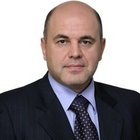
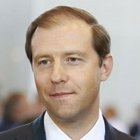
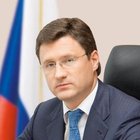
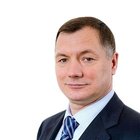
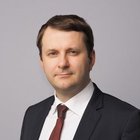
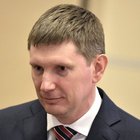
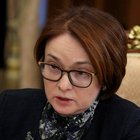
The meeting was attended by Prime Minister Mikhail Mishustin, First Deputy Prime Minister Denis Manturov, Deputy Prime Ministers Alexander Novak and Marat Khusnullin, Deputy Chief of Staff of the Presidential Executive Office Maxim Oreshkin, Minister of Economic Development Maxim Reshetnikov, Minister of Finance Anton Siluanov, and Central Bank Governor Elvira Nabiullina.
* * *
President of Russia Vladimir Putin: Good afternoon, colleagues.
Today’s agenda includes the current situation in Russia’s economy and its key sectors, and in the state of the financial system. We will also address global market trends that affect Russian enterprises and the economy overall.
Let me begin with the initial statistical data of the year. What stands out most is the weak, negative trend in key macroeconomic indicators. While not entirely unexpected, the statistics confirm this pattern. In January, Russia’s gross domestic product fell by 2.1 percent compared to the same month last year, and industrial production decreased by 0.8 percent. On a positive note, mineral extraction grew by 0.5 percent, even before the recent rise in global energy prices.
As you know, experts have pointed to the so-called calendar factor in January, since there were fewer working days this year compared to the last year. Nevertheless, I want to emphasise what we discussed earlier: we need to return to the path of sustainable economic growth, while also slowing inflation – which I will address later – and maintaining stability in the labour market. These goals may seem divergent, but we agreed that achieving precisely this balance is essential. It will not be easy, of course, but it is a target we must pursue.
Let me note that unemployment remained low in January at 2.2 per cent. Consumer spending is growing, and inflation has stabilised at below 6 percent year-on-year. This is, of course, a positive development.
Let me reiterate: a key condition for steady growth is the overall balance of the macroeconomic framework, along with continuous monitoring and management of such critical parameters as money supply growth, lending dynamics and, of course, the state of the budget system, where ensuring longterm sustainability is essential.
It is also necessary to improve the structure of employment–we have spoken about this repeatedly – and to encourage an inflow of skilled personnel into high-tech sectors, where greater added value is created. I expect that we will also have a substantive discussion of this today.
Effective macroeconomic policy must, of course, take into account all significant factors and respond in advance to external risks. Such risks are currently becoming increasingly pronounced in global markets and in the system of international economic relations. I am referring to the overall tensions in the world and the resulting volatility in energy markets, as well as in many other commodities. As we are well aware, a wide range of goods and product groups are linked to the energy sector.
As I have already said, Russian oil and gas companies should consider directing additional revenues generated by rising global hydrocarbon prices towards reducing their debt burden, including repaying liabilities to domestic banks. This would be a prudent course of action.
As regards the federal budget, it is likewise necessary to take balanced decisions on windfall revenues in order – once again – to ensure the long-term stability of the country’s principal financial document. We also discussed this at our previous meeting.
It should be noted that the Government is already engaged in this work, and we will review its progress in detail today.
Let us begin. Mr Novak, you have the floor.
<…>