


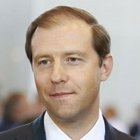
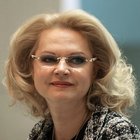
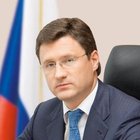
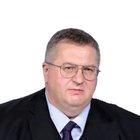
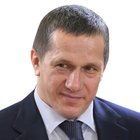
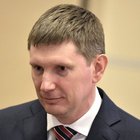
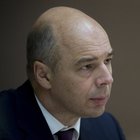
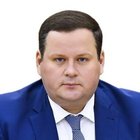
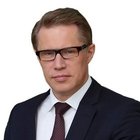
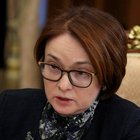
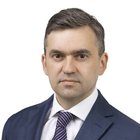
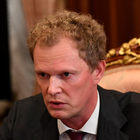
The meeting was attended by First Deputy Prime Minister Denis Manturov; deputy prime ministers Tatyana Golikova, Alexander Novak, Alexei Overchuk, Dmitry Patrushev, Marat Khusnullin, and Dmitry Chernyshenko; Deputy Prime Minister and Chief of the Government Staff Dmitry Grigorenko; Deputy Prime Minister and Presidential Plenipotentiary Envoy to the Far Eastern Federal District Yury Trutnev; Minister of Economic Development Maxim Reshetnikov; Minister of Finance Anton Siluanov. Also invited to the meeting were Minister of Labour and Social Protection Anton Kotyakov, Minister of Health Mikhail Murashko, Governor of the Central Bank Elvira Nabiullina, Ivanovo Region Governor and Chairman of the State Council Commission on Long and Active Life Stanislav Voskresensky, Head of the Federal Tax Service Daniil Yegorov, and Chairman of the Executive Committee of the Russian Popular Front Mikhail Kuznetsov.
Before the main issues on the agenda was addressed, several regional healthcare facilities were inaugurated via videoconference.
A regional clinical oncology dispensary clinic with 570 units of major modern medical equipment has opened in Smolensk.
In the Stavropol Territory, a new building of the Kislovodsk City Hospital with a surgery suite, a medical receiving unit and an intensive care unit has been launched.
Construction has also been completed on a new building for Vladivostok Outpatient Clinic No. 9 in Trudovoye, Primorye Territory, which now provides both primary and specialised medical care.
Meanwhile, a children’s outpatient unit of the Pavlovskaya Central District Hospital has opened in the village of Pavlovskaya, Krasnodar Territory, serving more than 10,000 registered patients.
Additionally, a new microbiology laboratory at the Kalinin Republican Hospital has begun operating in Donetsk. Its work is expected to improve the accuracy and speed of diagnosing infectious diseases.
* * *
President of Russia Vladimir Putin: Colleagues, good afternoon.
Today, we are connecting with a number of regions where significant healthcare projects have been implemented in recent years like in many other constituent entities of the Russian Federation.
For example, new medical facilities have been built in the Krasnodar, Stavropol, and Primorye territories, the Smolensk Region, and the Donetsk People’s Republic.
I would like to thank everyone who contributed to it for their dedicated work, and I extend my best wishes to the specialists serving at these facilities and their personnel.
Such modern, well-equipped hospitals, outpatient clinics, oncology centres, and diagnostic laboratories are essential for our citizens. They support families, mothers and children, provide care for the elderly, improve overall quality of life, and contribute to addressing demographic challenges and safeguarding the nation’s future. Once again, this remains a national priority for many years ahead.
I would also like to remind you that, in order to improve the quality and accessibility of medical care, we are implementing a large-scale project to modernise the primary healthcare system – the tier closest to the people, the one citizens and families turn to first for assistance.
Over the past five years, significant funds have been allocated for this project – 586.8 billion rubles. Of this amount, 485.4 billion rubles came from the federal budget, and 101.4 billion rubles were provided by regional budgets.
In total, more than 6,100 primary healthcare facilities have been constructed, including paramedic and midwifery stations and outpatient clinics in rural areas, remote towns, and villages. Additionally, over 7,800 medical facilities have undergone major renovations. Across Russia, more than 225,000 units of medical equipment and 20,400 specialised vehicles have been procured.
We will certainly continue to expand the capacity of primary healthcare institutions and all levels of the healthcare system, improve the remuneration system for medical workers, enhance their professional training, and develop new competencies based on modern scientific and technological advancements. We will also accelerate the introduction of advanced platform and digital technologies into the sector and do everything possible to ensure that medical professionals work in modern, comfortable conditions and that citizens can receive qualified assistance promptly, regardless of where they live or work.
In this regard, a fundamental requirement is the balanced and harmonious development of healthcare infrastructure, including the construction of new and the reconstruction of existing primary healthcare facilities. This work must be carried out in every region of Russia: in small towns and rural areas, industrial and administrative centres, regional capitals, and large metropolitan areas. Let me reiterate: the quality and accessibility of medical care must improve across the entire territory of our vast country.
I want to stress that when we are planning integrated development of new residential areas, or drawing up development plans for our towns and cities, we absolutely have to take into account people’s need for social infrastructure – and that includes medical facilities. Urban development policy needs to be shaped around this principle, and we have to make sure we are engaging properly with businesses, construction firms, and developers.
I would also like to reiterate how important it is to push ahead with the rollout of platform solutions and modern digital technologies. There is no doubt that this is where the future lies. They help reduce the risk of medical errors, they speed up diagnosis and, just as importantly, they improve its accuracy. Ultimately, they make doctors and the healthcare system as a whole more effective.
Moscow, for example, is one of the leading regions in this field, and has already introduced a cutting-edge digital platform in healthcare – I remember being shown how it works. Crucially, its services are now being used by medical organisations in most regions of the Russian Federation.
I would like to thank my colleagues in the Moscow Government for making it possible for other regions to connect to this platform. And I want to reiterate: these kinds of digital technologies need to be developed further and applied more widely.
In tackling these challenges, I am counting on effective, coordinated action from all levels of government, and on the commitment of our domestic institutions to working responsibly, focusing on delivering maximum results and responding to feedback from citizens.
Today, we will be looking at progress on the modernisation of primary healthcare. I have touched on some of the results already, and I would now ask you to give us a fuller picture – what has already been achieved, and where we need to focus our attention going forward.
So, let’s get started. I will hand over the floor first to Minister of Health Mikhail Murashko. Then we will hear from our colleagues from the regions. Over to you.
Minister of Healthcare Mikhail Murashko: Thank you very much.
Mr President, colleagues,
I would like to suggest that we view the new facilities first. Infrastructure development within the healthcare system progressed dynamically in 2025. A total of 2,500 medical facilities were built and renovated during the year, including both polyclinics and inpatient institutions. This figure reflects the number of projects completed in 2025 alone. These initiatives were funded through the federal and regional budgets, underscoring the particular importance of the healthcare system as a cornerstone of public policy in our country.
Today, we are inaugurating five new medical facilities. They differ in profile, which demonstrates that work in this area is underway not only in outpatient care, but also in inpatient services and other segments of healthcare infrastructure.
(Following the inauguration of several regional healthcare facilities via videoconference, Mikhail Murashko, Stanislav Voskresensky, and Mikhail Kuznetsov delivered reports on the main topic of the meeting. Tatyana Golikova also offered her comments.)
Vladimir Putin: Of course, a great deal has been accomplished in recent years. I would like to thank everyone who worked diligently to implement our plans.
Nevertheless, it is clear from Minister Murashko’s and Tatyana Golikova’s reports, as well as from the observations of the Popular Front, that several issues require special attention. These problems must be addressed comprehensively and in coordination with the regions. It is not enough simply to build a healthcare facility: it must also be accessible and within walking distance for residents. This is obvious, but it must be taken into account jointly with the regions. Among the priorities is modular construction, which is generally more cost-effective, but we must ensure that everything functions properly and meets quality standards, so that no facility remains underused or stands empty after completion.
This must be addressed. But the most important indicator for us is citizen satisfaction. This is the key measure of our work. If people feel that tangible improvements have been made, it means we are moving in the right direction. If not, we must determine what is not working and why. We agreed some time ago to develop a so-called citizen health profile. Unfortunately, this work has not yet been completed, and we need to give this matter further consideration.
But even this is not the main point. It is just a detail, albeit an important one. We must take a general look at what we have accomplished. Of course, we are now moving from one programme to another and looking at all its aspects, but I would like to tell our colleagues that we must scale up best practices.
I have already mentioned Moscow. We must look at what can be done in other regions based on the successful experience of our capital. At the same time, there are also positive examples in other regions. Of course, the infrastructure of such cities as Moscow and St Petersburg, the existence of good personnel potential and many other things offer certain initial advantages.
We must take a look at positive practice in general and do everything we can to scale them up. We must certainly improve the planning of managerial solutions, take a look at the regions where not everything is going well, analyse their problems and help them deal with them by supporting them and creating a training programme for the senior officials of the concerned establishments.
I would like to ask you not only to take note of this discussion but also to consider what can be done so that we do not forget what we discussed today, and possibly formalise this in the form of instructions.
(The discussion shifted to several current issues. Alexander Novak reported on the gas supply social programme. Daniil Yegorov spoke about the performance of the simplified taxation scheme. Elvira Nabiullina replied to the President’s question about the performance of the system of credit holidays for businesses adopted in October 2025.)
Vladimir Putin: Colleagues, I would like to thank you for our joint work today. I would also like to point out that the issues we discussed at the very beginning of our meeting, first of all primary healthcare development programmes, should be formulated in a way that will keep them in focus and so that we do not forget anything.
Regarding socioeconomic issues, such as social gas supply, we must ensure that everything is done in accordance with the plans we adopted long ago. But the other issues we discussed today are important as well. Social benefits must be paid on time; we have everything necessary for this. The main thing is to ensure proper discipline.
Overall, I would like to express gratitude to you. All the best. I wish you all the best.