


President of Russia Vladimir Putin: Good afternoon, Ms Matviyenko.
I can see from the documents that you have approved over 300 federal laws during this session.
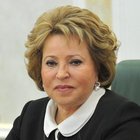
Federation Council Speaker Valentina Matviyenko: Yes, Mr President, over seven months. The session was rather intense and dynamic but we worked as usual and fulfilled all the plans concerning the national development goals you had approved, as well as other instructions of yours, including those issues at St Petersburg International Economic Forum.
It is important to note that, out of over 300 laws, more than one-third are social laws focused on social support. As prescribed, the senators drafted and submitted another 130 bills. Mr President, all these bills are responses to requests from regional officials and the public. Some of them have already passed.
Looking purely at statistics, the senators are currently among the three leading categories for the number of legislative initiatives submitted. This shows significant recent growth.
A crucial topic I wanted to report to you about, Mr President, is demography, which has been our priority. You labelled it as a strategic priority for everybody, which is true. I want to confirm, objectively and based on facts, that the measures adopted at your instruction are already bringing results. There are reasons to believe – and I always speak honestly – that the attitude to family, children and family values in society is certainly changing for the better.
Last year, the birth rate increased in 18 regions, and the number of large families is growing as well. Over the past year, which is especially pleasing, the number of student families has doubled, and half of them already have children. This is a result of the support measures proposed by the Ministry of Science and Higher Education and measures according to which higher schools have created conditions for student families with children.
You know, universities have entered a kind of competition for the greatest number of families with children. We have held the 2nd National Festival of Student Families at Moscow State University with support from MSU Rector Viktor Sadovnichy. Words cannot describe this atmosphere; you have to feel it for yourself. As you have said, these festivals have set a trend for families and children.
In addition, last year, the number of social orphans has decreased by 17 percent. Speaking about the atmosphere, which has improved, the number of children whose parents have either been deprived of or restricted in their parental rights has decreased by 25 percent. The number of children in orphanages has decreased, too.
It is also encouraging that the number of abortions has been falling consistently in the past two years. It has decreased by nearly 12 percent over the last two years. The best result has been reported in the Vologda Region, where the number of abortions has fallen by 45 percent. This is also the result of measures taken by the regional authorities. So much for the facts.
I will not dwell on this any longer. I regularly report the demographic situation to you. I know that it has your personal attention. In late May, we held a meting of the Presidential Council on Demography. You know, we had a very interesting and creative discussion, and many new proposals have been advanced. The Council members took an active part in its work. We have prepared and forwarded to you a set of proposals based on the results of that meeting. We are waiting for your instructions following that meeting.
Mr President, do you know what we are really pleased about? It is that everyone has joined in our demographic efforts. Everyone, including the regions, the regional and municipal authorities, ministries and government agencies have prepared sectoral programmes.
Our businesses have also joined in, surprisingly actively. We unofficially call it “the demographic millionaire club.” About 200 enterprises have adopted a “golden corporate standard,” paying out 1 million rubles to their employees for the birth of every child. These corporate standards also include kindergartens, lots of other benefits, and flexible working hours for women. Moreover, they are not being pushed, they are doing it of their own accord because they are aware of the importance of this policy, including for the future of their enterprises. Public institutions, the People’s Front and NGOs have also joined in this drive. I believe that we must keep up this topic in the spotlight so that everyone becomes aware of its importance.
Obviously, support for the current participants and veterans of the special military operation as well as their families is among our traditional priorities.
Mr President, I would like to thank you for the Executive Order to ensure equal support for participants in the special military operation and their families in all Russian regions. It was an awaited decision. Over this session alone, we approved some 50 bills that serve the goals of the special military operation. Since 2022, we have considered and passed over 400 bills, including over 160 bills on social support measures for our heroes. They concern assistance with education, employment, and so on.
You know, it may seem that after so many laws passed, one could stop. They may now be more specific but it doesn’t make them less significant because even small unaccounted issues – usually raised by special military operation participants with whom we maintain continuous dialogue – are worth clarifying and adjusting so that every hero in every place is guaranteed their social rights.
Another topic that you supported at the time is the modernisation of children’s recreation and health infrastructure which the Federation Council has been handling substantively. Over the four years since the launch of this programme, with the small support funding allocated to the regions from the federal budget, 336 new accommodation facilities have been built in 70 regions. Furthermore, major renovation of the infrastructure has been conducted, including catering facilities, medical stations and other amenities, which provides annual health improvement opportunities to over 200,000 children. Primarily this applies to the children of special military operation veterans, as well as the children of doctors, teachers, and children from large families. We will continue. In view of your instruction, the Government responded with two billion per year while the rest is provided by the regions. Most importantly, we are restoring the base that was lost earlier.
During the session, we held several traditional days of the Russian regions. We launched open dialogues with ministers. It is a practice when senators meet for an open and engaged dialogue during government hours.
The Council for the Integration of Reunified Regions, established under the Federation Council, has been operating actively. Federal laws are all well and good, but you have set the goal of bringing infrastructure and services in all reunified regions up to national standards by 2030. In practice, however, gaps emerge – some things are overlooked in legislation, others in regulatory acts, and some issues simply arise in the course of implementation. To address this, we are holding Council meetings with the leaders of Donbass and Novorossiya to discuss what needs to be put into practice on the ground. Given the cross-departmental nature of this work, Government members are also involved. The governors of all the newly reunified regions have found the Council extremely useful. In some cases, legislation needs to be refined; in others, deadlines need to be extended. The Council is developing practical approaches to these challenges, and we are putting them into effect.
As you are aware, the Federation Council is not only a legislative body but also a representative one, and we have been introducing new formats and expanding our work across a range of areas. For example, we recently held a broad dialogue with cultural figures, artists, and regional theatre directors. They raised a number of pressing issues, all of which we are addressing. We do not simply hold meetings for the sake of it – we follow through and bring matters to a conclusion.
One thing that did not surprise me, but rather confirmed my expectations, was the overwhelmingly positive and patriotic spirit we encountered. This is reflected across all our work. We even came across a situation where theatre companies approached us wanting to take concerts and performances to our special military operation personnel, but they did not know who to contact or how to arrange it. We worked with the Ministry of Culture and the Ministry of Defence to establish a “one-stop-shop,” so as not to hold back this grassroots impulse, but rather create the conditions for them to go.
The Forum of Regions of Russia and Belarus in Minsk was a great success and highly productive, with a significant number of agreements signed. I would like to thank you and President Lukashenko for your warm greetings. Our regions have become close partners in the broadest sense of the word. We have numerous joint projects and shared products, as you know well.
The forum also provided the setting for the Train of Memory event, now in its fifth year. High school students from across the CIS – including Ukraine, Moldova, and all the former Soviet republics, and this year also from the Allied Powers – spent 15 days travelling through Russia and Belarus, visiting sites of military and labour glory.
I can tell you, they return as changed individuals – almost as though they have been inoculated against any form of neo-Nazism. And, most importantly, they come back with a true sense of historical truth. You can read a book or watch a film, but when you see it all with your own eyes, that emotional impact is everything. It is a highly successful project. Thanks are due to Oleg Belozerov and Russian Railways for their active support – for them, too, as they say, it is a project close to the heart.
In the Year of National Unity, we have already convened the Second Forum of Women of the North. Mr President, I assure you, it is women who constitute the backbone in this endeavour – so active, so creative, so enterprising. All indigenous small-numbered peoples were represented. You issued an Executive Order establishing a new holiday – the Day of Indigenous Small-Numbered Peoples – which we celebrated for the first time this year. Following the First Forum, upon the initiative of the Federation Council, we adopted a comprehensive series of laws of great significance for the indigenous small-numbered peoples.
For instance, the professional standard ‘Livestock Breeder’ now encompasses a new profession – ‘Worker of Nomadic Housing’. This decision has conferred official recognition upon the arduous labour of nomadic women and has ensured that they are accorded pension rights on an equal footing with other workers of the Far North. This law was received with great approval by our citizens who lead a nomadic lifestyle. Another long-awaited legislative act – which they themselves raised – is the adoption of the Law on Nomadic Education, among several other measures. It is also heartening to note that several women delivered addresses at the Forum, and a discernible trend has emerged of professionals, doctors, and teachers relocating to the regions of the Far East, to the ‘North’. This trend, without doubt, warrants our active support.
Let me now turn to one of the key instructions you issued – the support for and preservation of folk arts and crafts. As you are well aware, this is the very code of our culture, our traditions, and so forth. The Federation Council, as the chamber of regions, has assumed stewardship of this matter. I wish to express my gratitude to the Ministry of Industry and Trade and, in particular, to Minister Anton Alikhanov for his robust personal support. Above all, comprehensive measures – not merely ad hoc steps – have been devised and implemented to support folk arts and crafts.
Furthermore, by your Executive Order, the Day of Folk Arts and Crafts has been established. This year, on our joint initiative, the Government instituted a national award for masters and enterprises of folk arts and crafts. This year, we presented this award for the first time. For artists and craftsmen, it was indeed a significant event. This represents both legal regulation and financial support. Each year, the Government increases this financial support – this year, it amounts to over 1 billion rubles, which is a meaningful contribution for the masters. There has also been a positive response: as a result of last year, the sector recorded a nine percent growth. Of course, this is by no means the limit. I am confident that these results will continue to grow with each successive year.
We have now reached an agreement with the Government to launch a personnel development programme for the folk arts and crafts sector, with the goal of attracting as many young people as possible, enabling master craftspeople to pass on their skills to the next generation, and ensuring that our traditional crafts not only survive but continue to flourish. Businesses have also stepped in, making investments in recognition of the importance and potential of this sector.
Mr President, as the chamber representing the regions, we continue, jointly with the Ministry of Finance and in close coordination with governors and heads of regional legislatures, to monitor the state of regional budgets.
I would like to thank you for the decision you made to postpone the repayment of budget loans until 2030. It provided the regions with timely and much-needed support. The situation remains under the Ministry of Finance’s control. It is challenging, but there is no cause for alarm, and work is proceeding in a normal, business-like manner.
Our international cooperation has been developing very actively – in fact, it has intensified. This year alone, we have held 77 meetings with our parliamentary counterparts from abroad in various formats. And these contacts extend well beyond the CIS countries, although it is important to note that the CIS Interparliamentary Assembly continues to work very effectively.
Our Interparliamentary Commission with China was highly successful, and the Chairman of the National People’s Congress came to Russia.
We have also maintained active contacts with South Africa, Indonesia, Mozambique, and many other countries. Most recently, the Chairperson of the National Council of Provinces of South Africa visited us, and that meeting also proved very productive.
Overall, Mr President, I would like to express my sincere gratitude for the attention you devote to the work of the Federation Council – the chamber of the regions – and to the regions as a whole, as well as for the support you consistently provide for the constructive initiatives we try to put forward.
Thank you very much.
Vladimir Putin: Ms Matviyenko, I would like to thank you, all the senators, and the Federation Council as a whole for your active work. The significance of your contribution lies not just in the fact that you approved more than 300 bills, including two constitutional laws, but also in the active role senators play in the legislative process. As you have just noted, they put forward legislative initiatives and draw attention to the fundamental issues that lie at the heart of the country’s life and the key challenges it faces.
Of course, demographics and support for our service personnel on the battlefield, and for their families, are of paramount importance. This is a crucial task for all branches of government. I keep speaking about it, and I expect the Federation Council to play its full part as the upper house representing the interests of the regions while many of our units are formed directly in the military districts, that is, from across the Russian Federation, as well as all government authorities must support our soldiers and their families, and I know they are doing a great deal. Nevertheless, this remains a vast undertaking involving a huge number of people. We must do everything in our power to ensure, first and foremost, that our soldiers have everything they need and that their families feel full support of the state. Just like with any large-scale effort, issues can arise, and people may sometimes encounter instances of perceived injustice. We must respond without delay, working closely with the Defenders of the Fatherland Foundation, and pay attention to every detail – being aware that there cannot be small matters in this area.
Turning to the other topics you have raised – they are, of course, utterly important. This includes support for industry, for specific production sectors, and the social issues you mentioned – I will not repeat them – and, naturally, the international dimension. Russia has never isolated itself from anyone and has no intention of doing so. Our engagement with friendly countries and their relevant government bodies remains extremely important.
Finally, on September 20, elections will be held for a number of regional government bodies across the Russian Federation. This will, in turn, have implications for the composition of the Federation Council, which includes representatives from both regional legislatures and executive bodies. I believe this is a very significant process, as our Federation Council is being renewed. I expect that experienced individuals will join the Council, all focused on a shared goal – the development of Russia, providing assistance to our citizens where it is most needed, and achieving our national development objectives.
Thank you very much for this work.
Valentina Matviyenko: Mr President, if I may add a word on the electoral process itself – our political system is structured in such a way that 20 to 30 percent of senators are replaced on the nationwide voting day, and that is a very positive development. It brings in fresh blood, new people with new perspectives, directly from the regions. We are monitoring this process very carefully to ensure that the regional representatives are worthy of the trust placed in them.
Vladimir Putin: I hope so. I am confident of that.
Valentina Matviyenko: Thank you.
<…>