


The agenda for the meeting in Kazan includes a review of the strategic partnership between the Russian Federation and ASEAN, as well as new avenues for collaboration on the political, economic and humanitarian tracks, and an exchange of views on the latest international and regional developments.
Heads of the delegations taking part in the summit posed for a group photo ahead of the first plenary meeting.
Following the summit, a package of documents was approved, including the Kazan Declaration, the Comprehensive Plan of Action for Russia–ASEAN, the Joint Statement on Cultural Cooperation, and the Joint Statement on Energy Cooperation.
ASEAN includes 11 Southeast Asian countries: Brunei Darussalam, Cambodia, Indonesia, Lao PDR, Malaysia, Myanmar, the Philippines, Singapore, Thailand, Timor-Leste, and Vietnam. Russia has been ASEAN’s full-scale dialogue partner since July 1996.
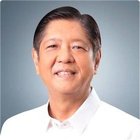
Taking part in the summit are Sultan of Brunei Darussalam Hassanal Bolkiah, Prime Minister of the Kingdom of Cambodia Hun Manet, Foreign Minister of the Republic of Indonesia Sugiono, Prime Minister of Lao PDR Sonexay Siphandone, Prime Minister of Malaysia Anwar Ibrahim, Presidential Special Representative and Permanent Secretary of the Ministry of Foreign Affairs of the Republic of the Union of Myanmar hau Khan Sum, President of the Republic of the Philippines Ferdinand Marcos, Prime Minister of the Republic of Singapore Lawrence Wong, Prime Minister of the Kingdom of Thailand Anutin Charnvirakul, Prime Minister of the Democratic Republic of Timor-Leste Xanana Gusmão, and Prime Minister of the Socialist Republic of Vietnam Le Minh Hung. Secretary-General of the Association of Southeast Asian Nations (ASEAN) Dr Kao Kim Hourn, Secretary-General of the Shanghai Cooperation Organisation (SCO) Nurlan Yermekbayev, and Chair of the Eurasian Economic Commission’s (EEC) Board Bakytzhan Sagintayev are also taking part in the summit.

* * *
Opening remarks by the President of Russia at the Russia – ASEAN Summit
President of Russia Vladimir Putin: Colleagues, friends,
I am delighted to welcome all of you to Kazan for the anniversary Russia – ASEAN Summit, which marks 35 years since the establishment of relations between Russia and the Association of Southeast Asian Nations.
Friends, many of you have visited our country in the past, while for some, this is their first time here. Welcome to everyone.
Delegations at the previous Russia – ASEAN meeting did not include Timor-Leste, which joined ASEAN in 2025. We are delighted to have the Prime Minister of the Democratic Republic of Timor-Leste with us today.
The Association of Southeast Asian Nations is an authoritative organisation extending beyond the Asia-Pacific region. Relevant on a global scale, it has withstood the test of time, building a system of cooperation between states founded on universally recognised norms of international law and mutual respect for each other’s interests.
These are precisely the principles underpinning Russia-ASEAN relations. It is a strategic partnership that serves as an essential stabilising factor in the Asia-Pacific amidst geopolitical turbulence, contributing to the formation of a balanced security architecture and equitable mutually beneficial cooperation.
Today’s agenda is as follows: we will exchange opinions on topical regional and international issues, share assessments of the outcomes of Russia-ASEAN cooperation over the past 35 years, and discuss future areas, tasks and objectives of the Russia-ASEAN strategic partnership.
It goes without saying that our discussion may cover other issues as well. Please feel free to raise any matters you deem worthy of discussion.
Our cooperation demonstrates clear results. We have developed a robust legal and regulatory framework to govern our relations, as well as an extensive network of joint mechanisms. We have launched new dialogue platforms. We have expanded the scope of practical cooperation in such areas as combating new security challenges and threats, as well as trade and investment, energy, agriculture, digitalisation, science and technology, tourism, and humanitarian contacts more broadly.
I hope this day will be productive and we will have a constructive and engaged exchange of opinions, as always.
I will be co-hosting this meeting with the President of the Republic of the Philippines, a country chairing ASEAN this year. With great pleasure, I pass the floor to Mr Ferdinand Marcos for his opening remarks.
Mr President, please.
President of the Republic of the Philippines Ferdinand Marcos: Thank you, Mr President, Your Majesty,
Excellencies, distinguished guests, good morning.
It is my honour to serve as co-chair of the ASEAN–Russia Commemorative Summit alongside President Putin as we mark 35 years of a partnership built on mutual respect, shared interests, and a steady conviction that cooperation, not confrontation, is the surest path to peace.
I wish to express our deep appreciation to the government and people of the Russian Federation for their generous hospitality and for the excellent arrangements that have brought us together here in Kazan, a city where civilizations have long met, mingled, and enriched one another. It is a fitting venue for a gathering that is itself an exercise in bridging distances, both geographic and cultural.
Thirty-five years ago, Russia’s participation in the ASEAN ministerial meeting in Kuala Lumpur planted the first seeds of what has grown into a strategic partnership of genuine consequence. The principles that guided those early steps – mutual respect, sovereign equality, and the commitment to peaceful cooperation enshrined in the Treaty of Amity and Cooperation – remain as relevant today as they were then.
They are not merely historical anchors. They are active guides for the work still before us. As we mark this milestone, the Philippines would like to highlight three priorities that should animate our cooperation in the years ahead.
First, peace, security, and stability. In an era of deepening geopolitical uncertainty, the value of steady political and security engagement between ASEAN and Russia cannot be overstated. Transnational threats such as terrorism, illicit trafficking, cybercrime, and online scams do not respect borders, and neither can our responses.
We must strengthen practical cooperation on maritime security and counterterrorism, reinforce our collective resilience in cyberspace, and develop the institutional habits of anticipation rather than mere reaction.
Second, a more dynamic economic partnership. Our trade and investment ties have grown, but they have yet to reach full potential. We must be more deliberate and more ambitious in expanding economic opportunities, improving trade facilitation, deepening investment flows, and connecting our business communities. Food and energy security deserve a particular attention, as these are the foundations on which broader stability rests. Our economic cooperation must also be inclusive. Our micro, small, and medium enterprises must have a place in this partnership, and our cooperation must extend into the emerging sectors that will shape tomorrow’s global economy.
And third, perhaps the most and most enduring, is our people. Scholarships, student exchanges, academic partnerships, tourism, and the arts, these are not peripheral to our relationship, they are at its living core.
The connections forged between our peoples outlast any summit declaration and carry our partnership forward in ways that policy alone cannot do. We must continue to invest in these bonds, placing our youth not merely at the receiving end of this cooperation, but at its centre, as the generation that will ultimately decide what ASEAN-Russia relations will become.
Your Majesty, Excellencies, colleagues,
Guided by our chairship theme, Navigating Our Future Together, the Philippines approaches this summit not just as a ceremony of commemoration, but as a renewed call for action.
Thirty-five years is a foundation. What we build on it is our choice and our responsibility. Let us choose well.
Thank you.